


By: Ginaba Lino
The local community in Panyikang County has thanked the German Catholic Church and Misereor for continued solidarity and humanitarian support to people affected by conflict, displacement, and devastating floods in South Sudan’s Upper Nile State.
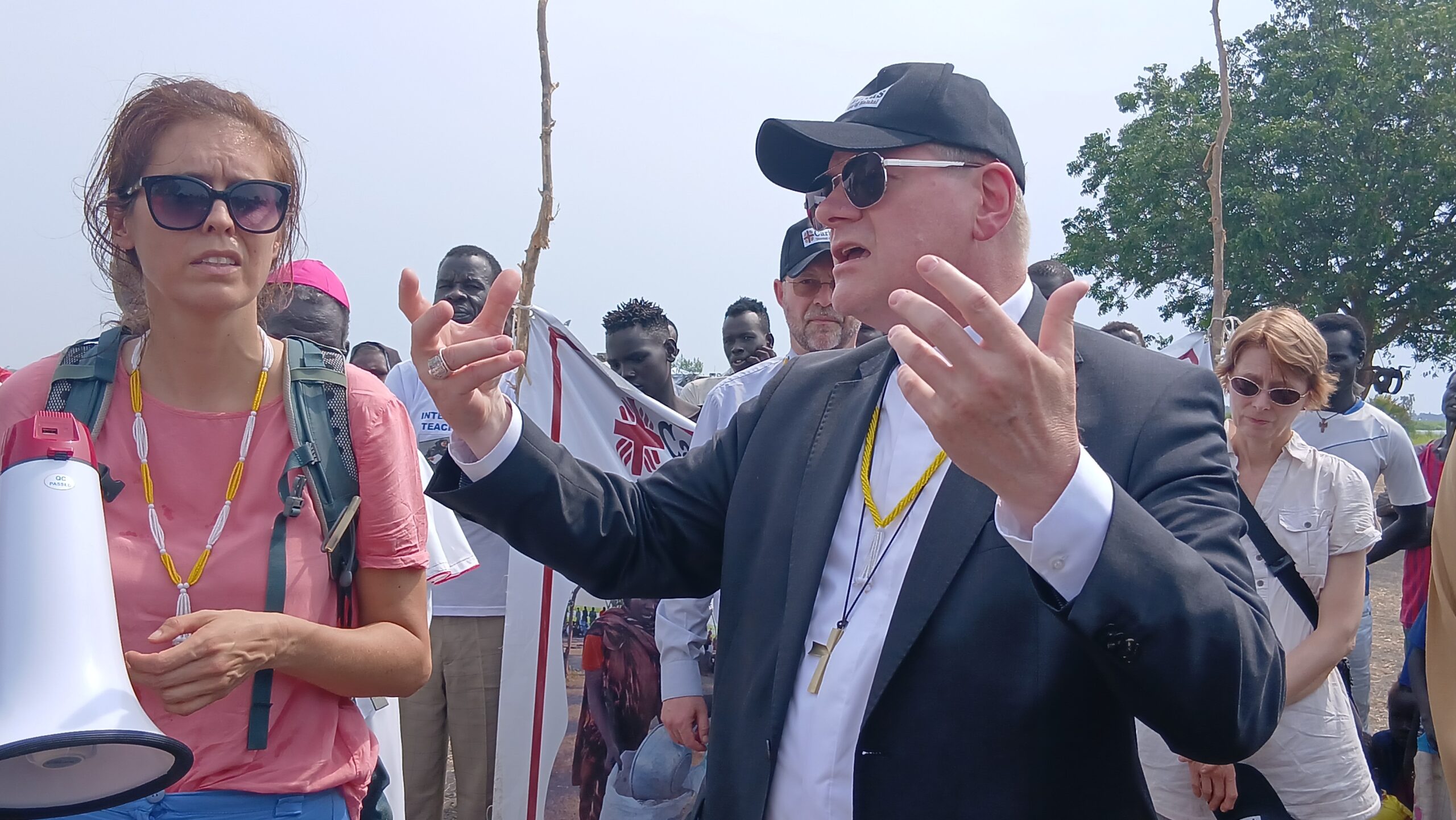
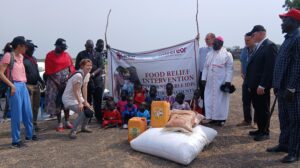
The appreciation was expressed during a visit by Misereor delegation led by Archbishop Stefan Burger of Freiburg, Germany, with the accompanying delegation include Fr. Dr. Andreas Frick, Director of Misereor; Katherina Goette, Misereor Desk Officer for South Sudan; Uwe Bergmeier, Head of Dialogue and Partnership Services; and Ita Reilly, Misereor Translator inspected food distribution activities and other projects supported through the Diocese of Malakal.
Panyikang County Commissioner James Obur Aywok described the delegation’s journey from Germany to the remote county as a powerful demonstration of solidarity with communities affected by the crisis.
Commissioner Aywok said residents were eager to welcome the delegation after learning that visitors from Germany would travel deep into the county to meet them and witness their situation firsthand.
“We heard that they are coming from Germany. We knew that Germany is very far. It is not easy to come to South Sudan. So, since they managed to come here, then also we have to be here for them,” Aywok said.
He praised the delegation for travelling beyond Juba and Malakal to reach remote communities, saying such a journey demonstrated a strong commitment to serving people in difficult circumstances.
“To come from very far like this to this rural, remote area, it’s only someone who strongly believes in God who can do that,” he said.
The local authority commended Caritas South Sudan for connecting vulnerable communities with international partners, noting that previous delegations, including visitors from Austria, had also travelled to the area to understand the needs of local people.
Aywok said the support from Germany and other international partners remains essential because the resources available within the community are insufficient to meet the scale of humanitarian needs.
He stressed that the needs extend far beyond the community visited by the delegation, with many villages still cut off by flooding and facing severe hardship.
According to the Commissioner, some residents in remote areas require up to two days to reach the distribution point because extensive flooding has made movement difficult and left many communities dependent on waterways.
He noted that the people who gathered for the food distribution represented only part of the vulnerable population, with others, including people who are sick or unable to walk, remaining in isolated locations without adequate support.
Aywok pledged that the county government and local community would continue working closely with the Catholic Church, praising Church-linked organizations for their reliability and commitment to returning to communities in need.
“We stand together with the Church because the Church is doing a lot,” he said, adding that communities trust Church organizations because “they don’t lie.”
He continued, “This trust was built through the Church’s consistent presence and its willingness to return to communities even when immediate assistance is not possible.”
“If they tell you we’ll come back, they will definitely come back. Even if they don’t come back now, they can come back even next year,” Aywok said.
He concluded by thanking Misereor from Germany, Caritas and the Diocese of Malakal for their continued support, saying the community welcomed their presence and hoped the partnership would continue as Panyikang County confronts the combined effects of flooding, displacement, and limited access to basic services.
Bishop of Malakal Stephen Nyodho Ador Majwok said Misereor’s assistance has enabled the Diocese of Malakal to meet some urgent needs of vulnerable communities, despite the enormous scale of the humanitarian crisis.
“We will not forget your generosity; we will not forget your kindness,” they told the visiting delegation, thanking Misereor, Archbishop Burger and Catholic partners in Germany for standing with the people of Malakal Diocese.
Panyikang County’s current headquarters was established after flooding destroyed the original administrative center in Tunja, forcing authorities and displaced communities to relocate to higher ground. The settlement, established only about seven months ago, now hosts families struggling to rebuild their lives after fleeing conflict and displacement, many arriving with little or no belongings.
Despite the ongoing resettlement, the community faces critical gaps in basic services, including healthcare, education, and infrastructure, with residents often relying on canoes and other difficult forms of transport to reach Malakal for essential services.
Bishop Stephen emphasized that the humanitarian situation is even more severe in other parts of the Diocese, including Pangak, where thousands of people are reportedly living in highly vulnerable conditions.
The Catholic community in Panyikang also lacks a permanent place of worship and currently gathers under a tree for Sunday prayers, while land donated for a future chapel remains undeveloped.
The Diocese of Malakal said its humanitarian and pastoral response is being strengthened through the support of Misereor, Caritas South Sudan and other international partners working alongside local communities and authorities.
The delegation’s field visit allowed the German Church representatives to witness directly the challenges facing displaced families while also seeing the resilience of communities working to rebuild their lives.
The Diocese described the visit as a powerful expression of solidarity, saying continued international support remains vital as communities across Upper Nile struggle to recover from the combined effects of conflict, displacement and recurrent flooding.
Archbishop Stefan Burger said their visit was to move beyond reports about South Sudan and witness the realities facing communities firsthand, saying, “For Misereor, it is very important not to only read about what is happening in South Sudan, but to see what the situation is like.
Reflecting on Germany’s own experience of hardship after the Second World War, Archbishop Burger said the German Church had learned the importance of solidarity and helping people beyond national borders, stressing that “as a Church we know there is not a first, second or third world, but we are one world.”
He said the Catholic Church’s commitment to solidarity is rooted in the belief that humanity forms one community, adding that the Church in Germany seeks to support people in need through the German Bishops’ Conference and Misereor, while communities in South Sudan continue to support one another locally.
Archbishop Burger also emphasized that communities need more than material assistance, highlighting the importance of spiritual support and prayer as he joined the people in praying for South Sudan and its future.