


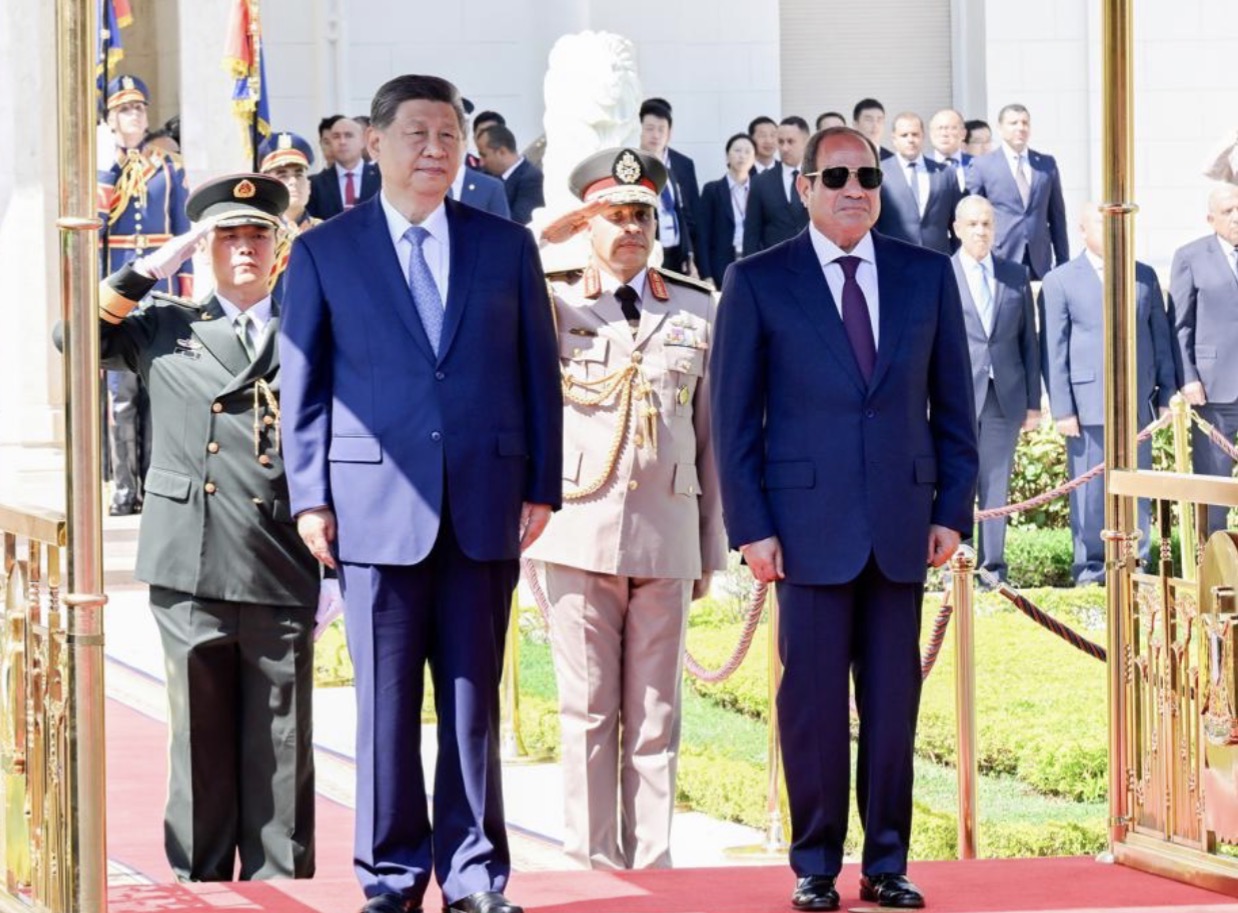
By CRN News Desk |Chinese President Xi Jinping’s state visit to Egypt has highlighted growing economic cooperation between China and Africa, with Egypt emerging as an important hub for Chinese investment, industrial development, technology and trade across the continent.
According to Chinese media reports, President Xi held talks with Egyptian President Abdel Fattah El-Sisi in Cairo on Wednesday during a state visit marking the 70th anniversary of diplomatic relations between China and Egypt.
The two leaders agreed to deepen their comprehensive strategic partnership, with cooperation extending beyond traditional infrastructure projects to sectors including green energy, electric vehicles, digital technology, aerospace, modern agriculture and industrial development.
More than 20 cooperation documents were reportedly signed during the visit, covering areas such as digital economy, science and technology, education and transportation.
The agreements underline the expanding economic relationship between China and Egypt and its potential significance for wider Africa-China trade and investment.
Egypt’s strategic location linking Africa, Asia and Europe make it an important partner in China’s expanding economic engagement with the continent.
The country controls the Suez Canal, one of the world’s major international trade routes, connecting the Mediterranean Sea with the Red Sea and providing an important link between Asian, African and European markets.
Chinese officials and analysts say cooperation with Egypt can therefore contribute to wider economic connectivity between China, Africa and other parts of the Global South.
The partnership is also being supported by Chinese investment in Egypt’s industrial and economic zones, particularly around the Suez Canal.
One of the most visible examples of China-Egypt economic cooperation is the China-Egypt TEDA Suez Economic and Trade Cooperation Zone.
According to the Global Times, the industrial zone, which was established in 2008, has grown into a major industrial hub with more than 200 companies operating in the area.
Investment has expanded into sectors including new energy, textiles, household appliances and other manufacturing activities.
The development has also created employment opportunities for Egyptian workers and provided opportunities for local employees to acquire technical and managerial skills through working with Chinese companies.
Chinese analysts say the experience demonstrates a shift in China-Africa economic cooperation from infrastructure construction toward industrialization, manufacturing, technology transfer and local employment.
During the talks, Xi encouraged China and Egypt to identify new areas of cooperation in green energy, electric vehicles, aerospace, the digital economy and modern agricultural technology.
These sectors are increasingly important to African countries seeking to diversify their economies, improve energy access, develop digital infrastructure and create employment for growing populations.
Chinese analysts cited by the Global Times said Egypt’s development priorities are increasingly aligned with China’s strengths in manufacturing, technology and infrastructure.
They said the expanding partnership could provide opportunities for Egypt to strengthen its industrial base while creating a platform for Chinese companies seeking access to African markets.
China’s involvement in Egypt’s electricity sector is another example of the expanding economic relationship.
The Global Times reported that Chinese companies have participated in dozens of power transmission and transformation projects in Egypt, including projects involving high-voltage electricity infrastructure.
One Chinese company has reportedly undertaken or participated in 65 engineering, procurement and construction projects involving power transmission and transformation systems of 500 kilovolts and below.
The company has secured more than 30 percent of the relevant Egyptian market, according to the report.
Such cooperation is significant for Africa, where many countries continue to face major gaps in electricity generation, transmission and access.
The China-Egypt partnership comes as African countries seek greater investment in infrastructure, manufacturing, agriculture, energy and technology to support economic transformation.
The cooperation model highlighted in Egypt increasingly combines infrastructure development with industrial production, skills development and technology.
Chinese analysts told the Global Times that Egypt’s position in both the Arab world and Africa means successful cooperation could have a wider demonstration effect for China-Arab and China-Africa relations.
They said the growing emphasis on advanced manufacturing, digital technology, green development and innovation could help expand economic cooperation between China and developing countries beyond traditional infrastructure projects.
China and Egypt also agreed to strengthen coordination on global governance and safeguard the interests of developing countries and the wider Global South.
For African countries, stronger China-Egypt cooperation could create additional opportunities for trade, investment, technology partnerships and access to international markets.
Egypt’s location along the Suez Canal, combined with its large domestic market and links to other African and Arab economies, gives it an important role in regional trade and investment.
The two countries’ renewed commitment to economic cooperation therefore extends beyond bilateral relations, potentially contributing to broader connectivity between China, Egypt and African markets.
As China and Egypt expand cooperation in manufacturing, renewable energy, digital transformation, agriculture and other emerging sectors, the partnership is increasingly being presented as an example of how developing countries can pursue economic modernization through South-South cooperation.