


CRN Staff
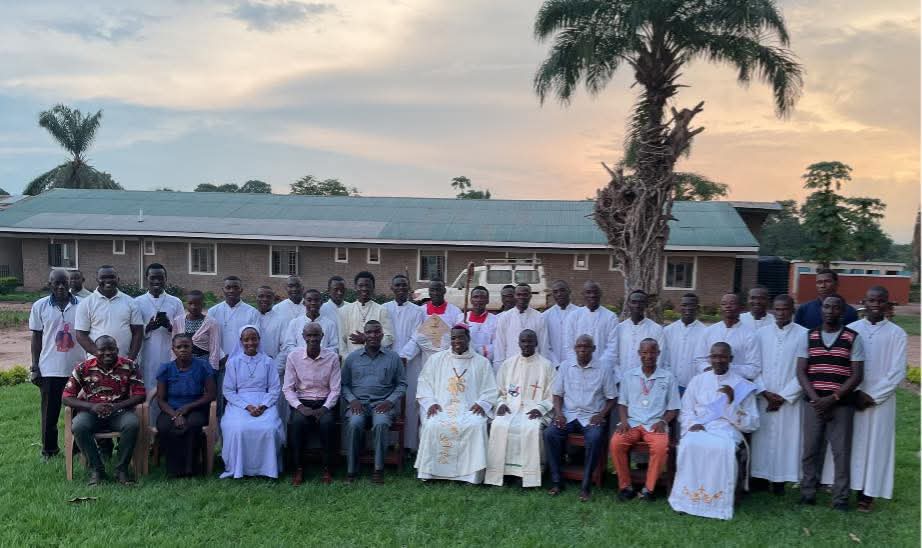
The Bishop of the Catholic Diocese of Tombura-Yambio, Barani Eduardo Hiiboro, has called on seminarians to embrace a vocation grounded not only in academic excellence but in humility, service, and spiritual depth, as he presided over the 2026 closing ceremony of the St. John Paul II Institute of Philosophy in Yabongo.
Addressing students, clergy, and guests during the ceremony, Bishop Hiiboro emphasized that the mission of a seminary extends far beyond intellectual training.
“A seminary does not merely produce scholars, but forms shepherds—men who think deeply, love sincerely, and serve selflessly,” he said, setting the tone for a message centered on holistic formation.
The annual event marked the successful completion of the academic year for seminarians undergoing philosophical formation, a critical stage in preparation for priesthood within the Catholic Church. It also provided an opportunity to reflect on the role of discipline, study, and spiritual growth in shaping future church leaders.
In his homily, Bishop Hiiboro urged the seminarians to cultivate a strong reading culture as a foundation for effective ministry. He stressed that intellectual development is essential in understanding and responding to the complex realities facing communities today.
“Read many books, for knowledge will strengthen your mission and guide your service to God’s people,” he told the gathering.
Beyond academics, the bishop highlighted the importance of moral integrity and mentorship. He encouraged students to be deliberate in choosing role models who embody virtue, wisdom, and dedication to service.
“Choose role models who inspire you to grow in virtue and wisdom,” he said, adding that the example set by others can significantly influence a seminarian’s journey toward priesthood.
Bishop Hiiboro also challenged the seminarians to pursue excellence in all aspects of their formation, describing commitment and discipline as essential virtues for those called to serve.
“Hold unto perfect work done; strive always for perfection in all that you do,” he said.
The ceremony brought together formators, students, and members of the wider church community, who gathered to celebrate the progress made by the seminarians over the academic year. It underscored the institute’s role in nurturing not only intellectual capacity but also spiritual maturity and pastoral readiness.
Formators at the institute were commended for their dedication to guiding the seminarians through rigorous academic and spiritual training, often under challenging conditions. Their work, church leaders noted, remains vital in preparing a new generation of priests capable of serving communities across South Sudan and beyond.
For the seminarians, the closing ceremony marked both an achievement and a transition point, as they continue their journey toward priesthood. Many are expected to proceed to theological studies, where they will further deepen their understanding of faith and pastoral responsibility.
The St. John Paul II Institute of Philosophy has played a significant role in shaping clergy within the region, contributing to the broader mission of the Catholic Church in promoting peace, education, and moral leadership in South Sudan.
As the event concluded, expressions of gratitude were extended to both students and staff for their commitment and perseverance throughout the academic year. Church leaders reiterated the importance of sustained support for seminary formation as a cornerstone of community development and spiritual guidance.
Bishop Hiiboro’s message resonated strongly with attendees, reinforcing the idea that true priestly formation lies in the integration of knowledge, character, and service, qualities he said are essential for addressing the spiritual and social needs of today’s world.