


By Ginaba Lino
The Presidential Envoy on Special Programmes, Adut Salva Kiir Mayardit, has pledged to work with cultural institutions, traditional leaders and development partners to establish dedicated cultural heritage sites across South Sudan to preserve the country’s diverse traditions and promote national unity.
Speaking during the Azande Cultural Festival in Juba, Adut said cultural centres, museums and protected historical landmarks are essential to preserving South Sudan’s cultural identity and educating future generations about their heritage.
Adut said she is committed to working alongside the Ministry of Culture, Museums and National Heritage, traditional leaders, cultural organizations and partners to turn the vision into reality.
“Celebrating our culture once a year is not enough. We must give it permanent homes where it can thrive every single day,” Adut said.
She described cultural heritage as an important pillar of national identity, saying every community’s tradition should be recognized as a source of strength rather than division.
Reflecting on the festival’s theme of celebrating Azande heritage while promoting unity and peaceful coexistence, Adut emphasized that cultural diversity could help bridge ethnic and regional differences among South Sudanese.
“No single tradition threatens another. Instead, every community’s culture is a vital pillar holding up our nation,” she said.
She commended the organizers for bringing together representatives from different communities across South Sudan, describing the festival as an example of how cultural exchanges can strengthen mutual respect and peaceful coexistence.
Adut revealed her personal connection to the Azande community, saying her mother had previously told her about their family’s Azande ancestry through her grandmother.
She said the discovery had deepened her appreciation of the country’s cultural diversity and the importance of embracing different ancestral identities.
The Presidential Envoy further highlighted the need to establish physical cultural spaces where young people could learn indigenous knowledge, explore their history and develop pride in their origins.
She cited cultural heritage institutions in neighboring countries, including Uganda and Kenya, as examples of how communities preserve their traditions and pass them on to younger generations.
According to Adut, establishing cultural centres would not only protect South Sudan’s national memory, but also create opportunities for cultural tourism, education and stronger community relations.
She recalled earlier discussions with His Majesty King Atoroba, King of the Azande Kingdom, about establishing a cultural heritage site that would serve the Azande community and other ethnic groups across South Sudan.
Adut commended President Salva Kiir Mayardit for supporting the preservation of national heritage and praised the Azande community organization, traditional leaders, artists, elders and volunteers for organizing the festival.
She expressed hope that the cultural celebration would continue annually, attracting more communities and providing opportunities for South Sudanese to learn about one another’s traditions.
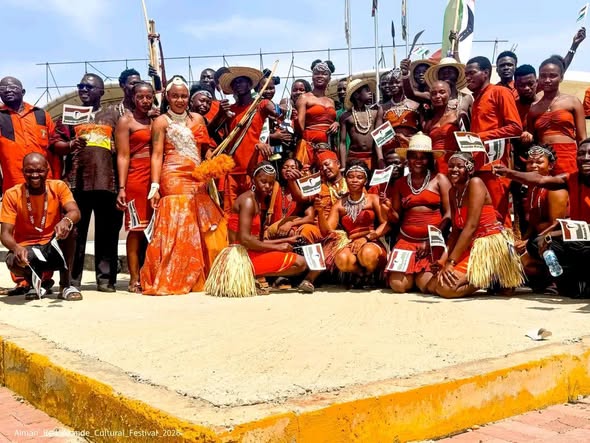
The two-day Azande Cultural Festival brings together traditional leaders, government officials, artists and members of different communities to showcase the Azande people’s cultural heritage through traditional music, dance, food, dress and other cultural expressions.