

 has convened a three-day cross-border dialogue bringing together religious leaders from Lakes, Unity, and Jonglei states to strengthen peacebuilding efforts in communities affected by recurring violence.)
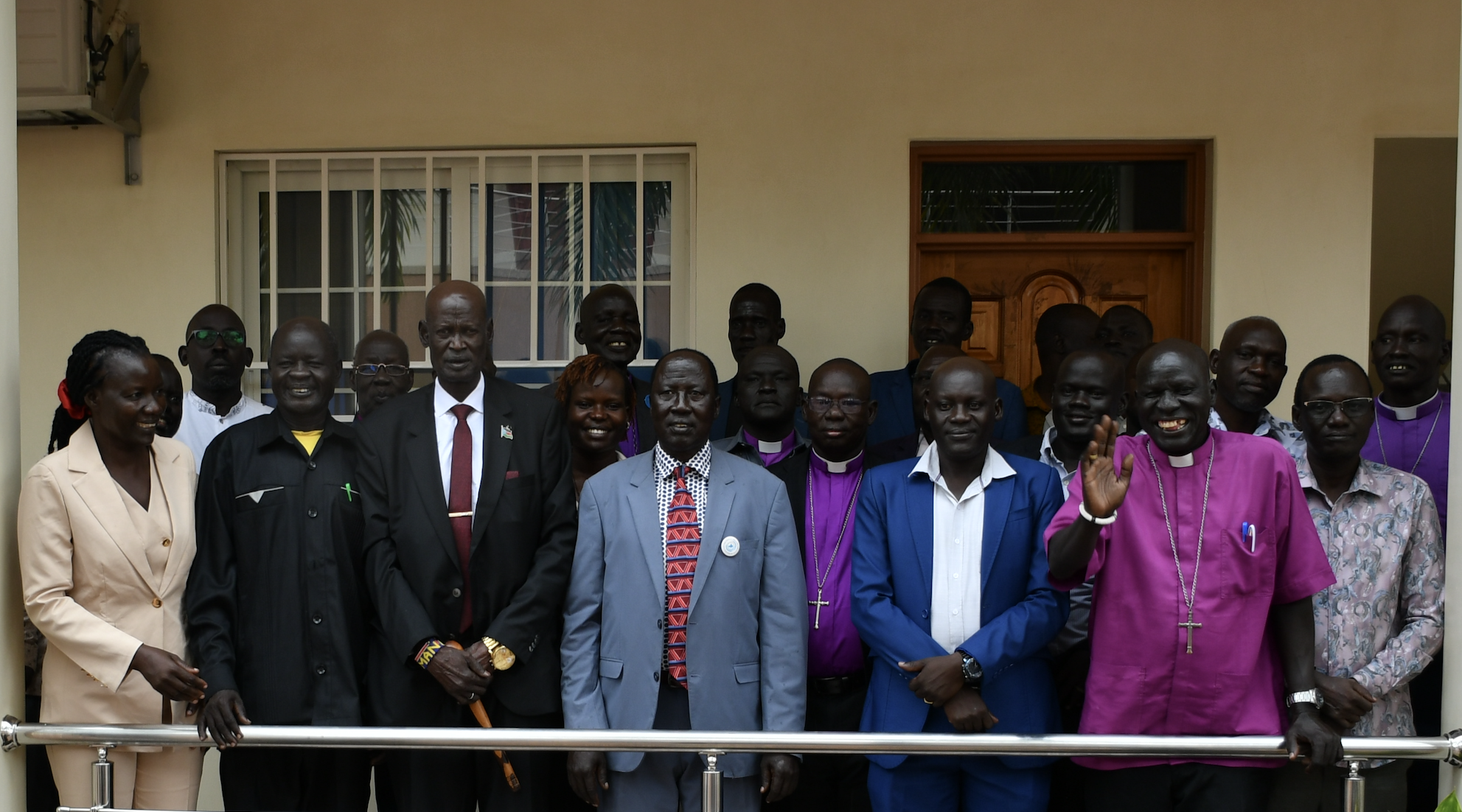
CRN News Desk| The Faith-Based Organization Assistant Mission for Africa (AMA) has convened a three-day cross-border dialogue bringing together religious leaders from Lakes, Unity, and Jonglei states to strengthen peacebuilding efforts in communities affected by recurring violence.
The dialogue is being held under the Reconciliation, Stabilization and Resilience Trust Fund (RSRTF) as part of the Southern Unity Area-Based Programme (SU-ABP). The initiative seeks to enhance cooperation among faith leaders in addressing cross-border conflicts and insecurity along the River Nile corridor.
Speaking at the opening of the forum in Juba, AMA Executive Director Rev. James Kai Thoat said the meeting aims to foster collaboration among religious leaders to promote reconciliation and peaceful coexistence in conflict-prone communities.
“The three-day forum is part of the Southern Unity Area-Based Programme to build peace along the Nile corridors by addressing recurrent cross-border conflicts and insecurity affecting communities living along the River Nile,” Rev. Kai said.
Also speaking during the event, Ms. Achiro Grace, Director of the Dialogue Research Institute, a consortium partner implementing the programme, said communities in Lakes, Jonglei, and Unity states have suffered years of violence driven by revenge killings and cattle raiding.
She noted that the persistent conflict has claimed many lives, displaced families, disrupted livelihoods, and weakened the social ties that have historically united neighboring communities.
“Today, we have gathered not simply to discuss the challenges affecting our communities but to strengthen our collective commitment to transforming faith into action. We are proud to stand alongside AMA and our consortium partners in supporting initiatives that place communities at the centre of peacebuilding,” Achiro said.
Presidential Adviser on Peace Hon. Charlaman Char Chawich commended faith leaders for their continued contribution to peacebuilding and reconciliation across the country.
He said South Sudanese citizens have long aspired to enjoy lasting peace since before the country’s independence and urged religious leaders to continue fostering trust, forgiveness, and dialogue within their communities.
Chawich also challenged leaders to confront the growing divisions and hatred in society, saying lasting peace can only be achieved when leaders actively guide their communities toward reconciliation and coexistence.
The dialogue is expected to produce practical recommendations to strengthen collaboration among faith leaders and local communities in preventing violence and promoting sustainable peace across the Nile corridor.