


By: Ginaba Lino
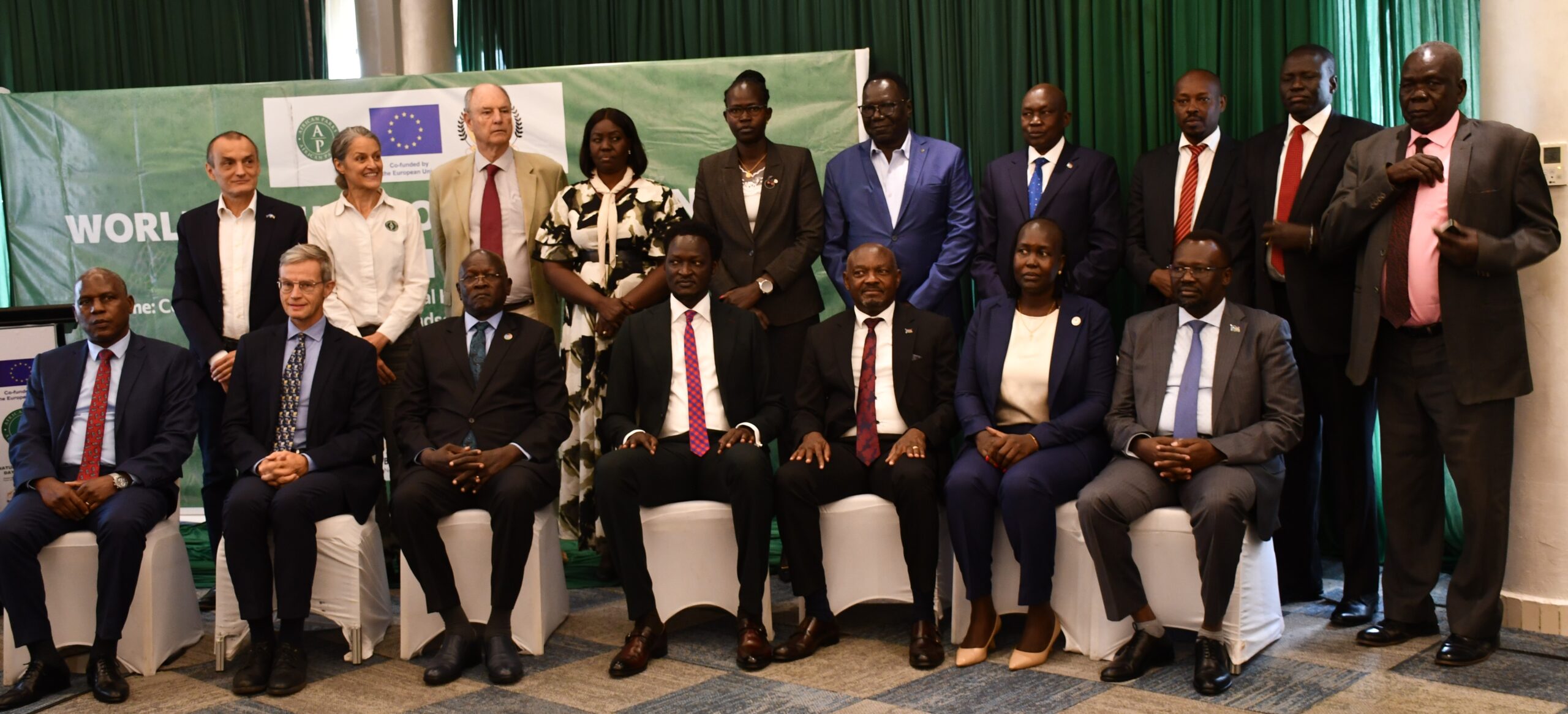
South Sudan’s efforts to protect its vast wildlife heritage and restore one of Africa’s largest animal migration corridors received renewed attention as the Ministry of Wildlife Conservation and Tourism, African Parks, and the European Union commemorated World Nature Conservation Day in Juba.
The event, held under the theme “Conserving South Sudan’s Natural Heritage with Focus on the Great Nile Migration Landscape,” brought together government officials, conservation partners, civil society organizations, researchers, and community representatives to highlight progress made in wildlife monitoring, data analysis, community engagement, and conservation efforts across the Boma-Badingilo-Jonglei Landscape.
Speaking during the event, the Chairperson of the African Parks Board, Philip Winter, said South Sudan’s wildlife represents one of the country’s greatest natural assets, but decades of conflict have severely affected biodiversity and animal populations.
Winter, who first came to South Sudan in 1975, said his early experiences in the country transformed him from a hunter into a conservation advocate.
“I started my career in Africa here in Juba in 1975. I came as a hunter, but what happened to me in South Sudan is that I became a conservationist,” Winter said.
He recalled that South Sudan once had wildlife populations comparable to some of Africa’s most famous conservation destinations, including Kenya, Tanzania, and Botswana.
Winter warned that the country’s prolonged civil wars had devastating consequences not only for communities but also for wildlife. He cited the disappearance of zebras from South Sudan as one example of the impact of conflict.
“There is one species which is extinct, as far as we can tell, in South Sudan. The zebra has gone. There used to be 27,000 zebras in the 1980s at Boma. Today we can’t find any,” he said.
African Parks began managing conservation activities in South Sudan following a 2022 Memorandum of Understanding with the Ministry of Wildlife Conservation and Tourism. The agreement established a delegated management arrangement for Boma and Badingilo National Parks, as well as the wider landscape used by migratory antelope species.
Winter explained that the Boma-Badingilo-Jonglei Landscape is among the largest conservation initiatives in Africa, covering an estimated area of more than 100,000 square kilometers.
He emphasized that successful conservation depends on three key principles: protecting biodiversity, ensuring economic sustainability, and involving local communities.
The Acting Ambassador of the European Union, Lothar Jasche, described the conservation programme as one of the EU’s important projects aimed at protecting nature and supporting the country’s future development.
“We are fully committed to this project. It is one of the best projects that we have. It is a project for the future of the country and protection of nature,” Jasche said.
He said protecting nature is directly linked to human survival, resilience, and economic prosperity.
Jasche highlighted South Sudan’s unique natural resources, including wetlands, rivers, wildlife, and the Great Nile Migration Landscape, describing them as assets many countries can only dream of.
However, he warned that threats such as climate change, floods, droughts, biodiversity loss, and poaching continue to challenge conservation efforts.
Through its Nature Africa initiative, the European Union is supporting sustainable management of key landscapes across Africa to protect biodiversity, conserve wildlife habitats, and promote livelihood opportunities for communities.
The World Nature Conservation Day commemoration served as a reminder of the responsibility shared by government institutions, development partners, communities, and individuals in safeguarding South Sudan’s natural heritage for future generations.