


By: Ginaba Lino
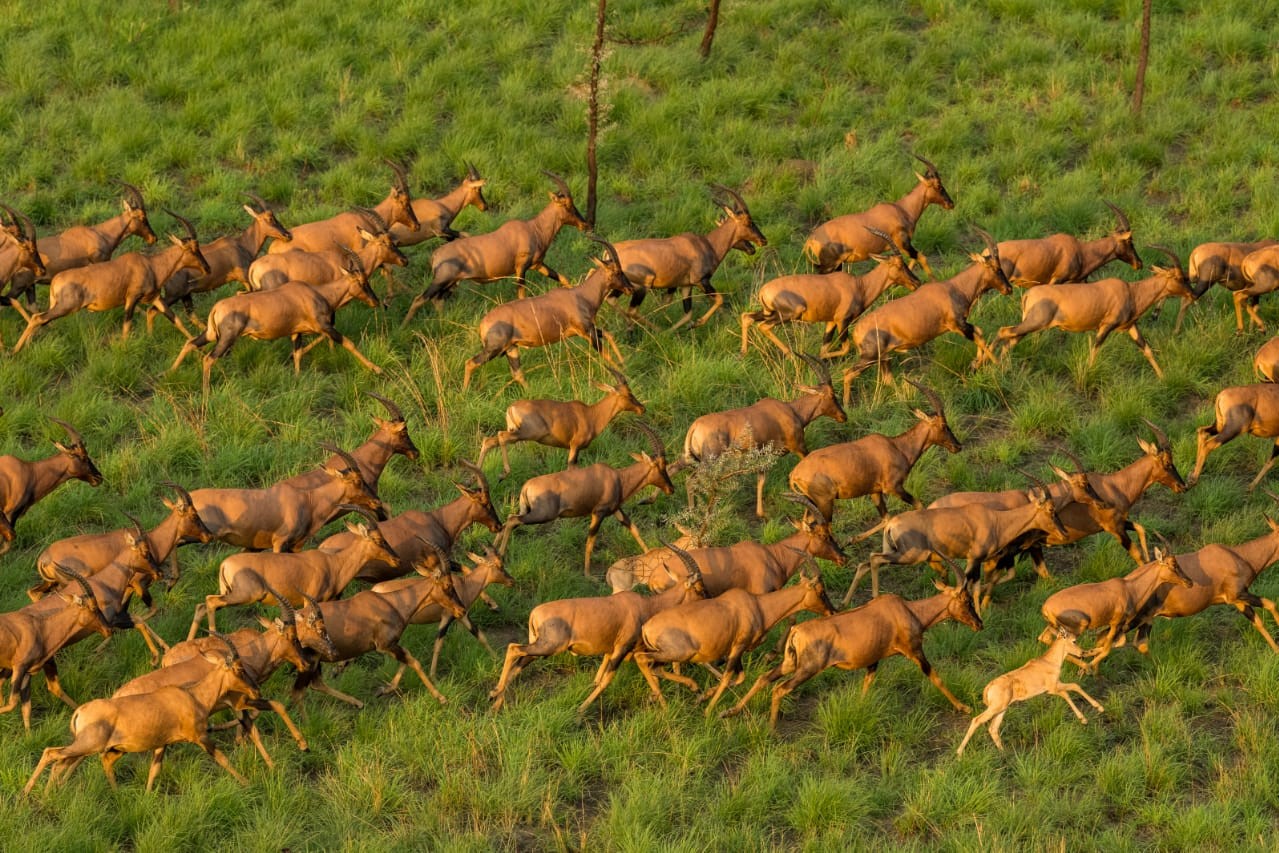
South Sudan continues to host the world’s largest known land mammal migration, with an estimated 6 million antelope roaming the country’s vast ecosystems, according to new aerial survey results presented by African Parks during the commemoration of World Nature Conservation Day on Friday.
The findings confirm that the Great Nile Migration remains one of the planet’s most significant wildlife spectacles, with no statistically significant changes in the populations of the four key migratory species compared to the 2023 survey.
According to the survey, the white-eared kob remains the most abundant species, with an estimated 5.17 million animals, and a possible population range of between 3.36 million and 6.98 million.
The survey also estimated 440,500 tiang, with a population range of 128,300 to 752,700, while the Mongalla gazelle population stands at approximately 191,200 animals, ranging from 102,800 to 279,600.
Meanwhile, the bohor reedbuck population was estimated at 131,700 animals, with numbers ranging between 53,020 and 210,400.
Experts noted that the differences between the 2023 and 2025 population estimates for all four migratory species were not statistically significant, indicating that wildlife populations have remained stable over the past two years.
The findings provide encouraging evidence that South Sudan’s vast wetlands and grasslands continue to support one of the world’s most important wildlife ecosystems despite ongoing environmental and conservation challenges.
African Parks described the results as a strong indication that the country’s iconic migration remains resilient, underscoring the importance of sustained conservation efforts, strengthened protection measures, and collaboration between the government, conservation organizations, and local communities.
The survey results were unveiled as South Sudan joined the rest of the world in marking World Nature Conservation Day, with renewed calls to safeguard the country’s rich biodiversity and promote wildlife as a driver of tourism, economic growth, and sustainable development.
Conservationists say protecting the Great Nile Migration will be crucial not only for preserving global biodiversity but also for positioning South Sudan as one of Africa’s premier wildlife tourism destinations.