

, and implemented by GOAL.)
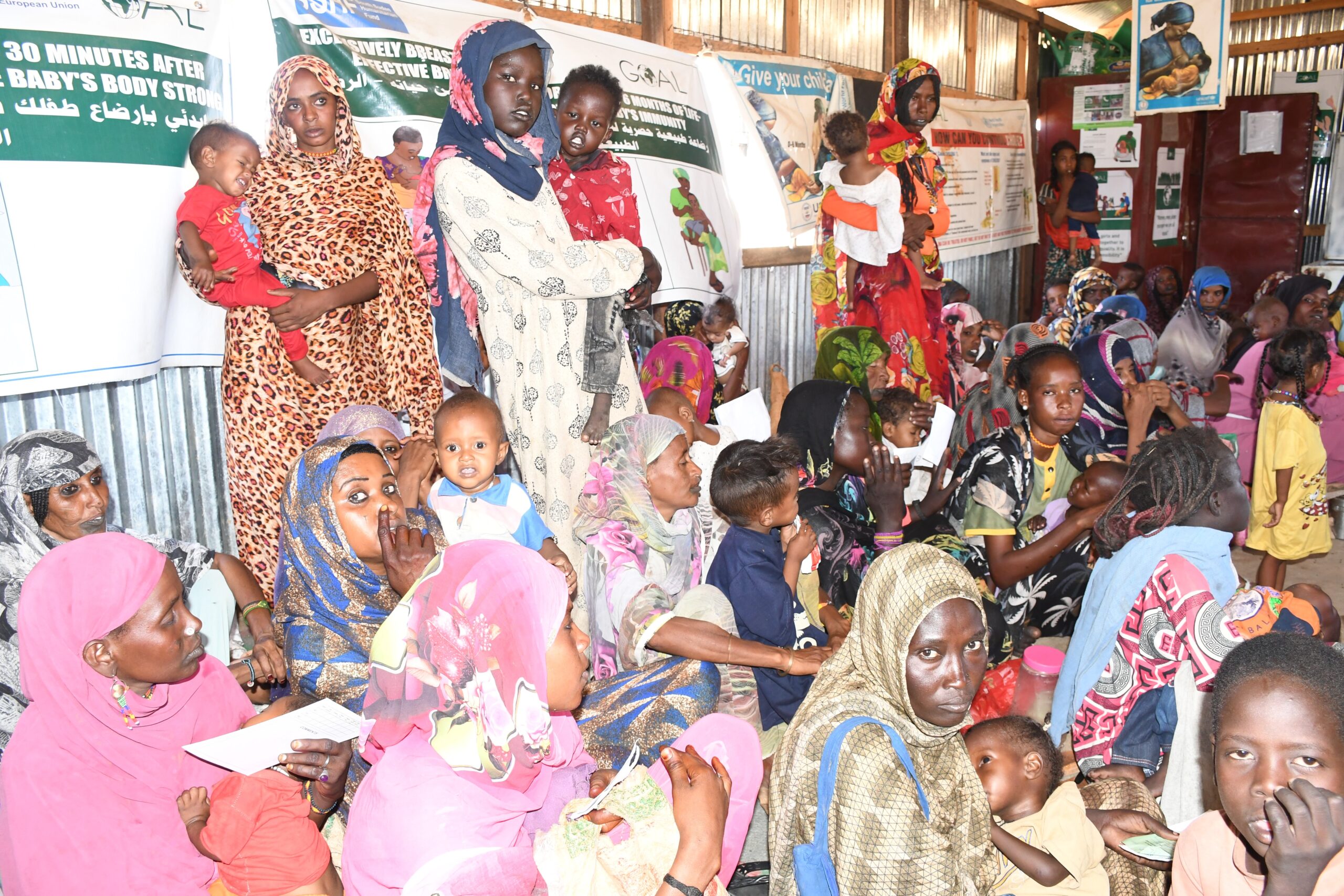
By: Ginaba Lino—At the Nutrition site in Chumedi Payam of Renk County, Upper Nile State, more than 200 children receive life-saving treatment daily through the Nutrition programme supported by UNICEF, funded by the European Civil Protection and Humanitarian Aid Operations (ECHO), and implemented by GOAL.
25-year-old mother Huminaa Abdullah Mohamed said, ” The transformation is nothing short of remarkable. She reflects on a journey that once seemed uncertain.
“We can see life again in our children,” she says, “We thank UNICEF, ECHO, and GOAL for the support you are giving us. We come here and receive all the services our children need free of charge. This has helped us a lot.”
Humina’s child was once severely malnourished, weak, underweight, and at risk of life-threatening complications. Today, the child is steadily recovering, a visible testament to the impact of sustained nutrition support.
Humina is one of thousands of Sudanese refugee mothers in Chumedi who rely on integrated nutrition services provided through UNICEF’s support. The programme offers regular screening, therapeutic feeding using ready-to-use therapeutic food (RUTF), and essential medical care for children suffering from severe acute malnutrition.
Health workers at the site report that the demand for services remains high, with over 200 children enrolled and treated daily. Many of these children arrive in critical condition, often after fleeing conflict in neighboring Sudan, where access to food and healthcare has been severely disrupted.
“Most of the children we receive are in urgent need of treatment,” says one health worker at the facility. “But with consistent care and therapeutic feeding, we start seeing improvements within weeks. It is encouraging for both the families and the staff.”
James Paulino Wani, a nutrition worker at the site, explains how the process begins the moment caregivers arrive, citing that they prioritize sick children first, especially new arrivals from the community.
After this initial stage, children are taken through a detailed screening process. Wani explains, “If a child is found to have acute malnutrition, we proceed with admission for treatment.”
The site delivers multiple nutrition services targeting different groups. According to Wani, the Outpatient Therapeutic Programme (OTP) currently supports 96 children suffering from severe acute malnutrition without medical complications.
In addition, 377 children are enrolled in the Targeted Supplementary Feeding Programme (TSFP), which treats moderate acute malnutrition among children aged 6 to 59 months.
Another 265 pregnant and lactating women (PLW) are also receiving nutritional support, including supplementary food for mothers from the second trimester of pregnancy and those breastfeeding infants under six months.
“In OTP, we provide Ready-to-Use Therapeutic Food (RUTF), which helps children recover quickly,” Wani says. “For moderate cases under TSFP, we give supplementary nutrition, and for pregnant and lactating women, we provide fortified blended food like CSB++.”
Despite the scale of support, challenges persist. One of the most pressing issues affecting service delivery is the shortage of safe water at the site.
“Water is a major problem here,” Wani notes. “We teach hygiene practices, but we do not have enough water for mothers and children to follow them. Even during treatment, children need water to take the therapeutic food.”
He adds that, in some cases, caregivers are asked to bring water from home, which is not always feasible given the conditions many families face.
“Before feeding a child, they are supposed to wash their hands, but without water, it becomes difficult,” he explains. “This affects both hygiene and treatment outcomes.”
The facility operates on a structured weekly schedule to manage the high number of beneficiaries. Mondays are reserved for OTP services, while Tuesdays and Wednesdays focus on supplementary feeding for children under five. Thursdays are dedicated to pregnant and lactating women, although new admissions are handled daily.
On average, the site receives around 50 OTP cases and up to 100 TSFP beneficiaries per day, including both follow-up and new admissions.
The growing demand reflects the broader humanitarian crisis affecting families who fled conflict in Sudan and those in host communities already struggling with limited resources. Food insecurity, displacement, and poor access to healthcare have left many children vulnerable to malnutrition.
Local authorities say the intervention has brought measurable improvements in child survival and well-being.
Ajal Dau Ajal, Deputy Payam Administrator of Chumedi, praised the contribution of humanitarian partners in addressing urgent needs.
“On behalf of the government of Upper Nile State, we appreciate the work of UNICEF, ECHO, and GOAL,” he said. “The services provided here are making a real difference in the lives of our people, especially children.”
Water scarcity continues to be a major concern, particularly as the population grows with the influx of refugees and returnees.
“Water is life,” Ajal said. “But many areas still do not have enough safe water, and this increases health risks for families.”
Despite these challenges, the nutrition programme stands out as a life-saving intervention that is restoring hope to families.
The ongoing conflict in Sudan has forced thousands of families to cross into South Sudan, particularly through Renk County, placing immense pressure on already limited resources. Displacement, food insecurity, and poor living conditions have contributed to rising cases of acute malnutrition among children under five.
In this context, the OTP services supported by UNICEF and its partners have become a critical lifeline. Beyond treatment, the programme also provides caregivers with nutrition education, helping them understand how to better care for their children even in challenging conditions.
As humanitarian needs remain high in Upper Nile State, sustaining and expanding such life-saving interventions will be critical to ensuring that more children not only survive, but thrive.