


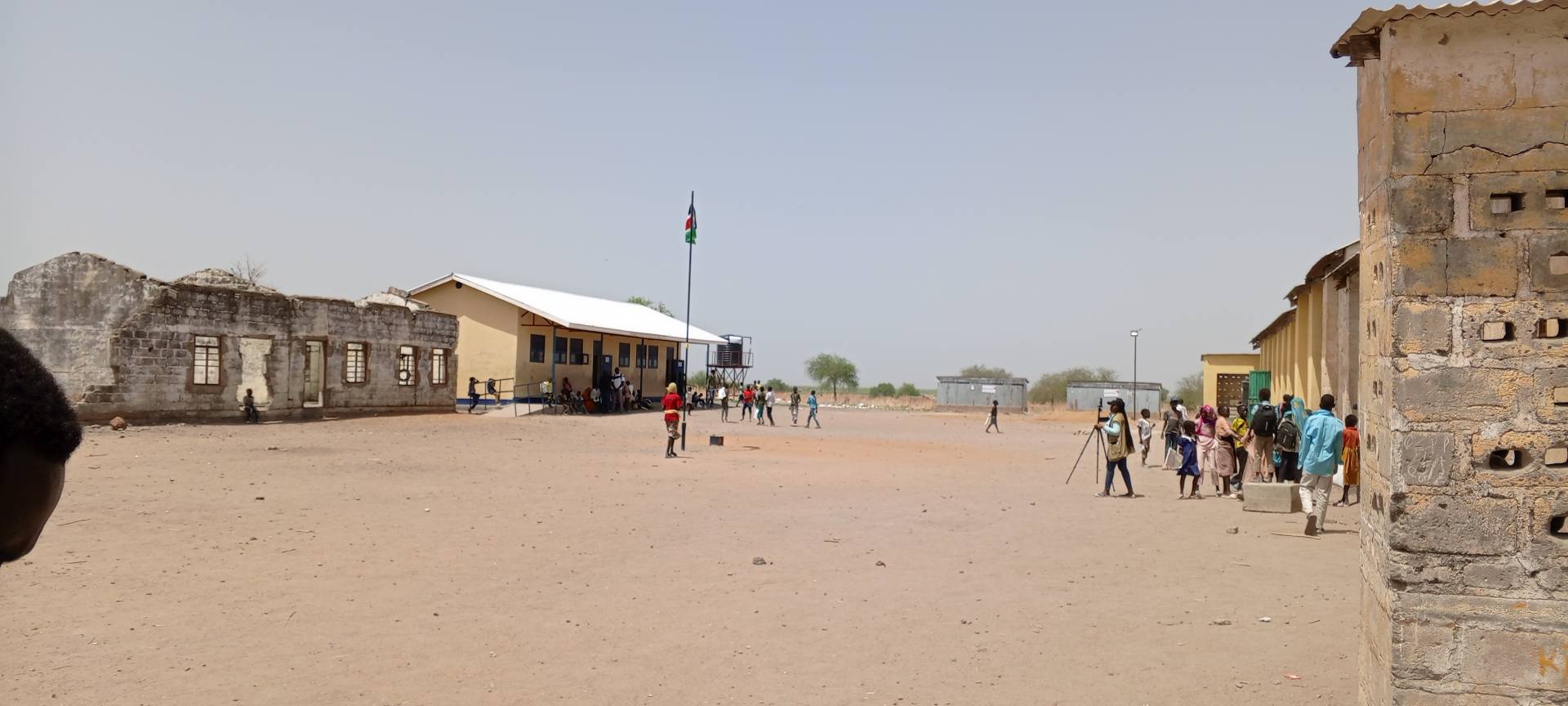
CRN|Ginaba Lino| Thousands of children in the eastern corridor of Renk County remain out of school as acute water shortages force authorities to delay the academic calendar, highlighting the growing link between basic services and access to education.
County Education Director Aleir Kur says schools in the eastern corridor bordering Sudan cannot open during the dry season due to the lack of safe drinking water, pushing the start of the school year from February to May.
“Water is life,” Kur said. “Without it, the area is not suitable for living, and children cannot attend school.”
The region depends heavily on seasonal rains, which typically begin in mid-May. Until then, communities rely on costly water trucking from the Nile, an approach that humanitarian agencies say is unsustainable for such a vast and remote area.
Although organizations, including UNICEF, have stepped in to provide emergency water supplies, Kur says the assistance remains limited and insufficient to meet the growing demand.
The delay in school reopening is the latest challenge facing Renk’s already strained education system, which has come under immense pressure following the outbreak of conflict in neighboring Sudan. Since violence erupted, tens of thousands of refugees and returnees have crossed into Renk County, overwhelming schools and resources.
“In collaboration with UNICEF and other partners, we managed to absorb about 90 percent of the children who arrived,” Kur said. “But the pressure on the system is still very high.”
Among the major hurdles has been a language barrier. Many children arriving from Sudan were previously taught in Arabic, while South Sudan’s curriculum is delivered in English. To bridge the gap, UNICEF and partners introduced innovative learning approaches, including radio-based education programs delivered in temporary learning spaces under the supervision of trained volunteer teachers.
Authorities have also expanded the Accelerated Learning Programme (ALP) to accommodate overage learners unable to join formal primary schools. The programme condenses multiple years of study into shorter cycles, enabling students to catch up. According to Kur, several learners enrolled in ALP centers successfully sat for the Primary Leaving Certificate exams this year.
Despite these efforts, significant gaps remain. In schools along the Nile, including areas like Abukadra, overcrowding and lack of basic infrastructure continue to undermine learning. In some cases, more than 200 pupils share a single classroom, while many sit on the ground due to a shortage of desks.
“Communities are trying to contribute, but they are already struggling with poverty,” Kur said.
Textbooks and scholastic materials provided by UNICEF last year have also fallen short of demand, leaving many students without essential learning tools.
Education officials are now calling for increased support from donors and humanitarian agencies to address the mounting crisis.
“The education sector in Renk is under severe strain,” Kur said. “We need more support to serve refugees, returnees, and host communities who are all affected.”
As the region waits for the rains, thousands of children remain in limbo, caught between environmental hardship and the promise of education.