


By Ginaba Lino
The UNICEF Deputy Executive Director, Mr. Ted Chaiban has reaffirmed UNICEF’s commitment to sustain life-saving assistance in South Sudan, warning that growing humanitarian needs and limited access continue to challenge response efforts.
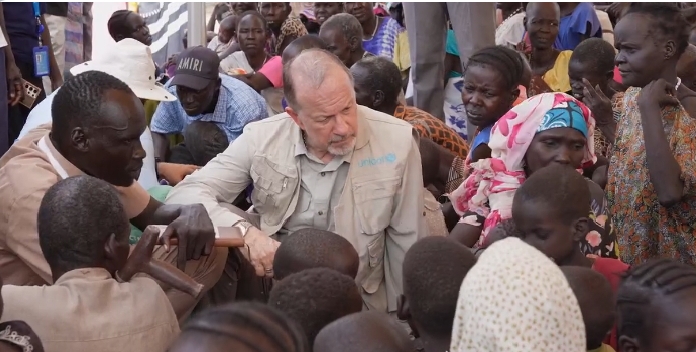
Speaking after visiting conflict-affected communities in Jonglei State, Chaiban said UNICEF and its partners remain focused on delivering essential services, including nutrition support, vaccinations, and treatment for diseases such as malaria and respiratory infections.
However, he cautioned that the scale of the crisis continues to outpace available resources.
“Wherever we have access, we can respond,” Chaiban said, stressing that reaching vulnerable populations remains critical to saving lives.
That access, he noted, is becoming increasingly fragile.
With the rainy season approaching, large parts of Jonglei State risk being cut off as poor road conditions and insecurity worsen. Humanitarian agencies may be forced to rely on air transport, an option that is significantly more expensive and limits the volume of aid that can be delivered.
“We need to reach people now, before the rains,” he warned.
Beyond the immediate response, Chaiban underscored the urgent need for lasting peace, saying humanitarian assistance alone cannot resolve the crisis.
“Resolving differences through political dialogue, not fighting, is what peace means,” he said, adding that children are among the most affected by continued instability. “They need stability. They need to feel safe.”
He also called for the protection of civilian infrastructure, including schools, health facilities, and water systems, describing them as essential lifelines for communities already under strain.
At the same time, the sustainability of basic services remains under pressure. Many frontline workers, including health personnel, have gone months without salaries, raising concerns about the continuity of critical services.
“When a health worker hasn’t been paid for nine months, how can we expect them to continue?” Chaiban asked.
Despite the challenges, he pointed to signs of resilience within affected communities. In one location, children welcomed visiting officials with handwritten messages calling for education, clean water, and support for their teachers, an indication of the continued demand for basic services and a return to normalcy.
For many children, education remains more than a fundamental right; it is a source of stability in uncertain times.
Amid increasing global crises and shrinking humanitarian funding, Chaiban reiterated UNICEF’s long-term commitment to the country.
“We will never walk away,” he said. “We are here for the children.”
In some areas, where many displaced families have sought refuge, the human impact of the crisis remains stark. Under the shade of trees, families continue to arrive with little or nothing, relying on limited resources to survive.
Among them is a mother still searching for her missing child, separated during the chaos of displacement.
As the humanitarian situation deepens, her story reflects the broader reality facing thousands across South Sudan, where survival is measured not only by access to food or shelter but by the enduring hope of being reunited with loved ones.