


By Ginaba Lino
The renewed violence in parts of South Sudan has displaced hundreds of thousands of people and worsened an already fragile humanitarian situation, with children facing the greatest risks, a senior UNICEF official has said.
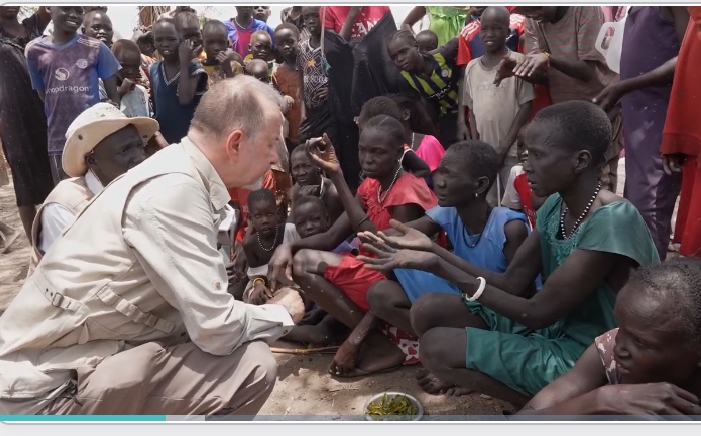
Ted Chaiban, UNICEF’s Deputy Executive Director, made the remarks after concluding a five-day visit to the country, including conflict-affected areas in Jonglei State, where he witnessed firsthand the impact of the fighting on communities.
“The renewed fighting has upended thousands of lives and left already vulnerable children in a precarious situation,” Chaiban said.
In Jonglei and surrounding areas, more than 286,000 people have been displaced since the beginning of the year. In Shreel, a village in northern Jonglei, the population has surged from about 6,000 to more than 30,000 in just two months, with thousands more settling along the Sobat River.
Chaiban described meeting families who had arrived with little more than the clothes they were wearing, struggling to access food, clean water, and basic healthcare. Health workers on the ground continue to call for increased support, particularly for nutrition services, vaccinations, and safe water.
The situation has further deepened existing vulnerabilities among children, many of whom were already at risk before the latest escalation. UNICEF has recorded hundreds of cases of unaccompanied and separated children, with efforts underway to trace and reunite them with their families while also providing psychosocial support.
There are also growing concerns over child protection, including reports of abductions during the violence, underscoring the heightened risks faced by women and children.
During his visit to Udol County, Chaiban observed the destruction of a primary healthcare centre that had been looted and stripped of essential equipment, including vaccine storage systems and solar panels. Similar incidents have been reported across the state, affecting both health and water facilities that communities depend on for survival.
Despite these conditions, UNICEF and its partners have continued to scale up their response, delivering more than 200 metric tonnes of supplies, including essential nutrition, health, and hygiene items, while expanding services in affected areas.
However, Chaiban emphasized that humanitarian assistance alone cannot address the crisis. He called on all parties to end the violence, protect civilians and critical infrastructure, and allow safe and unhindered access for aid workers.
He also urged increased investment in essential social services, particularly support for frontline health and education workers, noting that such efforts are vital to sustaining progress.
“No progress can be made without peace,” he said.
Chaiban reaffirmed UNICEF’s long-standing commitment to South Sudan, highlighting both the resilience of its people and the country’s potential. He stressed that sustained peace, investment in education, and strengthened social services remain key to securing a better future for the nation’s children.