

 and Plan International are championing girls’ leadership through the Girls Takeover initiative, giving adolescent girls opportunities to step into leadership roles ahead of the International Day of the Girl, which is celebrated annually on October 11.)
By: Ginaba Lino
As South Sudan joins the global community in commemorating the International Day of the Girl, the United Nations Population Fund (UNFPA) and Plan International are championing girls’ leadership through the Girls Takeover initiative, giving adolescent girls opportunities to step into leadership roles ahead of the International Day of the Girl, which is celebrated annually on October 11.
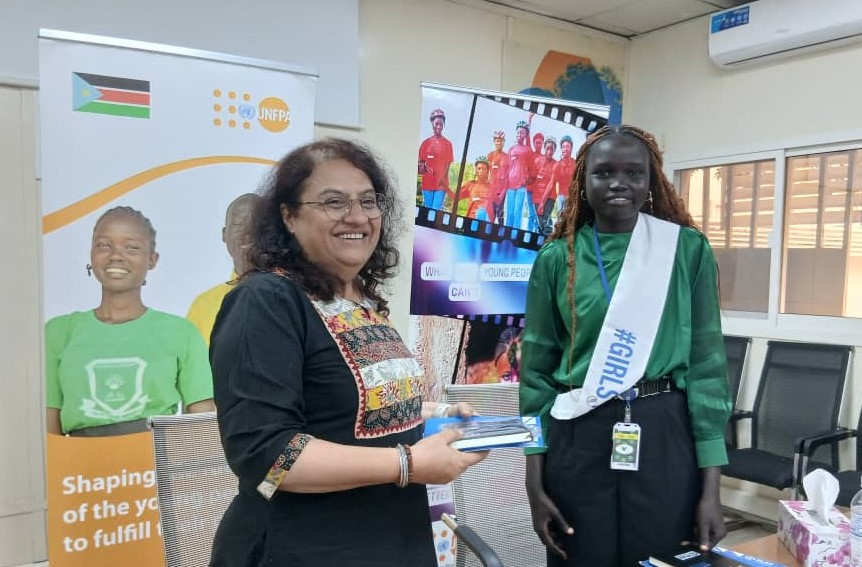
As part of the initiative, Mary Abuk took over the leadership as the head of the Sexual and Reproductive Health and Rights (SRHR) Unit at UNFPA South Sudan on Wednesday, October 7, gaining experience in institutional leadership and engaging with stakeholders advancing girls’ health and rights.
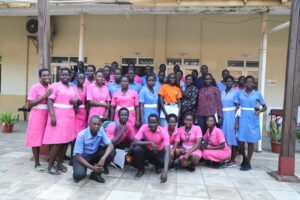
Following her takeover, Abuk visited Juba College of Nursing and Midwifery, where she met management, staff and students to discuss the role of nurses and midwives in providing adolescent-friendly SRHR services.
Deputy Principal Siama Abudalla Ladu welcomed the initiative, stating that UNFPA has been the main partner in maintaining our school up to today, from the inception up to today.
Siama emphasized that the Girls Takeover initiative provides an opportunity to highlight challenges facing adolescent girls. Ladu cited that nurses and midwives have a critical role in delivering youth-friendly services and preparing health workers to respond to girls’ needs.
She also called for stronger mentorship, encouraging greater interaction between students and medical practitioners. Such exposure would help trainees understand realities they will face in communities.
Mary Abuk said she was honored to take over the SRHR leadership role, calling the experience an opportunity to highlight girls’ rights and potential.
“I’m so happy that I am now the principal here, and I really appreciate you because the Girls Takeover is usually to empower the girl child,” Abuk said.
She said many girls continue to face social and economic barriers, including families that prioritize boys’ education.
Abuk also highlighted challenges linked to early marriage and pregnancy, saying young girls may face serious complications when their bodies are not ready for childbirth and healthcare access is limited. She noted that complications such as obstetric fistula can have devastating consequences.
Abuk praised female health professionals and students for choosing careers that serve communities and encouraged them to remain committed to their passion despite discouragement.
The engagement highlighted the importance of investing in girls’ leadership, education, and health while strengthening their participation in decisions affecting their lives and communities across South Sudan, for a more inclusive and healthier future for girls.