

By: Ginaba Lino
The Sudan and South Sudan Catholic Bishops’ Conference (SSSBC), through its National Safeguarding Office, has launched a two-day training aimed at strengthening safeguarding and child protection across Catholic dioceses in Sudan and South Sudan.
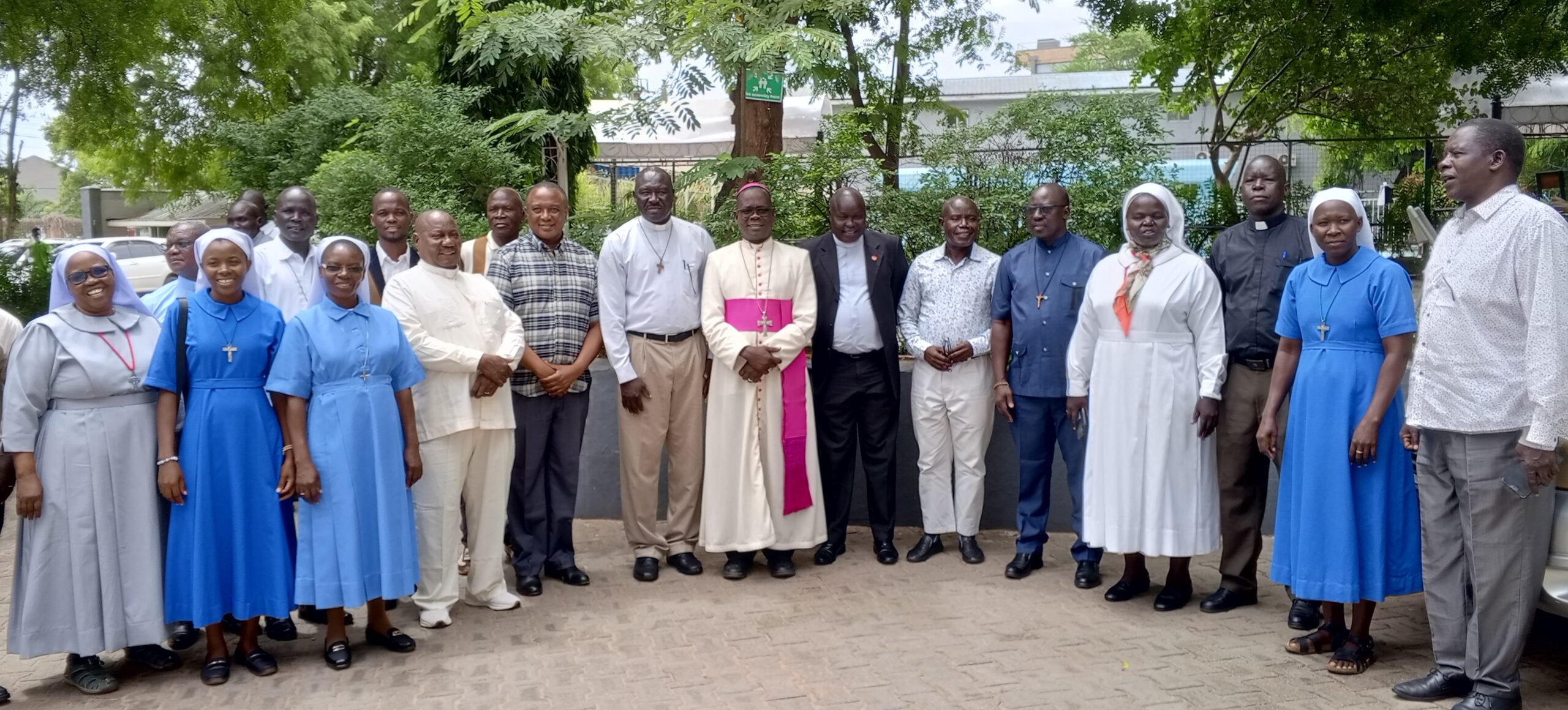
The training, held under the theme “Speak up for those who cannot speak for themselves,” brought together more than 30 Catholic personnel, including Vicar Generals, Religious Superiors and Chancellors from dioceses across the two countries.
The participants are to be equipped with knowledge on safeguarding responsibilities, legal and policy frameworks, and ways of identifying behavioral, physical and emotional signs associated with abuse, neglect and child sexual abuse.
The training also seeks to strengthen the capacity of Church leadership to create safe environments for children, vulnerable adults and other people receiving pastoral and institutional services.
Speaking during the opening, Bishop of the Catholic Diocese of Yei, Alex Lodiong Sakor, said the training was organized to ensure Church leaders responsible for pastoral and administrative affairs understand their safeguarding responsibilities.
“Child protection and the vulnerable adults is one of our pastoral duties to make sure that we protect every person, particularly children and the vulnerable, because they have nobody to protect them and they can be prey to any abuse.”
Bishop Sakor emphasized that safeguarding should not be viewed as an issue affecting the Catholic Church alone, noting that abuse of children and vulnerable people is a wider global concern affecting different institutions and faith communities.
He said the Church must ensure that its institutions remain safe spaces where everyone is protected and treated with dignity.
Safeguarding should also be incorporated into seminary formation so that future priests understand their responsibility to protect children and vulnerable adults, “He stated.
The bishop urged Church leaders to use their positions as opportunities for service rather than avenues for exploiting people under their authority.
“We would like to encourage all our people, wherever they are, particularly those in positions of leadership, to always put as a number one priority in whatever they do, the safety of people.”
Bishop Sakor added that the conference is working with regional Church structures to harmonize safeguarding policies and practices across the region.
Meanwhile, the Secretary General of the Sudan and South Sudan Catholic Bishops’ Conference, Fr. Martin Ochaya Lino, said safeguarding is rooted in the Gospel and the Church’s responsibility to uphold the dignity of every human being.
“Safeguarding is not only an administrative requirement, a policy framework, or a procedural obligation. In the context of the Catholic Church, safeguarding is deeply rooted in the Gospel and in our understanding of the dignity of every human person, created in the image and likeness of God.”
Fr. Ochaya highlighted that conflict, displacement, poverty, food insecurity, trauma and limited access to essential services have increased vulnerabilities across Sudan and South Sudan, making safeguarding more urgent.
He said Church facilities, including places of worship, schools, health facilities, humanitarian programmes and other institutions, must remain safe spaces where people can seek assistance without fear.
The Secretary General also highlighted emerging risks linked to digital technology, social media and artificial intelligence, particularly concerning children and vulnerable people.
He challenged Church leaders to consider how privacy can be protected and how online exploitation, abuse and misuse of emerging technologies can be prevented.
Fr. Ochaya emphasized that safeguarding cannot be left to a few individuals, but must become a shared responsibility involving bishops, clergy, religious, lay leaders, staff and volunteers.
“A culture of safeguarding is built when every person understands that protection, accountability, prevention, and care are integral to our mission.”
He encouraged participants to openly share experiences, learn from one another and strengthen safeguarding systems across all structures of the Church.
The two-day training is expected to strengthen the capacity of Church leaders to prevent abuse, respond appropriately to safeguarding concerns, and promote safer environments for children and vulnerable adults.