
 has opened a 10-day capacity-building training to strengthen leadership, institutional management, accountability, and resource mobilization within Church institutions.)
By Otto Abut | CRN
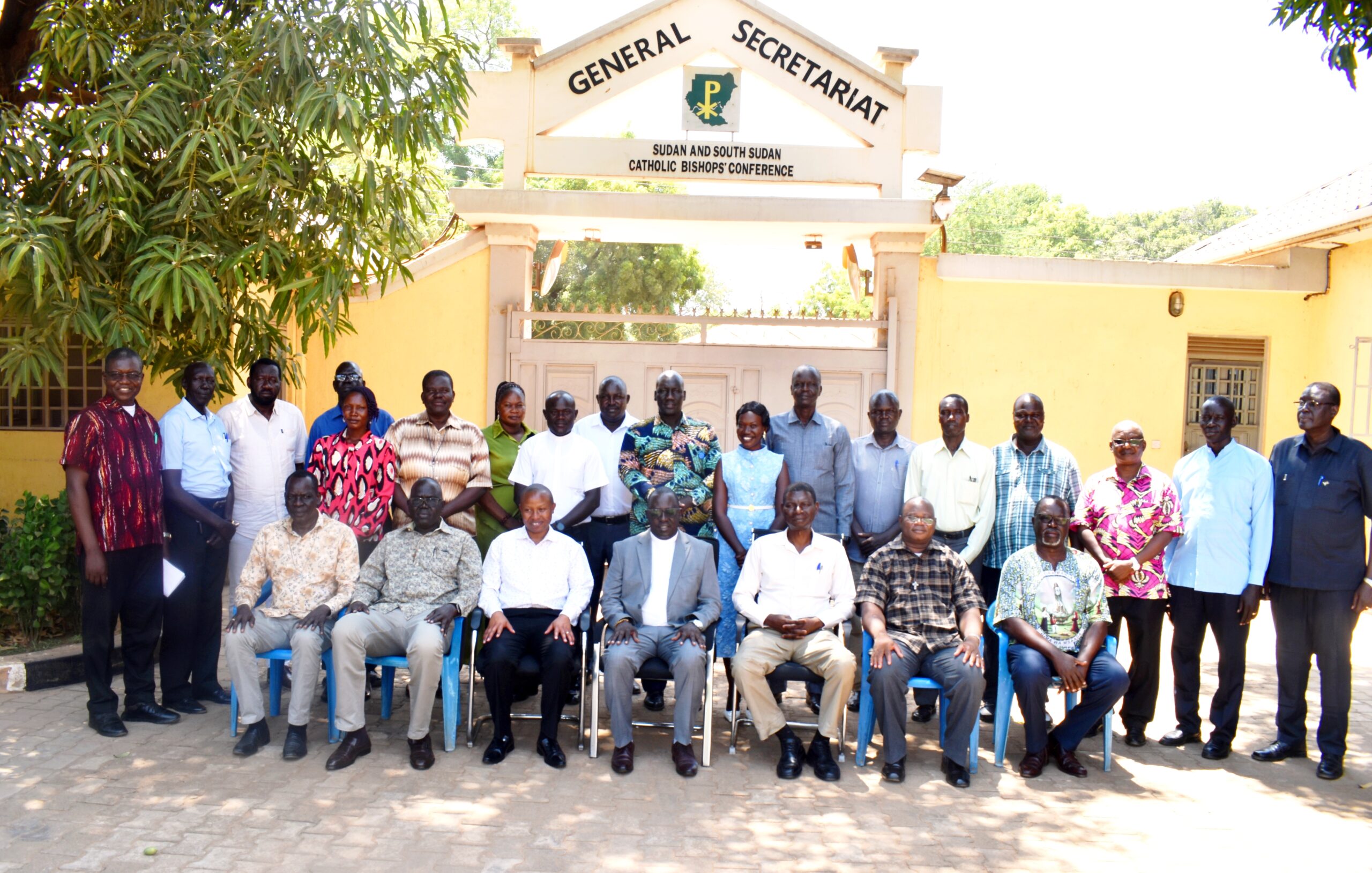
The Sudan and South Sudan Catholic Bishops’ Conference (SSCBC) has opened a 10-day capacity-building training to strengthen leadership, institutional management, accountability, and resource mobilization within Church institutions.
The training, which runs from Tuesday, September 1 to Friday, September 11, 2026, brings together staff of the SSSCBC and representatives from the Catholic University of South Sudan, St. Paul’s Major Seminary, the Archdiocese of Juba, St. Mary’s College, BGRRS and other partner institutions.
Opening the training, SSSCBC Secretary General Rev. Fr. Dr. Martine Ochaya said the gathering reflects a shared commitment to strengthening the institutions through which the Catholic Church carries out its pastoral and social mission in Sudan and South Sudan.
Fr. Ochaya expressed appreciation to CORAT Africa for its continued support and accompaniment, noting that the partnership between the organization and the Conference has lasted for more than two decades.
He said the training comes at a critical time following the recent launch of the Conference’s Strategic Plan, which provides a roadmap for strengthening Church institutions and improving services to the Church and communities.
According to the Secretary General, capacity and institutional strengthening is one of the key priorities of the Strategic Plan.
“We may have good structures, good plans, and good programmes, but their success ultimately depends on the people who are responsible for implementing them.”
Fr. Ochaya emphasized that effective leadership is essential for sound decision-making, teamwork, accountability and institutional growth. He also highlighted resource mobilization and fundraising as important to sustaining Church programmes and projects.
He urged participants to acquire practical skills that would enable their institutions to build stronger partnerships, mobilize resources and responsibly manage the resources entrusted to them.
The training also provides an opportunity for participants from different Church institutions to share experiences and learn from one another.
Fr. Ochaya encouraged participants to openly discuss institutional challenges, share successful approaches and identify areas that require improvement.
He challenged participants to ensure that the knowledge gained during the training translates into tangible changes in their workplaces.
“A training is successful not simply when participants attend all the sessions or receive certificates. A training is successful when it changes the way we work.”
He urged participants to return to their respective institutions and reflect on what they could do differently, which systems could be strengthened, and how they could become more strategic in leadership and resource mobilization.
The Secretary General also called on the CORAT Africa facilitators to make the training practical and responsive to the realities faced by Church institutions in Sudan and South Sudan.