


By Otto Abut | CRN
The Sudan and South Sudan Catholic Bishops’ Conference has launched its 2026–2028 Strategic Plan, a three-year roadmap aimed at strengthening the Church’s institutional capacity, expanding pastoral and humanitarian services, promoting peace and reconciliation, and enhancing its engagement in governance and policy.
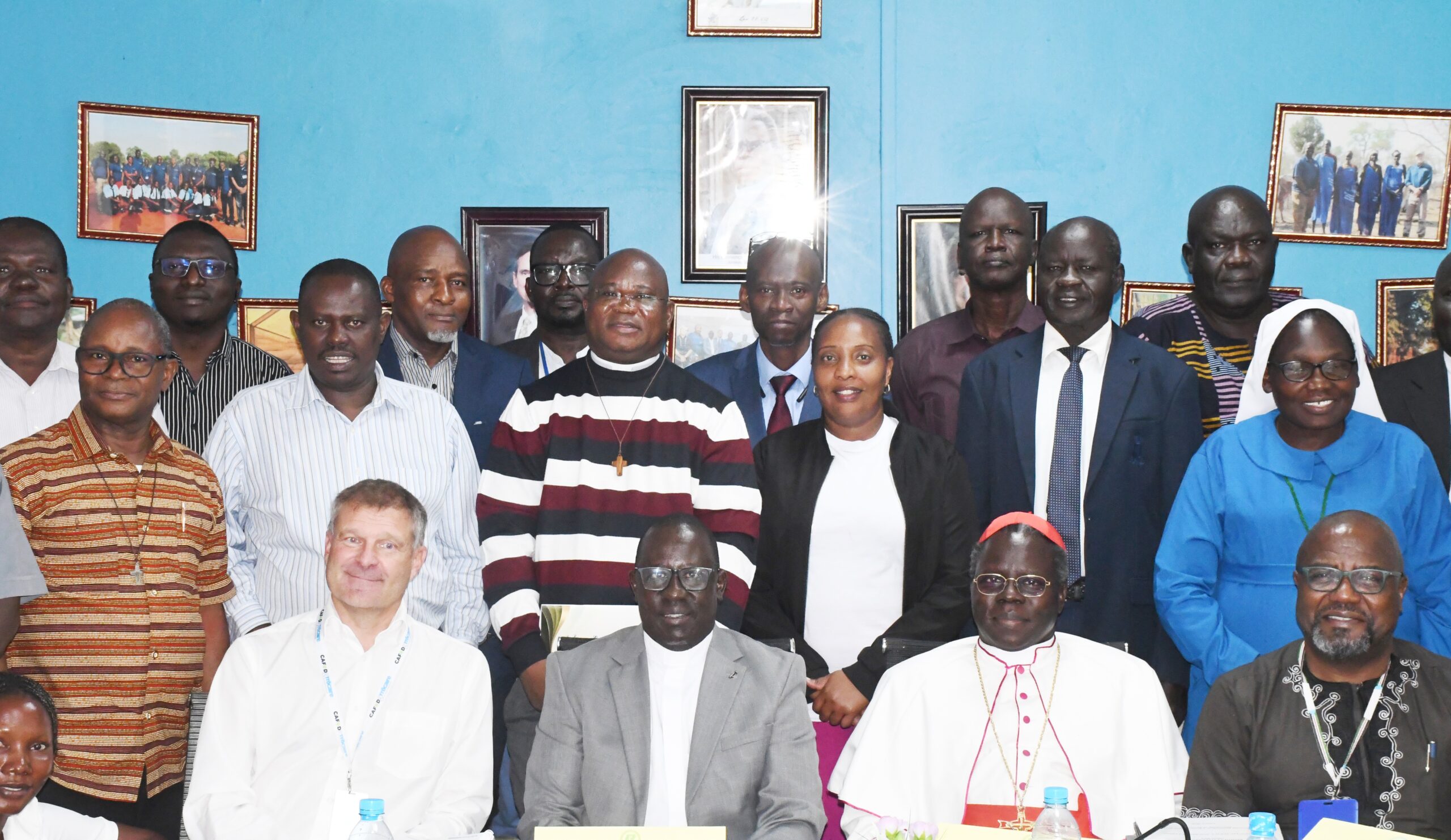
The strategic plan was launched on Thursday, August 20, 2026, during a ceremony attended by Church leaders, government representatives, development partners, financial institutions and other stakeholders.
Speaking at the launch, Rev. Fr. Dr. Martin Ochaya Lino, Secretary General of the Conference, said the strategy was developed in response to the complex and rapidly changing realities facing communities in Sudan and South Sudan, including conflict, displacement, poverty, political instability and climate-related challenges.
“Today we gather here not merely to launch another document. We gather to consecrate a renewed commitment to our sacred calling,” Fr. Ochaya said.
He said the strategic plan was developed to consolidate the positive impact of coordinated pastoral work, including the Church’s contribution to peacebuilding and humanitarian interventions.
It is also intended to strengthen the Church’s capacity to provide coordinated, evidence-based and context-sensitive responses to the challenges facing the two countries.
Fr. Ochaya said the strategy reinforces the Church’s commitment to synodality, participation, communion and accountability, while seeking to embed Catholic Social Teaching more firmly in its work.
He said particular emphasis would be placed on human dignity, justice, peace, solidarity, care for creation and the common good.
The President of the Sudan and South Sudan Catholic Bishops’ Conference, H.E. Stephen Cardinal Ameyu Mulla, described the Strategic Plan as more than an administrative document, saying it represents a shared vision and commitment by the Church to respond to the realities facing the people of Sudan and South Sudan.
“It is not simply an administrative document. It is a shared vision and a common commitment to respond faithfully and effectively to the reality facing our people and our Church,” Cardinal Ameyu said.
He expressed gratitude to God and to the Conference’s partners for their continued solidarity and support, which he said has enabled the Catholic Church to accompany communities affected by war, displacement, poverty and humanitarian crises.
According to Cardinal Ameyu, the strategy followed a process of reflection, consultation and prayer aimed at identifying and clarifying the Church’s priorities for the next three years.
He identified peace, reconciliation and healing as some of the most urgent priorities for Sudan and South Sudan, while also highlighting the forthcoming elections as an important challenge requiring responsible engagement.
“The Church cannot remain indifferent in this suffering. We are called to be the voice for the voiceless, an instrument for dialogue and service of reconciliation,” he said.
Cardinal Ameyu stressed that lasting peace cannot be achieved through violence or the victory of one group over another.
Instead, he said, sustainable peace requires justice, dialogue, forgiveness, respect for human dignity and a commitment to addressing the root causes of conflict.
He said the Catholic Church would continue engaging political and community leaders, collaborating with other Churches and religious communities, accompanying displaced populations and supporting reconciliation initiatives.
The new Strategic Plan, he added, will provide a stronger framework for coordinating these efforts across the two countries.
The strategy will also support the formation of priests, religious, catechists and lay faithful to enable them to contribute more effectively to peacebuilding, reconciliation and development.
Cardinal Ameyu further emphasized the importance of responsible management of resources entrusted to the Church, pledging greater transparency, accountability and responsible stewardship.
He called on those working within the Catholic Mission Conference and humanitarian sector to keep human dignity at the centre of their work.
“The ultimate objective” of humanitarian and peacebuilding interventions, he said, should be to create conditions that allow displaced families to safely return to their homes.
Cardinal Ameyu also appealed to the Conference’s partners to remain engaged throughout the implementation of the Strategic Plan.
He stressed that partnership should not be measured only in financial contributions, but should include accompaniment, mutual respect and shared responsibility.
“Partnership is not merely financial support. It is an accompaniment, mutual respect, shared responsibility and a common commitment to the Gospel.”
He concluded by calling on the Church, its partners and communities to renew their hope and commitment despite the significant challenges facing Sudan and South Sudan.
The 2026–2028 Strategic Plan will guide the Conference’s pastoral, humanitarian, peacebuilding and institutional activities over the next three years, providing a common framework for the Catholic Church’s engagement with communities, governments and development partners across Sudan and South Sudan.