

, in collaboration with the Sudan and South Sudan Catholic Bishops’ Conference (SSSCBC), has held a one-day Peace and Advocacy Consultative Engagement in Juba, bringing together Church leaders and key partners to strengthen peacebuilding, advocacy, reconciliation and social cohesion in South Sudan.)
By: Ginaba Lino
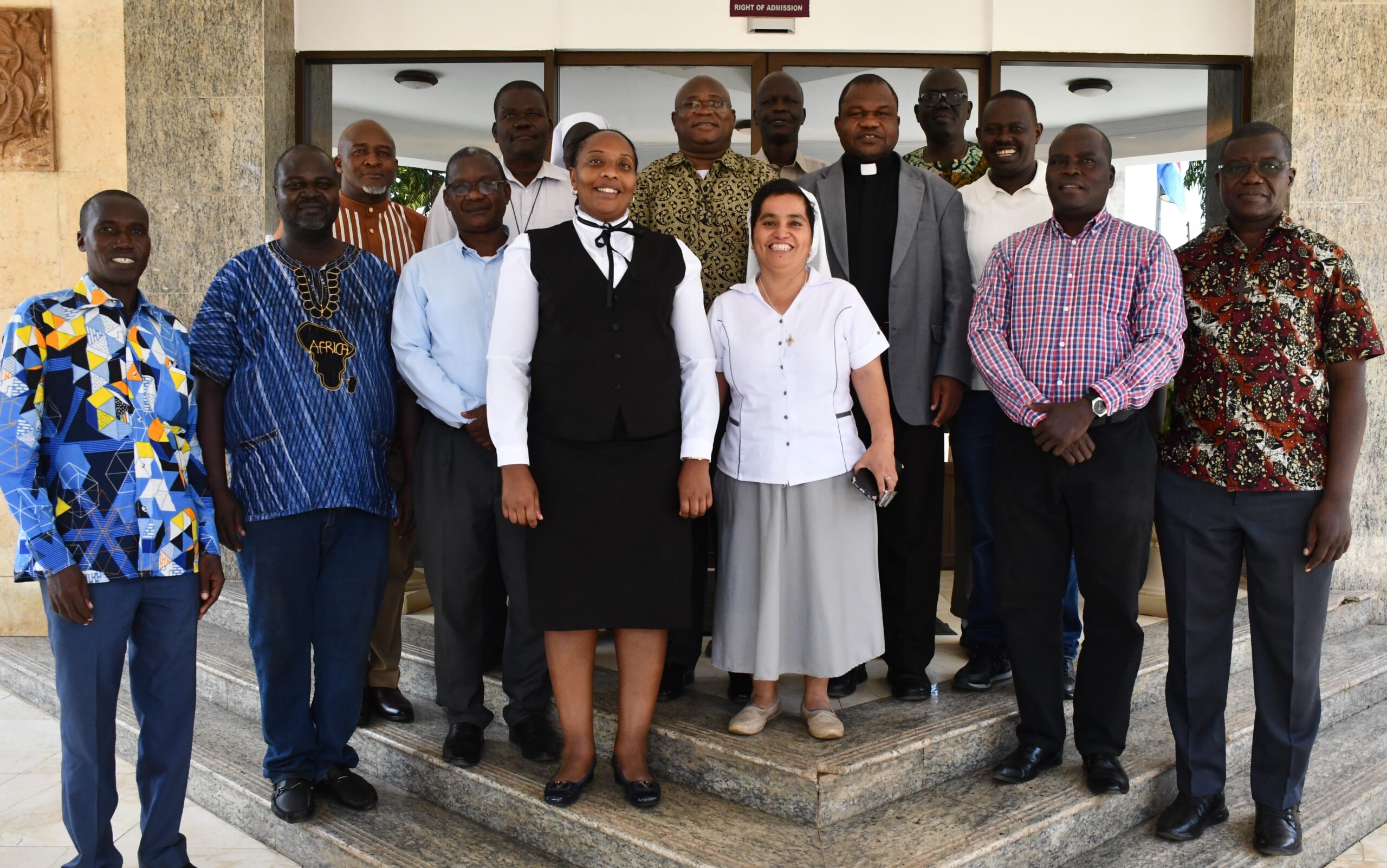
The Association of Member Episcopal Conferences in Eastern Africa (AMECEA), in collaboration with the Sudan and South Sudan Catholic Bishops’ Conference (SSSCBC), has held a one-day Peace and Advocacy Consultative Engagement in Juba, bringing together Church leaders and key partners to strengthen peacebuilding, advocacy, reconciliation and social cohesion in South Sudan.
The engagement brought together the Justice and Peace Coordinator of the Archdiocese of Juba, the National Justice and Peace Coordinator of SSSCBC, Caritas South Sudan and other stakeholders to reflect on the Church’s role in promoting lasting peace and justice.
Speaking during the opening of the consultation meeting, SSSCBC Secretary General Fr. Martin Ochaya Lino said peace remains one of the most urgent concerns facing the people of South Sudan and Sudan.
He said both countries have repeatedly experienced violence despite the signing of peace agreements, largely because some provisions have not been fully implemented.
“The quest for peace in these two countries remains the most important concern of the people because these countries have never known peace,” Fr. Lino said.
He said South Sudan’s planned December elections have generated different views, with some questioning the country’s preparedness while others argue that the prolonged transitional period must come to an end.
Fr. Lino said the Church cannot wait for political developments before engaging citizens, urging greater civic participation and preparedness.
“As Church, we cannot sit and wait for whether there is going to be an election or not. We have to engage with our people.”
He stressed the importance of civic engagement as the country prepares for its next political phase, saying the Church has a responsibility to accompany communities through dialogue, peacebuilding and advocacy.
The consultation also marked the participation of Fr. Dr. Peter Muidie Zingari, the incoming Chairperson of AMECEA’s Promotion of Integral Human Development Department.
Fr. Zingari said he joined the meeting as part of his transition into the new role, which he is expected to formally assume in September.
He said the engagement would help him understand ongoing programmes and build on work already initiated by AMECEA and its member conferences.
“It is not new work, it is work that has been there, and therefore I build on what had already been started,” Fr. Zingari said.
He pledged to work closely with bishops’ conferences and other Church partners to advance programmes aimed at addressing social and humanitarian challenges across the region.
Fr. Zingari identified peace as a major priority for South Sudan and Sudan, emphasizing that development and other national priorities cannot progress without stability.
“Peace is really a priority, because when there is peace, then other things, development and other things can go,” he said.
He also recognized the sacrifices made by Catholic bishops, priests and other Church leaders in the pursuit of peace, noting that some clergy have suffered and lost their lives because of conflict.
The AMECEA’s Promotion of Integral Human Development Department Chairperson urged participants to ensure that the consultation produces practical recommendations rather than remaining at the level of discussion.
“We will be able to discuss what is on the table, and really come up with a way forward which will be not only in theory, but practical things that we can do so that peace will be able to prevail in our country.”
The consultation aimed at strengthening collaboration among Church institutions and partners and identifying practical approaches to peacebuilding, reconciliation, justice, civic engagement and social cohesion as South Sudan prepares for its planned elections.