


By Otto Abut
The South Sudan Women Coalition has condemned what it described as the growing trend of removing women from leadership positions and replacing them with men, warning that the practice undermines the peace agreement and constitutional commitments on gender inclusion.
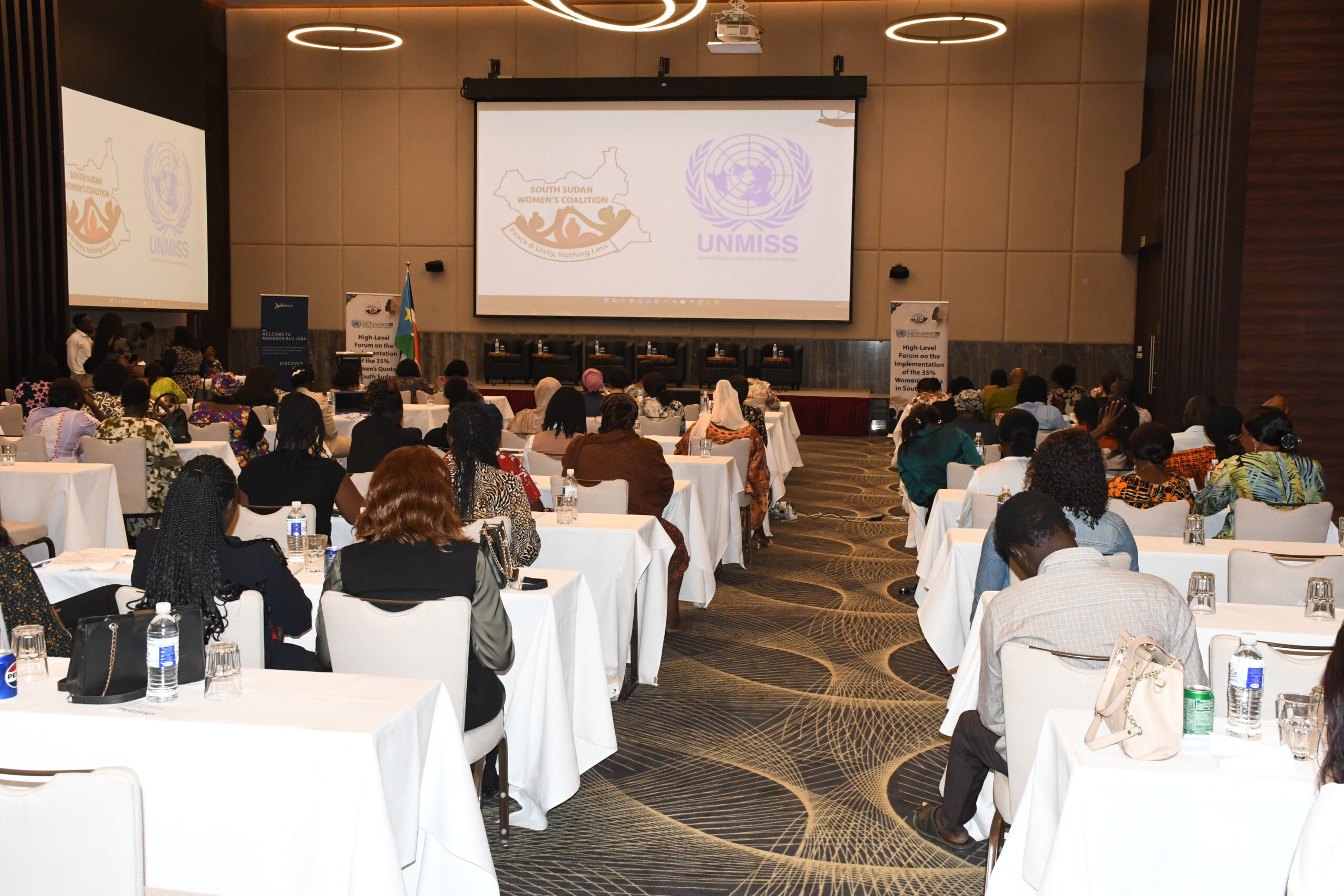
The concerns were raised on Tuesday, 12th May 2026, during a two-day high-level forum in Juba held under the theme: “Strengthening Women’s Participation in Governance and Peacebuilding.”
The forum brought together women signatories to the Revitalized Agreement on the Resolution of the Conflict in South Sudan (R-ARCSS), representatives of political parties, civil society organizations, faith-based institutions, academia, the business community, women’s networks, women in media, persons with disabilities, and peace actors.
At the conclusion of the meeting, participants renewed calls for urgent political commitment to fully implement the 35 percent affirmative action quota for women across all governance institutions.
The coalition said women’s representation in political leadership and decision-making remains far below the commitments outlined in the 2018 peace agreement despite women playing a major role in peacebuilding, mediation, humanitarian response, and community resilience.
The forum also cited what participants described as a clear example of exclusion in the recent broad-based national political dialogue, where only seven out of 70 delegates were women, representing just 10 percent participation.
According to the women leaders, the low representation violates Article 16 of the Transitional Constitution of 2011, as amended, which guarantees women’s participation in governance and public affairs.
The coalition stated that the removal of women from leadership positions and replacing them with men contradicts both the spirit and provisions of the peace agreement.
Participants stressed that women’s representation should not be treated as symbolic, temporary, or negotiable, but rather as a constitutional and political obligation necessary for sustainable peace and inclusive governance.
The forum further observed that the major challenge is not the absence of commitments, but weak political will, limited accountability mechanisms, inadequate enforcement measures, and persistent patriarchal norms that continue to hinder women’s meaningful participation in leadership and decision-making.
Delegates also emphasized that inclusion must go beyond numbers to ensure women actively influence policymaking, constitution-making, peace processes, and national decision-making.
The meeting concluded with participants outlining a unified roadmap aimed at advancing women’s participation in governance and peacebuilding while protecting gains achieved under the peace process.