


By: Ginaba Lino
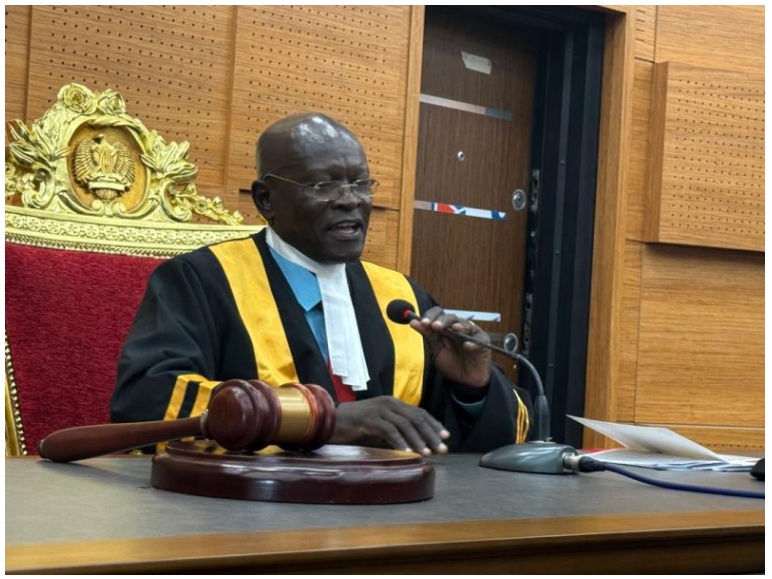
The Speaker of South Sudan’s Transitional National Legislative Assembly, Rt. Hon. Joseph Ngere Paciko, has publicly apologized to civil servants for years of unpaid salaries, despite Parliament approving budget allocations.
Speaking during International Labour Day celebrations at Juba National Stadium on May 1, Paciko acknowledged widespread frustration among workers and admitted that the failure to pay salaries has severely affected livelihoods across the country.
“We are aware that all of you are tired and frustrated because your salaries, which we pass in Parliament, have gone unpaid,” he said. “Hospitals demand cash before treatment, even in critical conditions, yet many of you have no money.”
The event, organized by the Ministry of Labour, marked the first official Labour Day celebration in South Sudan. It comes amid growing public concern over economic hardship, delayed wages, and rising inequality in the workforce.
Paciko said Parliament has consistently approved budgets that include salaries, allowances, and other benefits for public workers, but implementation remains a major challenge. He stressed that workers’ pay must become a national priority, particularly for essential sectors such as education, healthcare, and security.
“Teachers, nurses, and soldiers must be paid regularly and on time,” he said, adding that lawmakers will again prioritize salaries in the upcoming 2026–2027 national budget.
The Speaker also highlighted systemic issues within the labour sector, including the failure to implement pension schemes and enforce existing labour laws. He noted that many retired civil servants remain in office due to the absence of functional pension systems.
“Pensions exist only on paper, while senior citizens beyond retirement age continue working because there is no support system,” he said.
Paciko further raised concerns about wage disparities between South Sudanese nationals and foreign workers employed by international organizations, NGOs, and private companies. He described these concerns as legitimate and pledged parliamentary oversight.
“Equal pay for equal work must be respected,” he said, referencing provisions in the Labour Act passed in 2017, which guarantees fair wages, safe working conditions, and protections against exploitation.
He also criticized the failure to remit mandatory trade union contributions, as required under the South Sudan Workers Trade Union Act of 2014, calling it a violation of workers’ rights.
Looking ahead, the Speaker announced that Parliament’s Labour Committee will hold public hearings during the upcoming budget review process to allow workers’ representatives to present their concerns directly.
“We will summon employers and government officials who fail to uphold labour laws,” he said. “The law must protect workers in their workplaces.”
Paciko also acknowledged the plight of war veterans, many of whom remain unemployed and without pensions. He revealed plans to introduce a Veterans Welfare Fund to address their needs.
“You fought for independence, yet many of you struggle to support your families. This must change,” he said.
Despite the challenges, the Speaker urged workers to remain hopeful, reaffirming Parliament’s commitment to improving labour conditions and ensuring that laws translate into tangible benefits.
“Our duty is to turn your sweat into laws and those laws into your bread,” Paciko said.
South Sudan continues to face economic difficulties, with delays in salary payments becoming a persistent issue affecting thousands of civil servants nationwide.