


By Ginaba Lino
South Sudan has taken a step towards strengthening wildlife conservation after government institutions responsible for wildlife, land administration and environmental protection agreed to work together on a coordinated approach to demarcating and managing protected areas across the country.
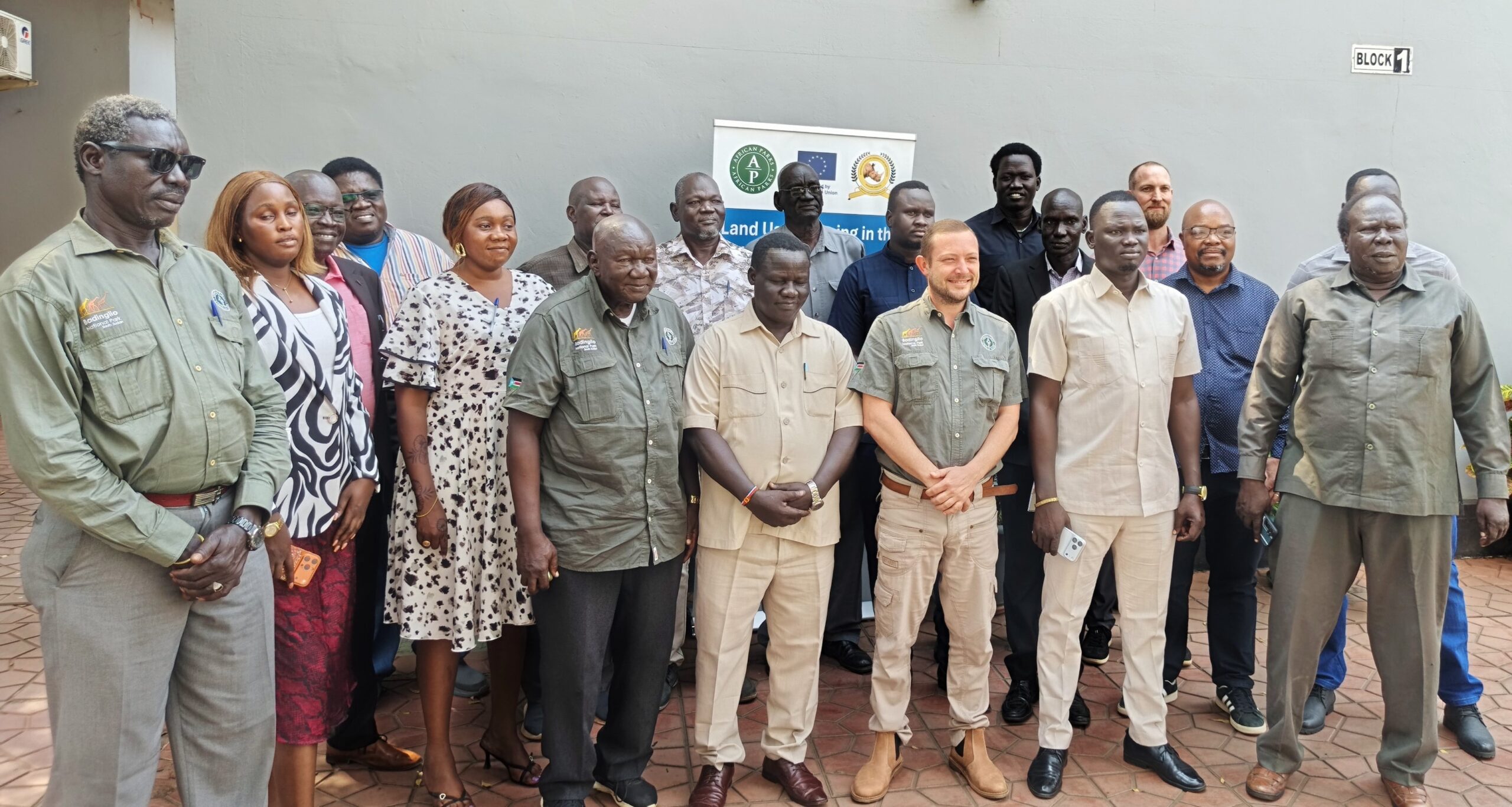
The commitment followed a two-day technical workshop on land-use planning and the demarcation of national parks, facilitated by African Parks in collaboration with the Ministry of Wildlife Conservation and Tourism and other government institutions.
The workshop brought together representatives from the Ministries of Wildlife Conservation and Tourism, Land, Housing and Urban Development, Environment and Forestry, as well as other relevant institutions, to develop a common understanding of land-use planning and the protection of wildlife habitats.
Lieutenant General Martin Ring Malek, Assistant Director General for Administration and Finance at the Ministry of Wildlife Conservation and Tourism and Deputy Chair of the Land Use Committee, said the initiative seeks to strengthen coordination among institutions while involving communities living within and around protected areas.
He said years of conflict had contributed to human settlements expanding into protected areas, creating challenges for wildlife conservation and land management.
“During the war, most of the settlements encroached into the protected areas. Now, we want to involve those people so that we see the ways and means of how to address this,” Ringmalik said.
Ring emphasized that the proposed process would not involve forced evictions, but consultations and negotiations with affected communities to explore mutually acceptable solutions, including possible relocation where necessary.
A key achievement of the workshop was bringing together institutions that previously worked separately on issues relating to land administration, environmental protection and wildlife conservation.
The Coordinator of the Land Reform Unit at the Ministry of Land, Housing and Urban Development David Geng Keck said, the collaboration is very important because effective land-use planning requires balancing human settlements, commercial activities and conservation priorities.
He noted that wildlife resources contribute to South Sudan’s economic potential, particularly through tourism, making the protection and proper management of national parks important for the country’s development.
On the other hand, the Director of Research and Planning at the Ministry of Environment and Forestry Joseph Kulang described the initiative as an important contribution to protecting the country’s biodiversity and environmentally significant areas.
He said national parks are important conservation areas because they support diverse biological species, including plants, animals, insects, and other living organisms.
“These parks are our hotspot areas, which need to be conserved,” Akech said, adding that the initiative could also inform the protection of important forests and landscapes beyond national parks.
Kulang further stressed that demarcation should not be viewed simply as a process of removing people from their settlements, but as an opportunity to secure the future of communities while safeguarding natural resources for coming generations.
Beyond institutional coordination, the workshop highlighted the importance of involving communities in decisions concerning land ownership, protected-area boundaries and possible relocation.
Ring Malek said authorities intend to use available land records, maps and historical evidence to establish the status of settlements within protected areas before making decisions.
He explained that communities would be given an opportunity to present evidence of historical ownership or occupation, including claims that their families had lived in particular areas before the establishment or official gazettement of national parks.
Where genuine grievances are identified, authorities would consider possible compromises, including reviewing boundaries where appropriate or negotiating relocation in cases where conservation priorities require it.
He said South Sudan has six national parks, but authorities have not yet established the total number of people living within areas affected by encroachment.
The actual population and extent of settlements will be determined through field assessments and consultations with affected communities.
Ring said the next steps would include finalizing the relevant guidelines and obtaining approval from the appropriate authorities before beginning community sensitization and consultations.
The process will involve the Ministry of Land, Housing and Urban Development, the Ministry of Environment and Forestry, the Land Commission and wildlife authorities, with each institution contributing its technical expertise and relevant documentation.
The workshop also provided an opportunity for government institutions to recognize the importance of working collectively to address challenges affecting the country’s protected areas.
According to the officials, coordinated land-use planning will help clarify land ownership, establish boundaries and create a framework for balancing conservation priorities with the rights and interests of communities.
For South Sudan, where years of conflict have disrupted land administration and conservation activities, the renewed institutional collaboration represents an important step towards strengthening environmental governance.
While the actual demarcation and community consultations are yet to be completed, the agreement to work together provides a foundation for a more coordinated and inclusive approach to protecting the country’s wildlife and natural heritage.
The initiative is expected to contribute to safeguarding biodiversity, supporting the country’s tourism potential and ensuring that conservation efforts take into account the interests of communities who depend on the surrounding natural resources.