


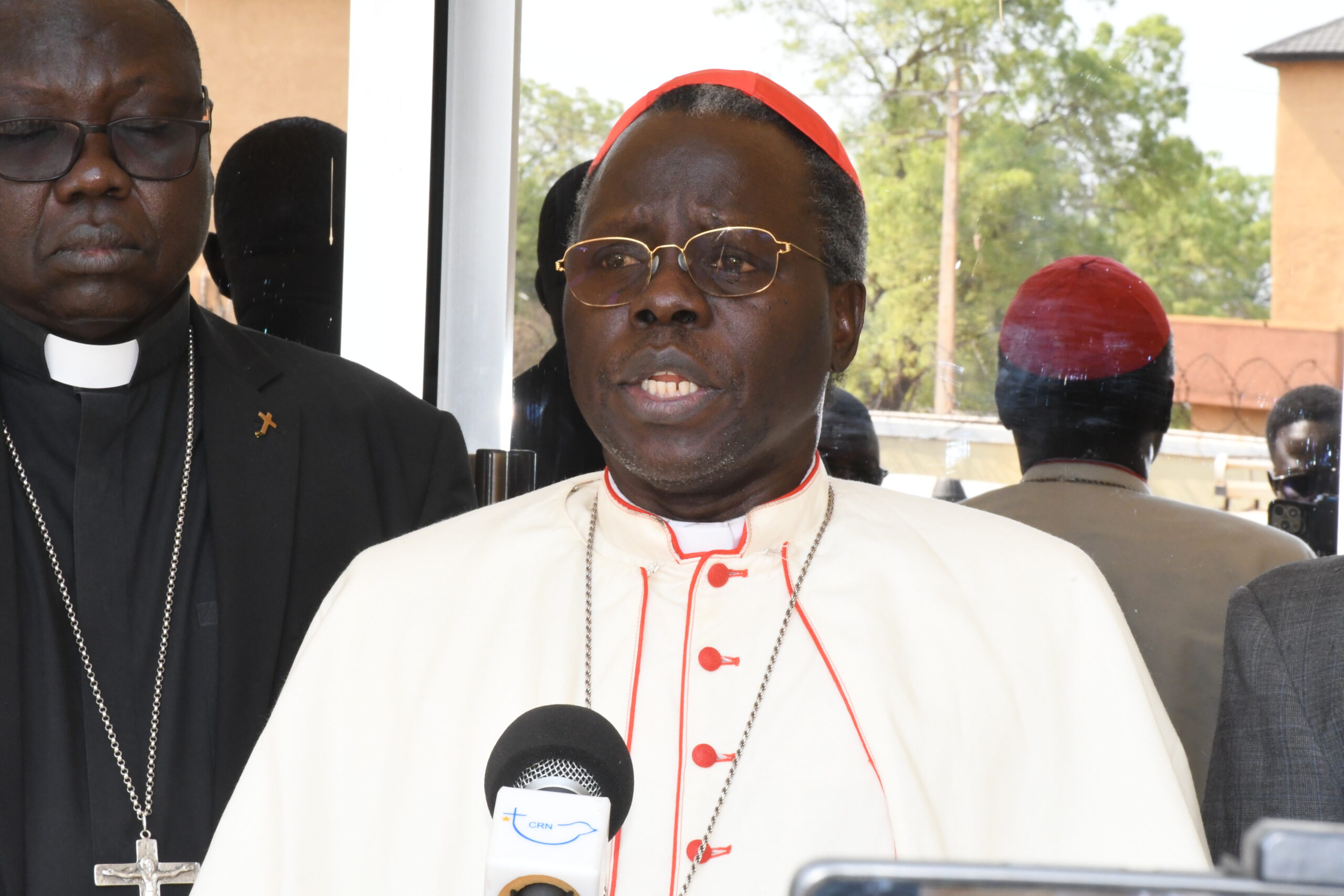
The President of the Sudan and South Sudan Catholic Bishops’ Conference, His Eminence Stephen Cardinal Ameyu Mulla, has called on the international community not to abandon Sudan and South Sudan in their pursuit of peace, democracy, human dignity and sustainable development.
Cardinal Ameyu, while reading a press statement on behalf of the bishops, urged political leaders and other stakeholders to take collective responsibility for building peaceful and stable societies in the two countries.
The bishops called on political leaders to exercise authority responsibly and accountably, public institutions to uphold the rule of law, and traditional and community leaders to promote reconciliation.
“We call upon political leaders to exercise authority responsibly and accountably, public institutions to uphold the law, traditional and community leaders to promote reconciliation, citizens to reject violence and misinformation, and international partners to demonstrate sustained solidarity,” the statement reads.
They also urged citizens to reject violence and misinformation while calling on international partners to demonstrate sustained solidarity with the people of Sudan and South Sudan.
The bishops reaffirmed their commitment to working with all people of goodwill, regardless of religious, ethnic or political affiliation, in promoting peace and reconciliation.
The bishops, on the other hand, acknowledged the prolonged suffering experienced by the people of Sudan and South Sudan but expressed hope for a peaceful and better future.
“Our people have suffered enough in the Sudan and South Sudan, but suffering must not have the final word. We believe that peace is possible, reconciliation is necessary, and a better future can still be built,” Cardinal Ameyu said.
The bishops further called on religious communities and people of goodwill to become agents of peace within their families, communities and nations.
They appealed to political leaders to prioritise dialogue over division, justice over revenge, public service over self-interest, and a people-centred constitutional order over arbitrary exercise of power.