


By: Ginaba Lino
For years, land grabbing, cattle-destroying farms, boundary disputes, and youth-related violence have strained relationships among communities in Juba County, leaving local leaders struggling to resolve conflicts that threaten peaceful coexistence.
But for Victor Lodu, Sub-Chief of Lodu East, a new community-led peace initiative is offering renewed hope that disputes can be addressed through dialogue rather than violence.
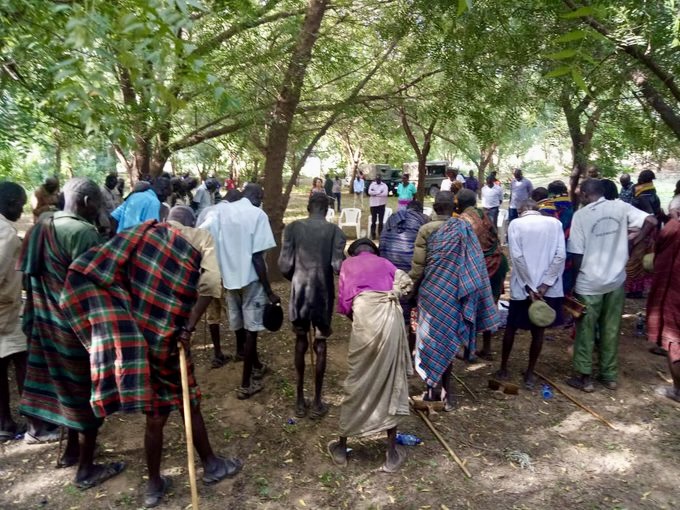
Lodu is among community representatives who recently participated in a five-day peacebuilding capacity-building programme organised by the Centre for Democracy and Development (CEDED), aimed at strengthening grassroots conflict prevention and resolution mechanisms.
Reflecting on the challenges facing his community, Ladu said local leaders have often struggled to manage disputes, particularly those involving armed individuals and young people.
He identified land grabbing, cattle destroying crops and boundary disagreements as some of the major sources of tension in his area.
However, he believes the newly established peace committees will provide communities with a stronger platform to address such challenges.
“Before, we had issues resolving conflicts involving young people because some of them take drugs and sometimes do not listen. But with this training and the establishment of peace committees, I am sure we are going to bring peace to our community,” Ladu said.
His renewed confidence reflects the ambition of the initiative, which seeks to equip community members with practical skills to identify tensions, mediate disputes and prevent conflicts from escalating into violence.
The project, funded by Caritas Switzerland and co-funded by the European Union, is being implemented by CEDED in Juba, Yei and Terekeka counties.
According to Nyoka Mary, Programme Assistant at CEDED, the two-year initiative began with stakeholder mapping and community inception meetings before the five-day training commenced on October 26 across the three counties.
In Juba County, the project covers Lodu and Rajaf Payams, targeting five bomas. Each boma will have a 15-member peace committee, bringing together different groups within the community.
Mary said the committees are expected to serve as peace ambassadors and community monitors, organising dialogue, analysing conflicts and providing early warning information to help prevent violence.
Participants were introduced to conflict mapping and analysis, mediation and dialogue skills, which they are expected to apply when handling disputes in their respective communities.
For young people, the initiative is also creating an opportunity to become part of the solution rather than being viewed only as a source of insecurity.
Jackson Soka, a youth representative from Nyawa Boma in Lodu Payam, said the programme had changed his understanding of the role young people can play in promoting peace.
He acknowledged that some youths engage in activities that damage the reputation of young people but said he intends to mobilize his peers and encourage them to abandon violence.
“This training has opened my mind and given me skills and knowledge to address issues in our community. When I go back home, I will bring young people together and teach them how we can stop conflicts in our community,” Soka said.
He also suggested promoting agricultural activities to bring young people together and encourage them to focus on productive livelihoods.
The initiative is also seeking to strengthen women’s participation in community decision-making, recognizing their contribution to identifying and resolving local disputes.
Susan Peter, Deputy Director of Ladu Payam, said women often understand the security challenges within their communities but are not always given equal opportunities to participate in resolving them.
She said the training had strengthened her understanding of peaceful conflict management, including how to engage aggressive individuals without worsening tensions.
Peter called on community leaders to give women greater opportunities to participate in peacebuilding and decision-making.
Meanwhile, Ever Marcello Jada, an information officer in the Rajaf Payam Peace Committee, said she will return to her community with a commitment to translate the knowledge gained into practical action.
Although she said she does not read or write, Jada described the training as an opportunity that had increased her understanding of conflict and the responsibilities of community peace representatives.
She pledged to work with chiefs and other committee members to implement their action plan and engage young people involved in drugs and other activities contributing to insecurity.
Alfredo Jada Jinario, an official from the State Ministry of Animal Resources and Fisheries working in Rajaf Payam, said lasting peace requires the participation of all sections of society, including women, young people and persons with disabilities.
He also called on the government and development partners to provide the committees with resources, security support and transportation to enable them to reach remote communities.
Programme Assistant at CEDED said, the organization would conduct regular monitoring visits to assess how the committees are applying their knowledge and support the implementation of their community action plans.
She acknowledged that poor road access and transportation challenges could affect the initiative’s reach, particularly in remote bomas.
As the committees prepare to return to their communities, the initiative’s success will depend on their ability to turn the lessons learned into action and build trust among people affected by recurring disputes.
For participants like Ladu and Soka, the hope is that communities will increasingly resolve disagreements through dialogue, protect livelihoods and give young people and women a meaningful role in building peace.
The initiative seeks to demonstrate that peacebuilding can begin at the grassroots, with ordinary community members taking responsibility for preventing violence and creating safer communities.