

, Dr. Lam Akol, has questioned the legality of Parliament’s recent amendment, arguing that the process failed to comply with procedures outlined in the Revitalized Agreement on the Resolution of the Conflict in South Sudan (R-ARCSS) and the Transitional Constitution.)
By Ginaba Lino
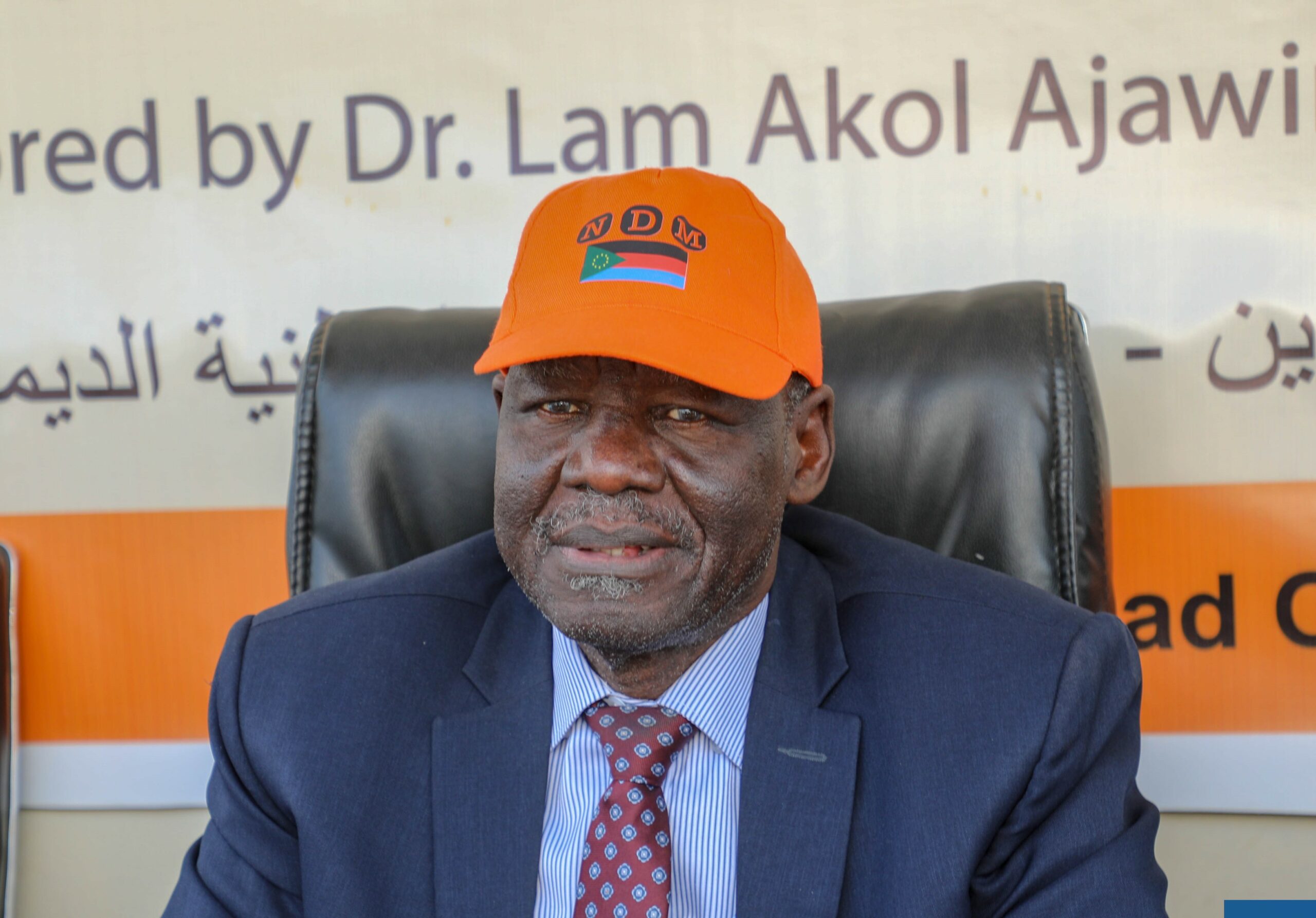
The leader of the National Democratic Movement (NDM), Dr. Lam Akol, has questioned the legality of Parliament’s recent amendment, arguing that the process failed to comply with procedures outlined in the Revitalized Agreement on the Resolution of the Conflict in South Sudan (R-ARCSS) and the Transitional Constitution.
Dr. Lam said Article 8.4 of the R-ARCSS sets out a specific procedure that must be followed before amendments to the peace agreement can become valid.
He said the signatories to the agreement must first reach consensus, after which the proposed amendment should be presented to the Council of Ministers for approval by a two-thirds majority.
According to Dr. Lam, the amendment must then be considered and approved by two-thirds of voting members of the Reconstituted Joint Monitoring and Evaluation Commission (RJMEC) before being finally ratified by Parliament.
“First of all, the signatories must have a consensus on that amendment. Second, that amendment is taken to the Council of Ministers. They must approve it by a majority of two-thirds. Third, it must go to RJMEC and be approved by two-thirds of the voting members,” he said.
Dr. Lam further cited Article 199 of the Transitional Constitution, which provides procedures for constitutional amendments, including requiring a proposed bill to be tabled at least one month before deliberation.
He also said the National Assembly and the Council of States are required to deliberate separately on such amendments.
Akol argued that these requirements were not followed, claiming there was no consensus among the political parties, RJMEC was bypassed, and the two Houses of Parliament did not sit separately.
He also questioned the decision to refer the bill to a parliamentary committee for a report within two weeks, arguing that this did not meet the constitutional requirement for a one-month period.
“So if you consider all this, the amendment is ultra vires,” Dr. Lam said.
Meanwhile, Dr. Lam has also raised concerns over the credibility and independence of the National Elections Commission, accusing it of lacking sufficient transparency and partisan independence.
He said the Constitution and the R-ARCSS require the National Elections Commission to comprise non-partisan members whose names should be submitted to Parliament for vetting.
The NDM Chair argued that this process was not properly followed and warned that the Commission’s activities appeared to be announced piecemeal rather than through a comprehensive electoral roadmap.
“The National Election Commission must publish a full roadmap of their activities from the moment they want to have voter education, voter registration, recruiting people to be election officers, up to the time of voting.”
He questioned whether voter registration centres had been established and called on the Commission to be transparent about its preparations ahead of the planned general elections.