

By Ginaba Lino
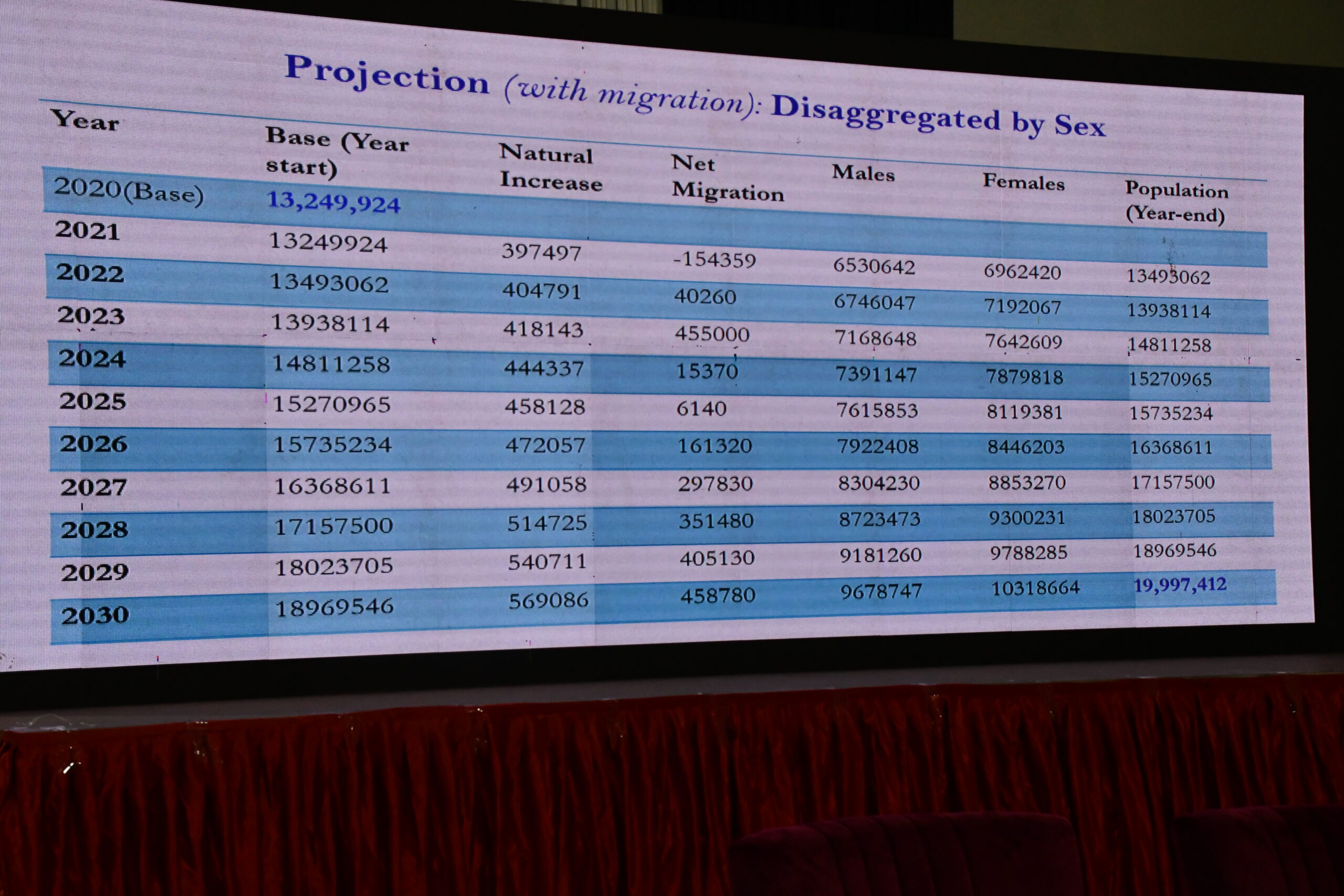
South Sudan’s population is projected to grow from 13.2 million people in 2021 to nearly 20 million by 2030, driven by high birth rates and increasing migration linked to regional conflicts, according to a presentation delivered during the World Population Day High-Level Dialogue in Juba.
The Government of South Sudan organized the dialogue with support from the United Nations Population Fund (UNFPA) to assess demographic trends and their implications for national development planning.
Presenting the findings, experts said South Sudan’s population is expected to reach approximately 19.99 million people by 2030, while the projected population for the end of 2026 stands at 16.36 million.
The report noted that migration has become a major factor in population growth following the outbreak of war in neighboring Sudan, which triggered a large influx of refugees and the return of South Sudanese citizens who had been living there.
According to the projections, migration could contribute about 2.2 million people to South Sudan’s population by 2030. Without migration, the country’s population would be estimated at 17.8 million by the same year.
The analysis also highlighted the country’s youthful population structure. Nearly 70.6 percent of South Sudanese are under the age of 30, while about 59 percent are under 18, creating significant pressure on education, health, and employment systems.
Experts warned that the country’s relatively small working-age population is supporting a large dependent population, posing economic challenges and limiting productivity.
High fertility rates were identified as another major driver of growth. The report estimates a fertility rate of 6.4 children per woman and a crude birth rate of 40.9 births per 1,000 people, among the highest globally.
The presentation further revealed a 35.7 percent unmet need for family planning services and a low contraceptive prevalence rate, factors contributing to high fertility and maternal health risks.
Participants called for increased investment in family planning, maternal healthcare, and social services, noting that South Sudan continues to record one of the world’s highest maternal mortality rates.