

By Ginaba Lino
Women with disabilities in South Sudan are calling for greater inclusion in the country’s 2026 general elections, urging political parties and election stakeholders to remove barriers that prevent them from participating fully in political leadership and decision-making.
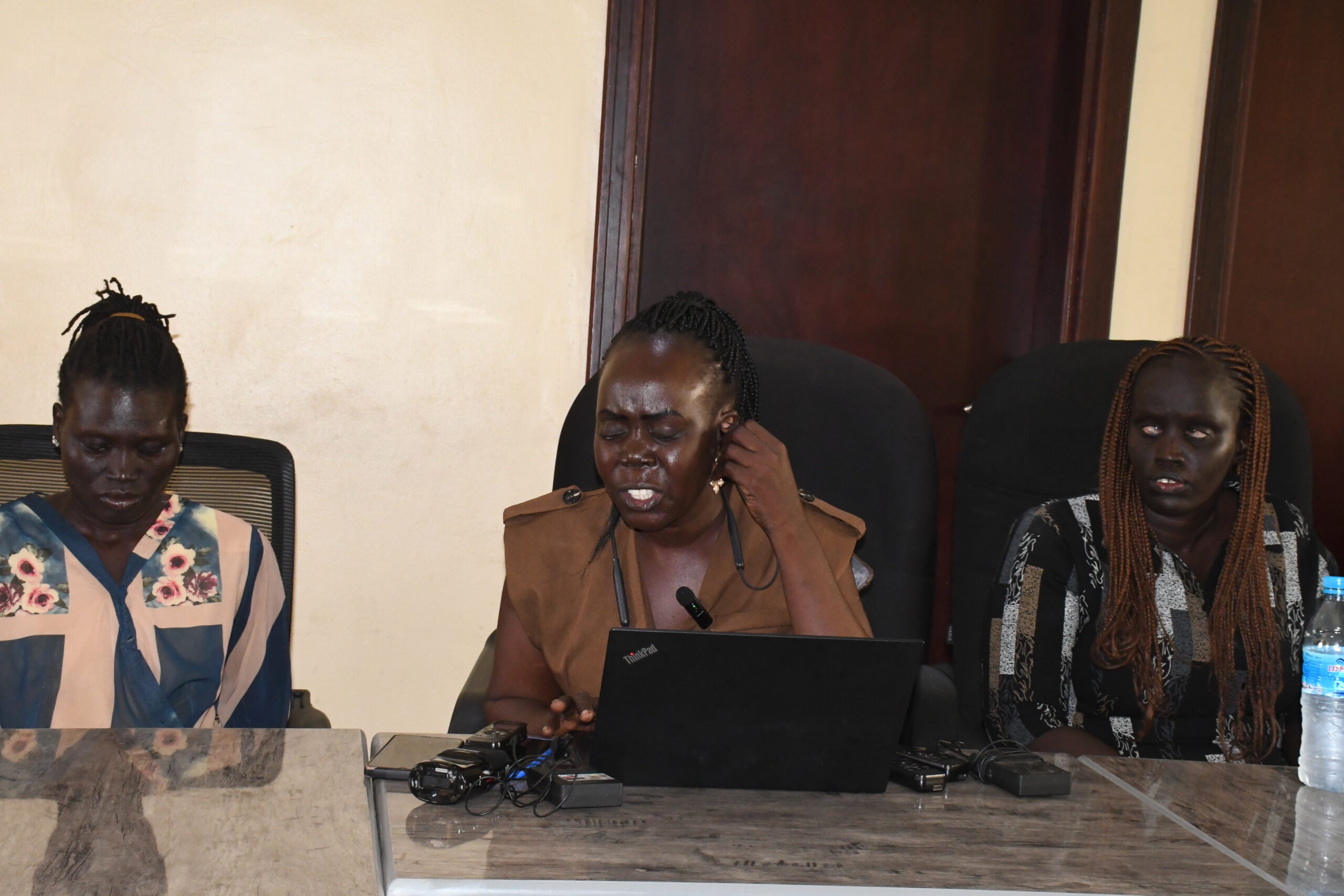
Speaking to journalists in Juba on Monday, disability rights activist Catherine Vicencio, who read a joint statement on behalf of women with disabilities, said many continue to face discrimination, inaccessible political spaces, limited access to information, and poor representation in leadership.
“The conversation emphasized that inclusive elections are the cornerstone of democratic participation and that women with disabilities continue to face multiple and intersecting barriers to political participation, including inaccessible political spaces, discrimination, economic exclusion, and underrepresentation in political leadership.”
The statement followed a meeting with the Political Parties Council, where participants discussed ways to increase the participation of women with disabilities in the electoral process ahead of the 2026 elections.
Vicencio reminded the country of its commitments under international and regional agreements, including the United Nations Convention on the Rights of Persons with Disabilities, the African Charter on Human and Peoples’ Rights, the Maputo Protocol, and the Revitalized Peace Agreement, which all guarantee equal participation in public and political life.
She welcomed the Political Parties Council’s efforts to promote inclusion but said more practical action is needed.
The group called on political parties to recruit, mentor, and support women with disabilities as members, candidates, and leaders. They also urged parties to make meeting venues and information accessible and to eliminate discriminatory practices.
“As South Sudan prepares for democratic elections, we call upon all political actors to honour the commitments our nation has made under the Convention on the Rights of Persons with Disabilities, the Women, Peace and Security Agenda, and the Maputo Protocol.”
The organizations also called for stronger voter education targeting women with disabilities and the adoption of codes of conduct that punish discrimination based on gender, disability, or ethnicity.
They reaffirmed their commitment to working with government institutions, political parties, civil society organizations, and development partners to promote inclusive governance.
The women concluded by saying that South Sudan can only achieve peaceful and credible elections when every citizen, including women with disabilities, is fully represented and given an equal opportunity to participate in shaping the country’s future.