
, and no accountability has been established, raising alarm over continued attacks on healthcare facilities in South Sudan’s conflict-affected regions.)
Médecins Sans Frontières has said it’s now One year after the bombing of a hospital in Old Fangak, Jonglei State, operated by (MSF), and no accountability has been established, raising alarm over continued attacks on healthcare facilities in South Sudan’s conflict-affected regions.
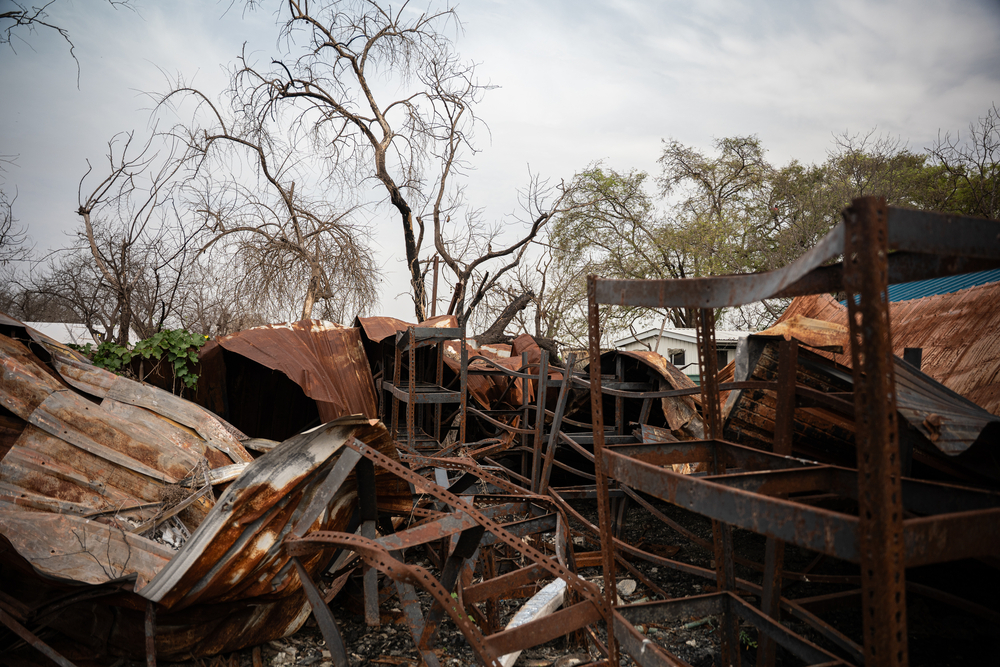
On 3 May 2025, the MSF-run hospital in Old Fangak was bombed by government forces despite being clearly marked and its GPS coordinates shared with authorities. A subsequent drone strike hit a nearby market, killing seven people and injuring 27 others, including four MSF staff. The hospital has not reopened since the attack.
MSF says the incident is part of a broader pattern of violence against medical facilities and personnel, warning that the remaining fragile health system in Jonglei State is at risk of total collapse. Today, only two hospitals remain operational in the conflict-affected areas of Jonglei, both run by MSF and serving a population of over one million people.
“The bombings of Old Fangak and Lankien by South Sudanese government forces cannot go unanswered,” said Isabelle Defourny, President of MSF. She called on authorities in South Sudan to provide clear explanations and publicly commit to protecting hospitals and healthcare workers.
“Attacks on healthcare are violations of international humanitarian law. They must stop,” she added.
Since January 2025, fighting has intensified between the South Sudan People’s Defence Forces and allied Ugandan People’s Defence Forces against opposition groups including the Sudan People’s Liberation Army in Opposition, National Salvation Front, and the Nuer White Army.
A significant escalation in aerial bombardments has been recorded, with 138 airstrikes reported in 2025 compared to just two in 2024. Between January and March 2026, at least 18 additional airstrikes were documented, most of them in Jonglei State. MSF notes that only the SSPDF and UPDF possess the capacity to carry out such aerial attacks.
Between January 2025 and April 2026, MSF recorded 12 separate incidents targeting its staff and facilities, all in opposition-controlled areas. These include the bombing of Old Fangak and Lankien hospitals, as well as looting and destruction of facilities in Ulang, Pieri, and Akobo. Several MSF operations have been forced to shut down, with only limited services recently resuming in Pieri.
The consequences have been severe. In 2025 alone, more than 400,000 people lost access to MSF-supported healthcare services. In the first quarter of 2026, an additional 366,000 people were left without care following renewed attacks and looting. MSF reports that there is currently no surgical capacity in the affected areas of Jonglei State.
Akobo County illustrates the scale of the crisis. On 6 March 2026, authorities issued a 72-hour evacuation order ahead of a military offensive in opposition-held areas. The hospital there was looted shortly after residents fled, leaving the town largely deserted.
“Elderly people and people with disabilities were left behind. People were killed; they died from hunger and lack of water. All the water systems had been destroyed,” an MSF staff member in Akobo recounted in April.
Currently, MSF operates only two hospitals providing secondary healthcare in Chuil and Paguir. Medical teams are overstretched, often treating patients outdoors due to limited infrastructure, while outreach services attempt to reach displaced populations sheltering in remote and overcrowded areas.
MSF has called on all parties to the conflict to immediately cease attacks on medical facilities and ensure their protection, stressing that no military objective can justify targeting healthcare.
“Those responsible must be held accountable,” Defourny said. “Without accountability, impunity prevails.”