

 is holding a two-day peace dialogue bringing together about seventy (70) elders from the Jieng and Nuer Councils of Elders to foster reconciliation and address longstanding issues affecting relations between the two largest communities in South Sudan.)
By: Ginaba Lino
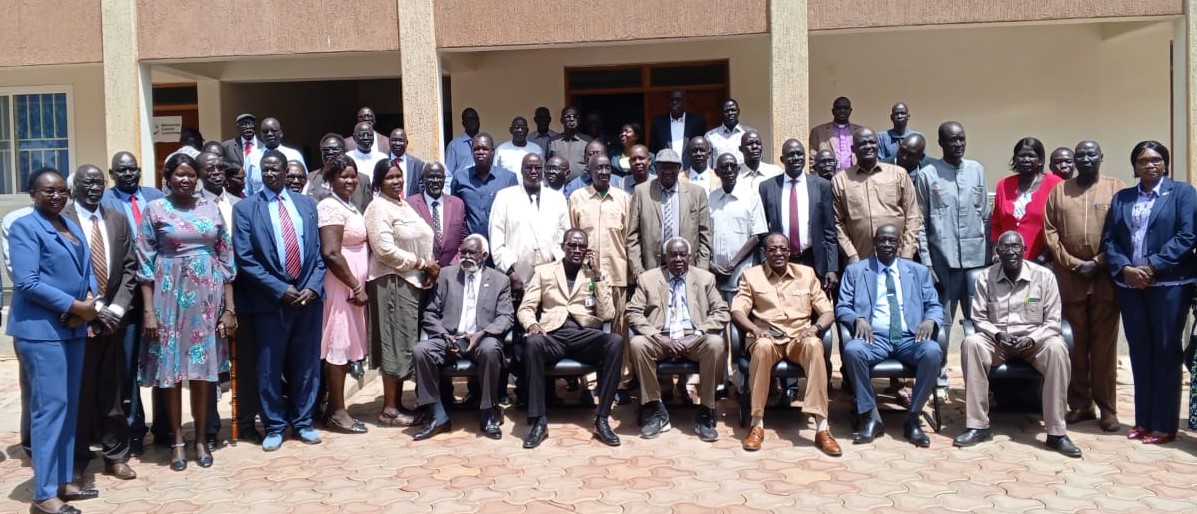
The South Sudan Council of Churches (SSCC) is holding a two-day peace dialogue bringing together about one hundred (100) elders from the Jieng and Nuer Councils of Elders to foster reconciliation and address longstanding issues affecting relations between the two largest communities in South Sudan.
The dialogue, which began today at the SSCC headquarters in Juba, aims to promote understanding, strengthen community trust, to facilitate a participatory root cause analysis of the conflict dynamics and socio-economic drives fuelling violence between the nuer and jieng communities in the target states, and reinforce peace efforts through cultural and moral leadership. The workshop is expected to conclude tomorrow with a set of resolutions to guide continued engagement between the two communities.
Speaking during the opening session, Rev. Tut Kony Nyang Kon, Secretary General of the South Sudan Council of Churches, described the gathering as a family conversation rather than a political negotiation.
“The Jieng and the Nuer are not enemies; we are brothers,” Rev. Tut said. “Our communities have lived side by side for generations. We intermarry, trade together, protect each other, and sometimes, we suffer together. Our histories and our futures are intertwined.”
Rev. Tut urged the elders to institutionalize regular dialogue as a preventive mechanism against conflict and to use their influence to promote unity and peace across South Sudan. “If the two councils act in isolation, their impact remains limited. But if they act in unity, as brothers, their influence becomes transformational,” he added. “Peace cannot be sustained solely through political agreements. It must also rest on moral leadership and community ownership.”
He further emphasized that the dialogue was not intended to assign blame or serve political interests but to create a shared space for reflection, reconciliation, and collective responsibility for peace.
Joshua Dau Diu, Chairperson of the Jieng Council of Elders, commended the Council of Churches for facilitating the initiative and praised the role of faith-based institutions in promoting reconciliation. He reflected on previous efforts by community elders to mediate peace since 2014, calling for renewed commitment to national unity and peaceful coexistence.
“We have been out for peace to meet among our communities,” he said. “As nationals of big tribes, we must do our homework and make extensive contacts to bring peace among our people.”
Diu also called on religious leaders to strengthen engagement and ensure that past peace resolutions are implemented. Recalling the 2017 Rome meeting with international Christian leaders, including Pope Francis, he expressed regret that South Sudan has yet to fully embrace the message of peace the Pope delivered. “He kissed the hands and feet of our leaders and said, ‘Go and make peace in your country.’ But we have not done it,” he said. “Let us be Christians truly committed to peace for the coming generation.”
Representing the Nuer community, Gen. James Hoth Mai, Chairperson of the Nuer Leadership Peace Forum, echoed similar sentiments and called on the two communities to move beyond past grievances and rebuild national unity. “The Nuer and Jieng communities, together with others, form this beautiful nation called South Sudan,” he said. “After decades of war and suffering, it is time to rebuild trust, strengthen unity, and support our government in consolidating peace.”
Gen. Hoth stressed that peace must be a collective responsibility, not only a political one. “Peace is not the responsibility of our leaders alone. It is the responsibility of all of us,” he said. “Through open discussion, reconciliation, and mutual respect, we can heal the wounds of the past and secure a better future for our children.”
He thanked the South Sudan Council of Churches for organizing what he described as a timely and vital platform for reconciliation and unity.
The dialogue, attended by senior clergy, traditional leaders, and representatives of both the Jieng and Nuer councils, marks a significant step toward strengthening grassroots peacebuilding. Participants expressed optimism that the discussions would result in practical mechanisms for sustained engagement, trust-building, and cooperation between the two communities—laying the groundwork for broader national reconciliation across South Sudan’s diverse ethnic landscape.