

By Ginaba Lino
The Catholic University of South Sudan, Juba Campus, has concluded a three-day strategic planning workshop aimed at developing a new roadmap to guide its academic, operational, and financial priorities through 2031.
The new initiative replaces the university’s previous strategic plan, which was developed in 2013 and expired in 2018. University officials say the updated framework is designed to respond to institutional growth, emerging challenges, and the changing demands of South Sudan’s higher education sector.
Speaking to the Catholic Radio Network, Vice Chancellor Rev. Br. Dr. Bruno Dada said the workshop was necessary to align the university’s vision with current realities.
“With the growth of the university and the expansion of campuses, it became necessary to develop a new strategic plan that reflects our current realities and future aspirations,” he said.
The university, owned by the Catholic Bishops Conference of Sudan and South Sudan, now operates campuses in Rumbek, Wau, and Yambio. Administrators say the expansion requires a unified framework to ensure consistency in governance, academic standards, and institutional identity across all campuses.
According to Dr. Dada, the new strategic plan will strengthen academic quality, improve operational efficiency, and promote sustainable financial management. It also aims to enhance the university’s competitiveness, reinforce its Catholic identity, and contribute to national development goals.
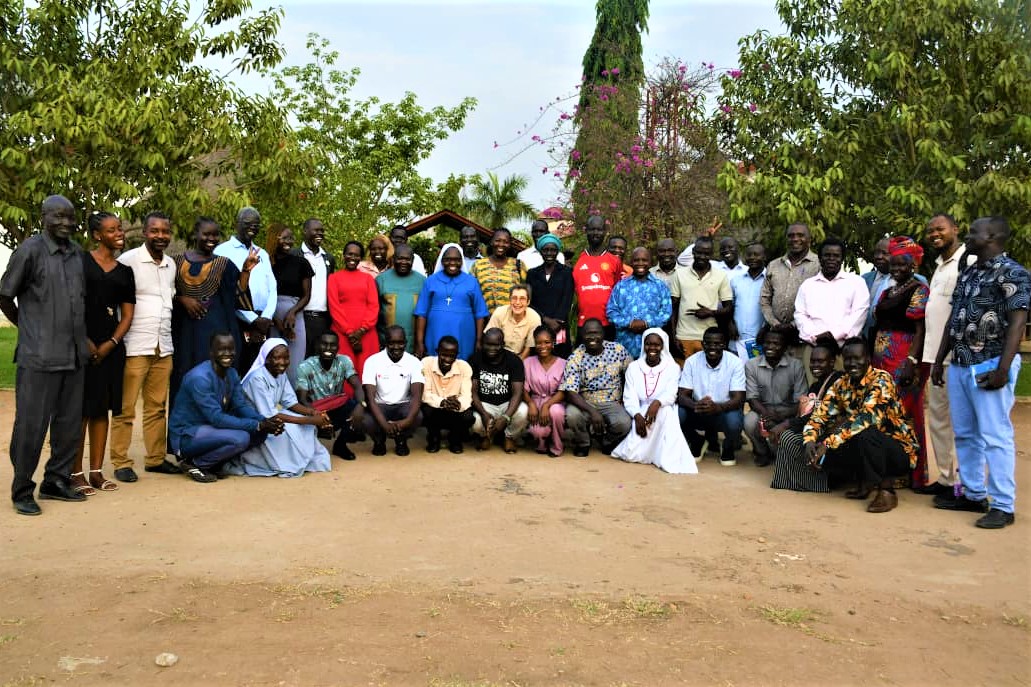
Students and staff participated actively in the workshop, proposing ideas to improve academic performance, student services, budgeting, and institutional planning. The immediate outcome will be a strategic planning booklet that will serve as the official policy document guiding implementation through 2031.
A drafting team is expected to finalize the document in the coming months, with the official launch anticipated within three to four months.
Discussions during the workshop focused on aligning academic programmes with labour market needs, strengthening administrative systems, and identifying sustainable funding mechanisms. Risk management and adaptability were also highlighted, particularly in response to technological changes, political uncertainties, and enrollment trends.
Jovense John Romano, an Admission Officer at the university, described the workshop as educative and transformative, noting that it deepened her understanding of enrollment patterns and the importance of aligning courses with job market demands.
The inclusive workshop brought together board members, staff, students, alumni, and strategic planning experts. Awareness campaigns are planned to ensure the broader university community supports and participates in implementing the new strategy.
Dr. Dada expressed confidence that the framework will strengthen governance, improve academic standards, and enhance student success in the years ahead.