
 on the use of artificial intelligence tools for fact-checking, as South Sudan prepares for general elections scheduled for December 2026.)
By Ginaba Lino
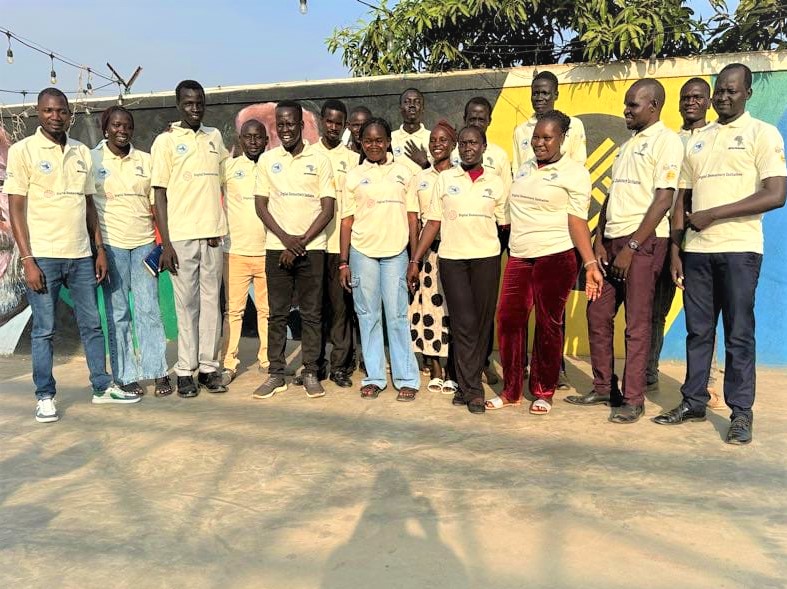
The Excellence Foundation for South Sudan through the ClarityDesk project, has trained more than 12 fellows and contributors under the Young Journalists Media Integrity Fellowship (YJMIF) on the use of artificial intelligence tools for fact-checking, as South Sudan prepares for general elections scheduled for December 2026.
The one-day, in-person training focused on detecting AI-generated images, debunking false claims, countering disinformation, understanding electoral laws, and improving access to credible data sources. The initiative is supported by AfricTivistes within AHEAD Africa, and the Digitalise Youth Projects under the Digital Democracy Initiative.
Speaking to Catholic Radio after the session, the ClarityDesk Project Manager Jibi Moses said the training was designed to strengthen practical verification skills among young journalists ahead of the elections.
“The main objective is to equip participants with hands-on fact-checking skills so they can independently verify claims and counter disinformation,” Moses said. “As this network grows, we expect those trained to pass on the knowledge to others.”
Moses described misinformation, hate speech, and fake news as significant threats, particularly in a country emerging from years of conflict. He noted that false information often spreads because individuals may not recognize it as inaccurate.
“When people understand how to identify misinformation, it reduces its spread,” he said.
He acknowledged challenges facing the initiative, including limited funding, language diversity, and uneven internet access across the country. Only five fellows were selected for the first cohort due to budget constraints, though organizers plan to recruit an additional five in the next phase. Online training sessions may also be introduced to expand outreach.
The ClarityDesk Director Emmanuel Bida urged fellows and contributors to prioritize accuracy and increase the production of credible content to address information gaps.
“One of the biggest drivers of disinformation is the lack of credible information,” Bida said. “When there is an information gap, people exploit it to spread falsehoods. We must work to fill that gap with verified and reliable content.”
He encouraged participants to continue contributing to fact-checking platforms and to apply the skills within their respective newsrooms.
Ajah Jenifer Mayen, a fellowship beneficiary, said she joined the program out of concern about the impact of misinformation in her community, especially ahead of the elections.
“As journalists, we must not only stop misinformation, but also educate the public on how to identify it,” she said. “Learning how to detect AI-generated content is one of the most valuable skills I’ve gained.”
Mayen added that the fellowship introduced her to solutions journalism, which promotes balanced and constructive reporting.
Kiden Naomi Joseph, another fellow, said she was drawn to the program’s focus on fact-checking tools and source verification. She highlighted lessons on navigating social media platforms, editing content on Wikipedia, and sourcing credible information for health reporting.
“I believe this fellowship will help me write more accurate and well-verified stories, especially in health reporting,” Joseph said.
Founded in September 2021 and headquartered in Juba, the Excellence Foundation for South Sudan is a youth-led, volunteer-based national non-governmental organization focused on education, leadership, and socio-economic development. Through initiatives such as “Your Skill Boost” trainings, literacy programs including spelling competitions, and emergency health and hygiene services, the foundation says it aims to empower communities at the grassroots level.