


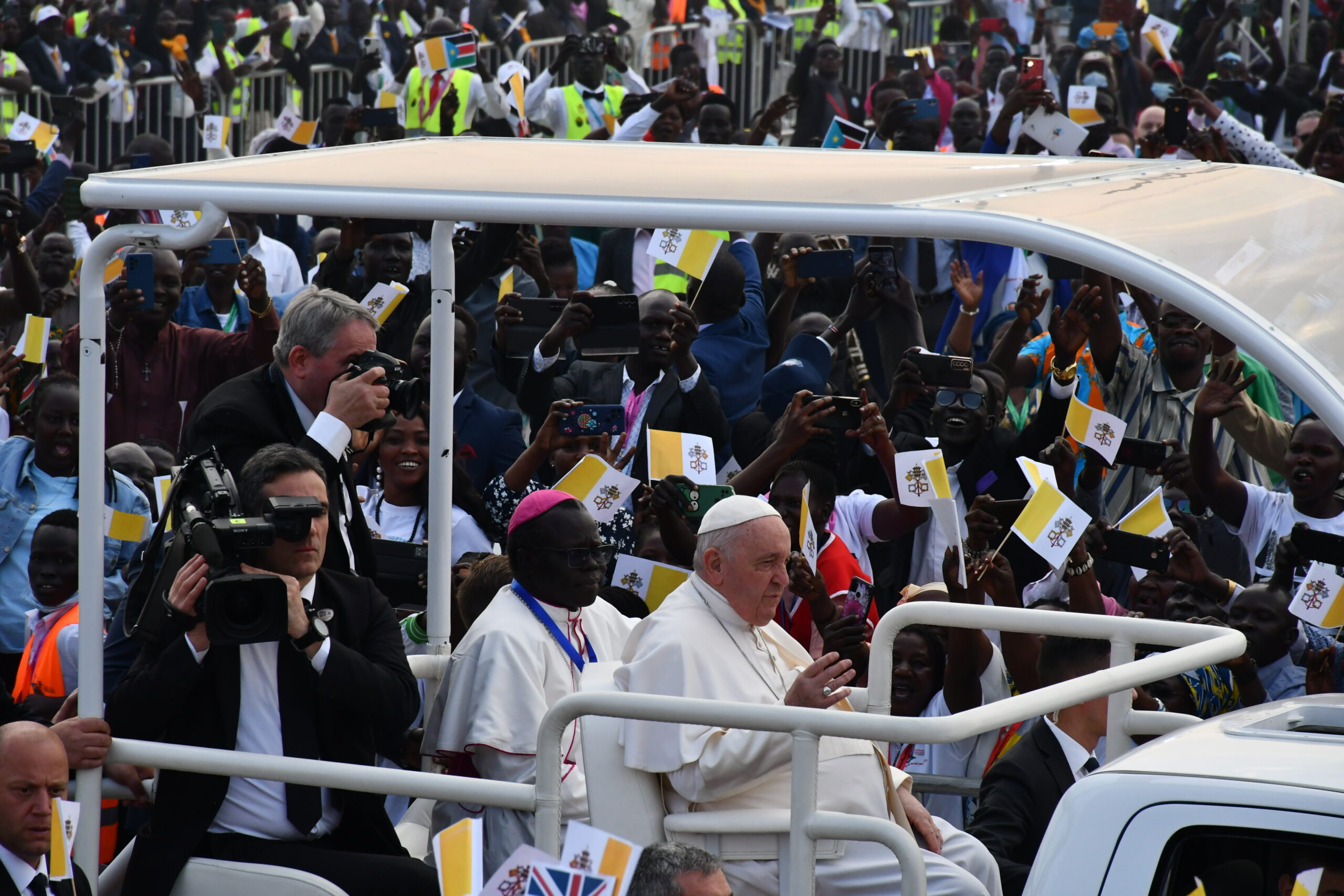
Author: Atto Abut|CRN- As South Sudan moves toward its scheduled general elections in December 2026, the country once again finds itself at a decisive moment. Renewed military confrontations and rising political tensions threaten the fragile gains made since the signing of the peace agreement.
In this context, the enduring message of the late Pope Francis delivered during his historic ecumenical visit to South Sudan marked three years today, from February 3, 2023 remains as urgent and relevant as ever.
Pope Francis’ visit was far more than a symbolic gesture. It was a profound moral appeal to the nation’s political leaders and citizens alike to reject violence, division, and self-serving politics that have repeatedly dragged the young nation into cycles of conflict. He came as a pilgrim of peace, carrying a message of reconciliation, responsibility, and hope.
During his time in Juba, Pope Francis went beyond official ceremonies and state meetings. He met displaced person from the Protection of Civilians (PoC) site, where he listened attentively to the painful testimonies of internally displaced persons.
Speaking with deep compassion, he said he had long desired to meet those who had suffered most from the conflict—to look them in the eye, shake their hands, and embrace them.
“Now at last I am here, together with my brothers on this pilgrimage of peace, to express to you all my closeness, all my affection. I am here with you, and I suffer for you and with you,” he told them.
The Pope acknowledged the immense suffering caused not only by human violence but also by climate-related disasters such as floods, which have displaced millions across the country. He lamented that displacement and refuge had become a shared and tragic experience for so many South Sudanese, especially women and children, in a nation yearning for stability and dignity.
At the Presidential Palace, Pope Francis delivered one of his strongest and most direct appeals to the country’s leadership. Addressing the President and Vice Presidents, he called for an end to politics rooted in violence, blame, and division.
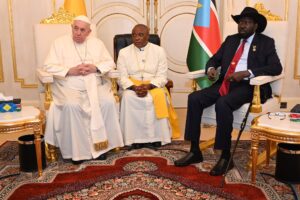
“No more bloodshed, no more conflicts, no more violence and mutual recriminations about who is responsible for it. No more leaving your people thirsty for peace. No more destruction: it is time to build! Leave the time of war behind and let a time of peace dawn!”
He added with unmistakable urgency “In the name of God… now is the time to say, ‘No more of this’, without ‘ifs’ or ‘buts’.”
The Holy Father stressed that peace, stability, and justice are not optional ideals but essential foundations for development, social cohesion, and national healing. He warned against further delays in implementing peace commitments, noting with sorrow that many children in South Sudan have been born and raised knowing nothing but displacement camps—growing up without a sense of home, roots, or cultural belonging.
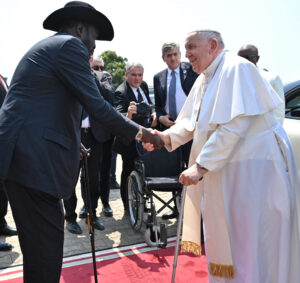
During the ecumenical peace pilgrimage, President Salva Kiir welcomed Pope Francis and described the visit as a courageous act that rekindled hope for reconciliation and unity. He affirmed that the visit strengthened the government’s resolve to implement the peace agreement despite ongoing challenges.
Pope Francis passed away in April 2025, but his voice continues to echo across South Sudan. Today, as fresh military confrontations raise fears of renewed instability, Church leaders in South Sudan have stepped forward to echo his message.
They are calling on political and military actors to choose dialogue over confrontation, to silence the guns, and to place the welfare of the people above all other interests. Their appeal reflects the very heart of Pope Francis’ message: that peace is built through sincere dialogue, mutual respect, and moral courage.
As the nation prepares for the December 2026 elections, Pope Francis’ legacy stands as a moral compass for South Sudan’s future. It is a reminder that true leadership is measured not by power or ambition, but by service to peace, unity, and the common good.
The question that remains is whether South Sudan’s leaders will honor this legacy—or once again allow the hopes of a suffering people to be eclipsed by violence and conflict.