

, has successfully concluded a week-long obstetric fistula surgical camp at Juba Teaching Hospital.)
By: Ginaba Lino
Amref Health Africa, in partnership with South Sudan’s Ministry of Health and the United Nations Population Fund (UNFPA), has successfully concluded a week-long obstetric fistula surgical camp at Juba Teaching Hospital.
The initiative provided free, life-changing surgeries to 33 women suffering from obstetric fistula a preventable childbirth injury caused by prolonged and obstructed labor.
Many of the women had lived with the condition for years, enduring social isolation, stigma, and emotional distress.
“I was sick for a year. When they told me I needed surgery, I was scared,” said Hanan Ibrahim Mohamed, one of the beneficiaries. “But now, I feel good. I can walk in the community without fear. Even my children are happy when they see me.”
Another survivor, Christine Simon, shared a similar sense of relief: “There is nothing wrong with me now. I am doing well,” she said with a smile. “I thank the doctors, the nurses, everyone. I thank God.”
Beyond surgery, the camp emphasized holistic care and reintegration. Local partner organization SNAMA provided psychosocial counseling, hygiene and nutrition training, and small business start-up support.
“We don’t just close the fistula and send them home,” said a SNAMA representative. “We help them return to life with dignity—equipped with confidence, knowledge, and a bit of capital to start tailoring or trading.”
Capacity-building was another critical component of the camp. South Sudanese nurses and health workers received hands-on training in fistula care and post-operative management—a significant step for a country that currently lacks permanent, resident fistula surgeons.
The surgical team was led by Dr. Anthony Wanzala, a visiting specialist from Nairobi. “I’m going home tired, but with so much joy,” Dr. Wanzala said. “The smiles on these women’s faces—the hope restored in them—that’s the real success.”
Dr. Wanzala confirmed that all eligible patients were treated or referred for further care, with only a few deferred due to medical or psychological reasons. He called for more sustainable approaches:
“We need permanent, dedicated treatment centers—not just periodic surgical camps. If we act now, we can prevent future suffering.”
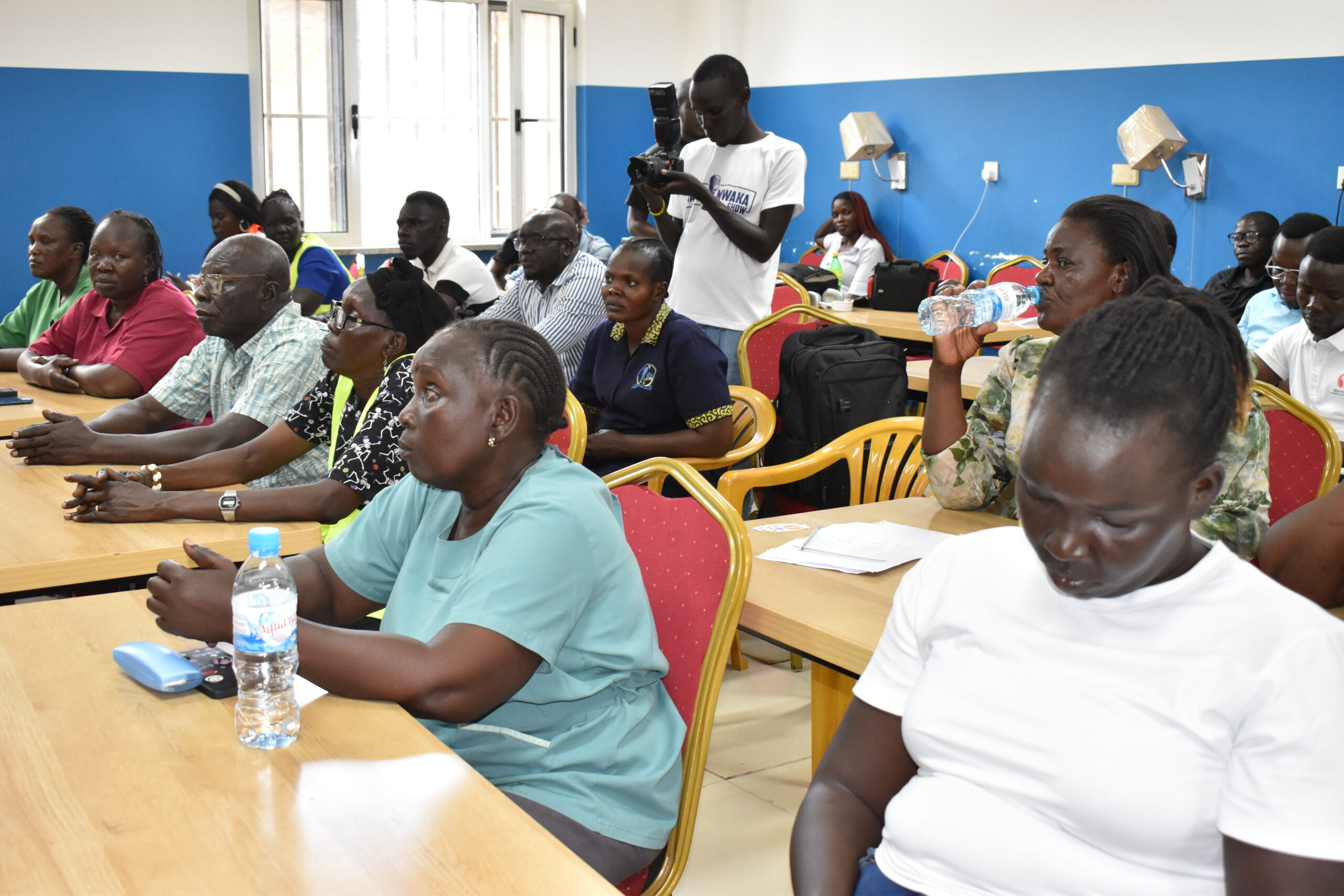
At the closing ceremony, Olore Peter, Amref’s Programme Manager in South Sudan, commended the collective effort—from hospital staff and administrators to community mobilizers and support teams.
“Thanks to Juba Teaching Hospital, SNAMA, and especially the support staff who not only treated these women, but also fed them, cleaned them, and made them feel at home,” he said. “We hope this is not the end. These camps must become regular efforts to reach the many mothers still waiting.”
While resource constraints limited the number of women treated during this round, all partners reaffirmed their commitment to expanding outreach, particularly to underserved and remote communities.
As the 33 women leave Juba Teaching Hospital, they return home not only healed—but restored in dignity as mothers, sisters, daughters, and active members of their communities once more.