



Author: Chuol Jany|CRN, Juba
Persistent flooding in Unity State has triggered widespread deforestation, with submerged trees dying off and increasingly harvested for firewood sparking fears among residents and environmentalist’s over long-term ecological damage.
While the floods have devastated homes, displaced communities, and threatened livelihoods, a less visible but equally critical consequence is unfolding across the landscape. Trees left standing in water for prolonged periods are wilting and dying, leading many locals to cut and use them as firewood.
“Forests play a crucial role in maintaining the ecosystem, and we are losing that protection with every flood,” said James Gatloth, a resident of Koch County. “Many trees haven’t sprouted a single green leaf since the floods began. Once the waters recede, it will be difficult for the trees to recover.”
Unity State, known for its oil wealth, is now facing an environmental crisis compounded by climate change, a fragile infrastructure, and limited government capacity to respond. The floods are not only disrupting lives but accelerating environmental degradation that could take decades to reverse.
In a recent investigative report by Catholic Radio Network journalist Chuol Jany, the environmental fallout from the floods was brought into sharp focus. Deforestation, soil erosion, loss of biodiversity, and diminished natural flood barriers are just a few of the consequences identified.
In Guit County, some residents have adapted to the situation in unexpected ways. Martha Nyagai, a mother of four, has turned to selling firewood from damaged trees to support her family.
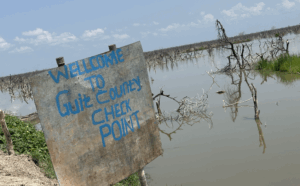
“When the floods destroyed the trees, people didn’t think to use them. So, I started collecting firewood,” Nyagai said. She transports bundles on a motorbike—known locally as Recha—to Bentiu town, where demand is growing. “At first, people didn’t see the value, but now many have joined me in this business.”
Though Nyagai’s enterprise is providing essential income, it also highlights a broader challenge: the lack of sustainable forest management and the risk of permanent environmental loss if these resources are not replenished.
Climate Change Adaptation and Smart Actions (CCASA), a South Sudanese NGO, said deforestation in Unity is accelerating as residents increasingly depend on dead trees for firewood and construction.

“Flooding has intensified logging activities. People are turning to forests for firewood and materials, especially in displaced areas,” said Thor Yohanes, CCASA’s Executive Director. He noted that government response has been hampered by limited resources, ongoing conflict, and weak enforcement of environmental regulations.
“The current policies are inadequate. Many programs lack funding, community engagement, and long-term integration,” he added.
Thor also warned that without effective flood drainage systems, entire communities near wetlands could face permanent displacement and recurring food shortages.

Unity State’s Minister of Information, Hon. Gatwech Bipal, acknowledged the environmental damage and outlined steps the state is taking.
“The government has launched impact assessments and afforestation efforts, including the planting of one million trees in coordination with the International Organization for Migration (IOM). This initiative began in April,” Bipal said.
National authorities have also stepped in. Under Secretary at the Ministry of Environment, Hon. Joseph Bartel, confirmed that the national government is encouraging tree planting and is working with affected states to develop climate resilience strategies.
“Government efforts are underway because we’re aware of the dangers ahead once the floodwaters recede,” Bartel said.
As the people of Unity State face rising waters and vanishing forests, the need for a coordinated, long-term environmental strategy has never been more urgent. Without comprehensive flood management, reforestation, and sustainable livelihoods, the region risks permanent ecological decline.
Climate change is no longer a distant threat for Unity State—it is an unfolding crisis. Protecting the environment must become as central to disaster response as saving human lives if the region is to recover and build resilience for future generations.
South Sudan’s government reported that is actively responding to the growing environmental and humanitarian impact of severe flooding, combining immediate relief efforts with long-term resilience strategies.
Key humanitarian organizations including UNHCR, UNICEF, and the South Sudan Red Cross are on the ground providing essential supplies, reinforcing flood defenses, and assisting displaced and affected communities. Their efforts also address critical health concerns, such as the rise in waterborne diseases, while working to mitigate the broader impact on livelihoods and food security.
In 2024, the Ministry of Water Resources and Irrigation, with support from the World Bank, launched a nationwide radio messaging campaign targeting communities in Greater Upper Nile, Lakes, and Eastern Equatoria. The campaign aims to raise awareness about flood preparedness, personal safety measures, and ways to reduce long-term environmental damage.
At the regional level, the Intergovernmental Authority on Development (IGAD) has been implementing wide-ranging climate adaptation initiatives across the Horn of Africa. These include a Climate Adaptation Strategy, development of early warning systems for climate-related conflicts, promotion of groundwater management, and the integration of climate resilience into disaster risk management. IGAD is also supporting women-led climate adaptation initiatives, recognizing their central role in community resilience.
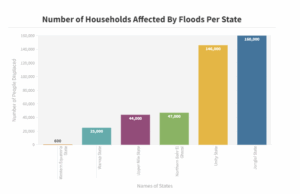
According to a ReliefWeb report from November 2024, an estimated 1.4 million people have been affected by flooding across 43 counties and the Abyei Administrative Area. Nearly half of those impacted are in Jonglei, Unity and Northern Bahr el Ghazal state. Approximately 375,000 individuals have been displaced in 21 counties and Abyei due to rising floodwaters.
These coordinated national and regional responses highlight the scale of the crisis and the urgent need for sustained investment in climate adaptation, disaster preparedness, and environmental conservation across South Sudan.