


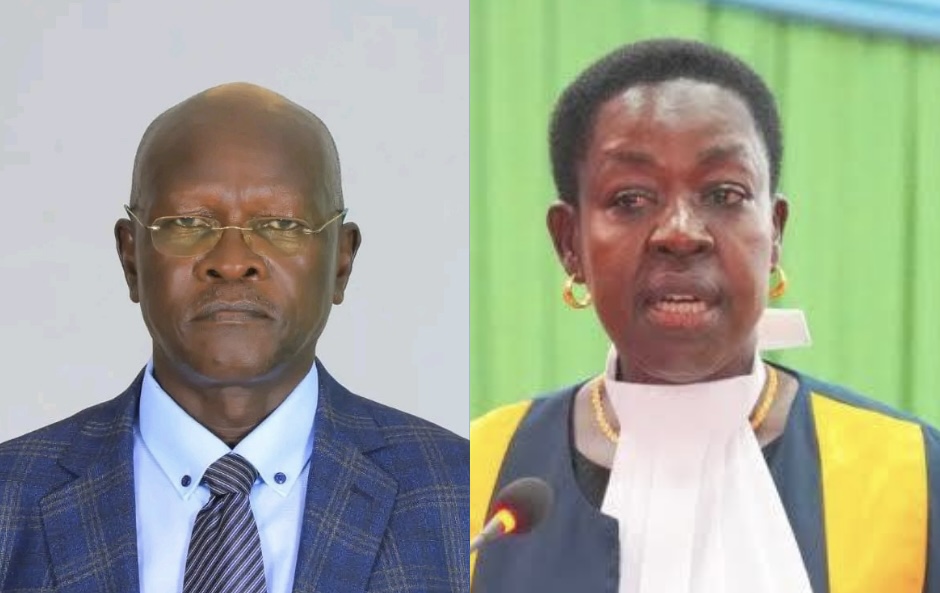
CRN News Desk|President Salva Kiir Mayardit has appointed Rt. Hon. Joseph Ngere Paciko as the new Speaker of the Transitional National Legislative Assembly, marking a significant shift in the country’s parliamentary leadership.
The appointment was announced through a presidential decree read at the August House, the seat of South Sudan’s national legislature. In the same decree, Hon. Abuk Payiti Ayik was named Deputy Speaker, signaling what observers describe as the beginning of a new leadership phase within the assembly.
The newly appointed officials replace former Speaker Jemma Nunu Kumba and her deputy Paramena Awerial, who were removed during a parliamentary sitting on Tuesday. Their dismissal follows mounting political pressure within the legislature.
The Parliament spokesperson, Hon. Oliver Morris Benjamin, has confirmed the appointments said Transitional National Legislative Assembly, has extended heartfelt congratulations to Rt. Hon. Joseph Ngere Paciko on his appointment as Speaker, and to Hon. Abuk Payiti Ayik as Deputy Speaker.
Hon. Benjamin emphasized that the Assembly looks forward to strong collaboration between the new leadership and Members of Parliament to advance its legislative, oversight, and representative roles in the service of the people of South Sudan.
He also expressed gratitude to former Speaker Hon. Jemma Nunu Kumba and Hon. Awerial Alier for their dedicated service and contributions during their tenure. The Assembly, as an institution, continues to learn, evolve, and strengthen its systems.
“Together,” he noted, “we reaffirm our commitment to a disciplined, accountable, and results-driven Parliament that truly reflects the aspirations of the people of South Sudan.”
The leadership changes come in the wake of a vote of no confidence passed last week by members of the Sudan People’s Liberation Movement (SPLM) parliamentary caucus. The motion, reportedly backed by President Kiir, accused the former Speaker of corruption—allegations that were strongly denied by her office at the time.
Political analysts say the reshuffle underscores growing internal dynamics within the ruling party and reflects efforts to consolidate leadership within the legislative arm of government. It also raises questions about accountability and governance in the country’s transitional political period.
The appointment of Paciko and Ayik is expected to influence the direction of parliamentary proceedings, including the handling of key legislative reforms and oversight responsibilities. However, it remains to be seen how the new leadership will navigate ongoing political tensions and restore confidence within the assembly.
South Sudan continues to operate under a transitional framework aimed at stabilizing governance and preparing the country for future elections. Changes within the legislature are therefore closely watched as indicators of broader political shifts within the government.