

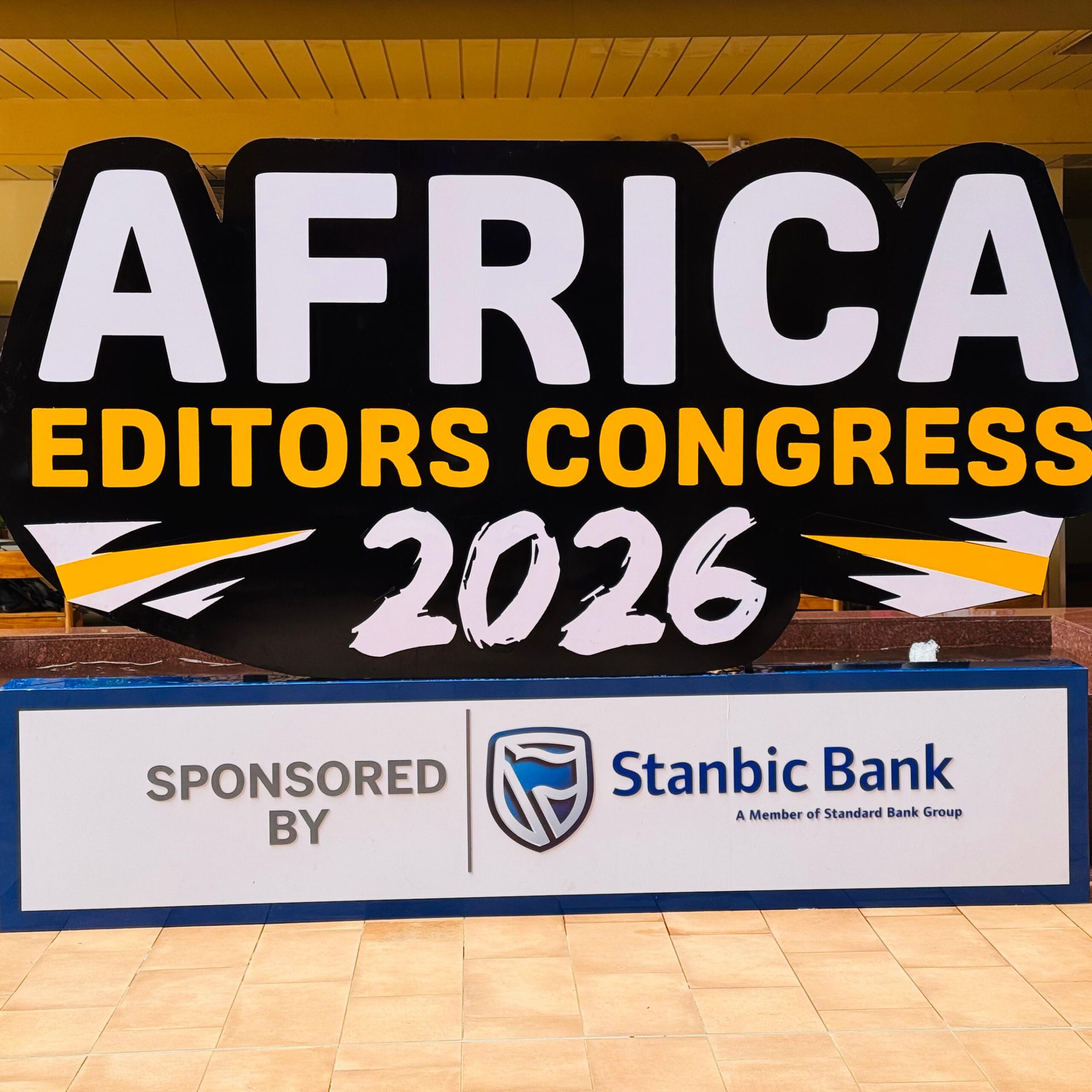
Africa’s leading media voices have convened in Nairobi for a landmark Congress aimed at defending press freedom, advancing sustainable journalism, and ensuring the continent plays a decisive role in shaping global artificial intelligence policy.
The high-level gathering brings together senior editors, media executives, policymakers, and strategic partners from across the continent to address the pressing questions shaping the future of the continent’s media ecosystem.
For the first time, South Sudan is formally represented at the Congress by Mr. Chuol Jany, Chairperson of the National Editors Forum (NEF) and Chief Editor of the Catholic Radio Network (CRN). His participation marks a significant step in integrating South Sudan’s media leadership into continental editorial platforms.
Chairperson of the National Editors Forum (NEF) and Chief Editor of the Catholic Radio Network (CRN), Mr. Chuol Jany, described the Congress as a critical opportunity for regional solidarity and professional reform.
“I will utilize this three-day conference as Chairperson of the Forum in South Sudan because our media sector needs regional support to achieve media self-regulation with less government interference and to promote independent journalism in the country. This is something we cannot achieve alone, but through collective effort at regional and continental levels,” he said.
Mr. Jany also confirmed his participation in the sideline annual assembly of the East African Editors Society, where members are expected to deliberate on structural reforms. This engagement marks the first formal participation of South Sudan’s editors in the Society’s proceedings.
The President of The African Editors Forum, Churchill Otieno, issued a firm call for journalism that tells African stories on African terms.
“Independent journalism is essential, yet sustainability and freedom are under threat in many parts of Africa. Against this backdrop, we are here not simply to talk, but to work,” Otieno emphasized.
Renowned media scholar Kwame Karikari of the Media Foundation for West Africa underscored the ethical responsibility of editors as custodians of public trust and democratic values.
“Editors are servants of the public. They are the professional guides within news organizations and chief political decision-makers. Editors must actively advocate for public interest journalism rather than content that fails to promote truth,” Professor Karikari said.
He stressed that editing in Africa must be viewed not merely as a profession, but as a mission grounded in accountability, courage, and service to society.
The Congress takes place at a pivotal moment for African media. Newsrooms across the continent face financial instability, political interference, and the rapid evolution of artificial intelligence. Meanwhile, global technology companies increasingly shape information flows, even as Africa’s rare minerals power many of the AI systems transforming the global economy.
Participants say the gathering is more than a conference — it is a coordinated effort to defend editorial independence, safeguard democratic institutions, and reposition African media as a driver of continental agency.
For Africa’s editors, the message is clear: this is not a time for rhetoric, but for strategic leadership and collective action to protect journalism that serves the public interest.