

By: Ginaba Lino
South Sudan is hosting representatives from ten Nile Basin countries for the 20th Nile Day regional celebrations, a high-level gathering aimed at strengthening cooperation and promoting sustainable management of one of Africa’s most vital natural resources.
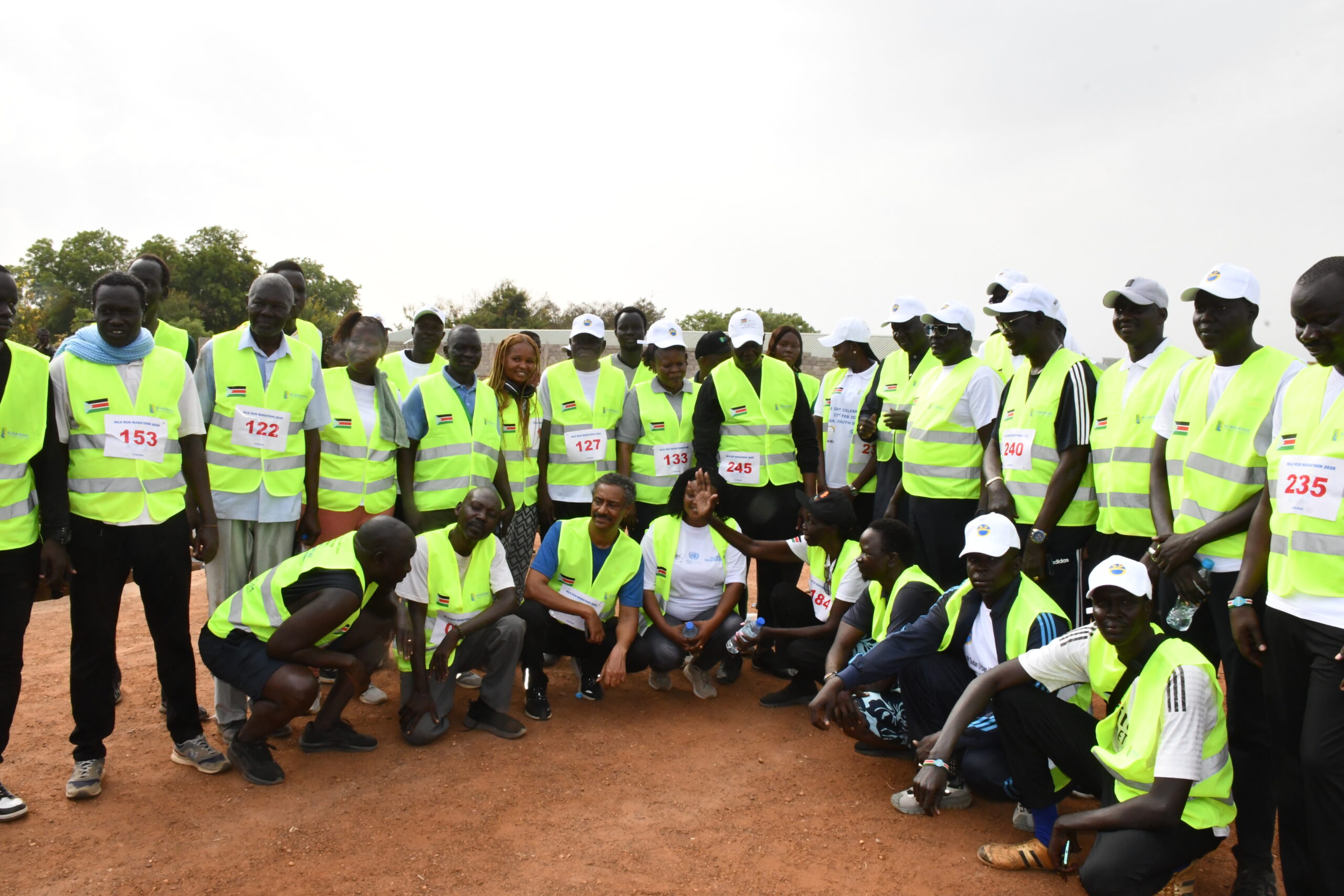
The two-day event, held in the capital Juba, began on Saturday with a public marathon symbolizing unity among Nile Basin states. It will conclude on Sunday with a conference focusing on how member countries can equitably and sustainably benefit from the shared waters of the Nile.
Speaking during the marathon, South Sudan’s Minister of Water Resources and Irrigation, James Mawich Makuach, who is also hosting this year’s celebrations, underscored the strategic and symbolic importance of the river to millions of people across the region.
He described the Nile’s story as “more than just a hydrological system,” calling it a narrative that connects cultures, economies, and histories across borders.
The Nile River is one of the world’s longest rivers, flowing through northeastern Africa into the Mediterranean Sea. Its drainage basin spans eleven countries: Burundi, Democratic Republic of the Congo, Egypt, Eritrea, Ethiopia, Kenya, Rwanda, South Sudan, Sudan, Tanzania, and Uganda.
The celebrations are organized under the framework of the Nile Basin Initiative, which was established in 1999 in Dar es Salaam. The Initiative was founded to serve three core functions: facilitating cooperation among riparian states, promoting sustainable water resources management, and advancing joint water resources development.
Since its establishment, the Nile Basin Initiative has provided a platform for dialogue and collaboration among member states, helping to reduce tensions and foster shared planning over transboundary waters.
However, participants at this year’s event emphasized that regional cooperation must translate into concrete outcomes. Beyond high-level meetings and declarations, leaders stressed the need for practical projects, infrastructure development, and policies that deliver measurable benefits to communities that depend on the river for agriculture, energy, transport, and livelihoods.
As host nation, South Sudan is positioning itself as an active stakeholder in regional water diplomacy, calling for unity and shared responsibility in safeguarding the Nile for future generations.
The 20th Nile Day celebrations come at a time when climate change, population growth, and increasing demand for water resources are intensifying pressure on the basin, underscoring the urgency of collective action.