


By: Ginaba Lino
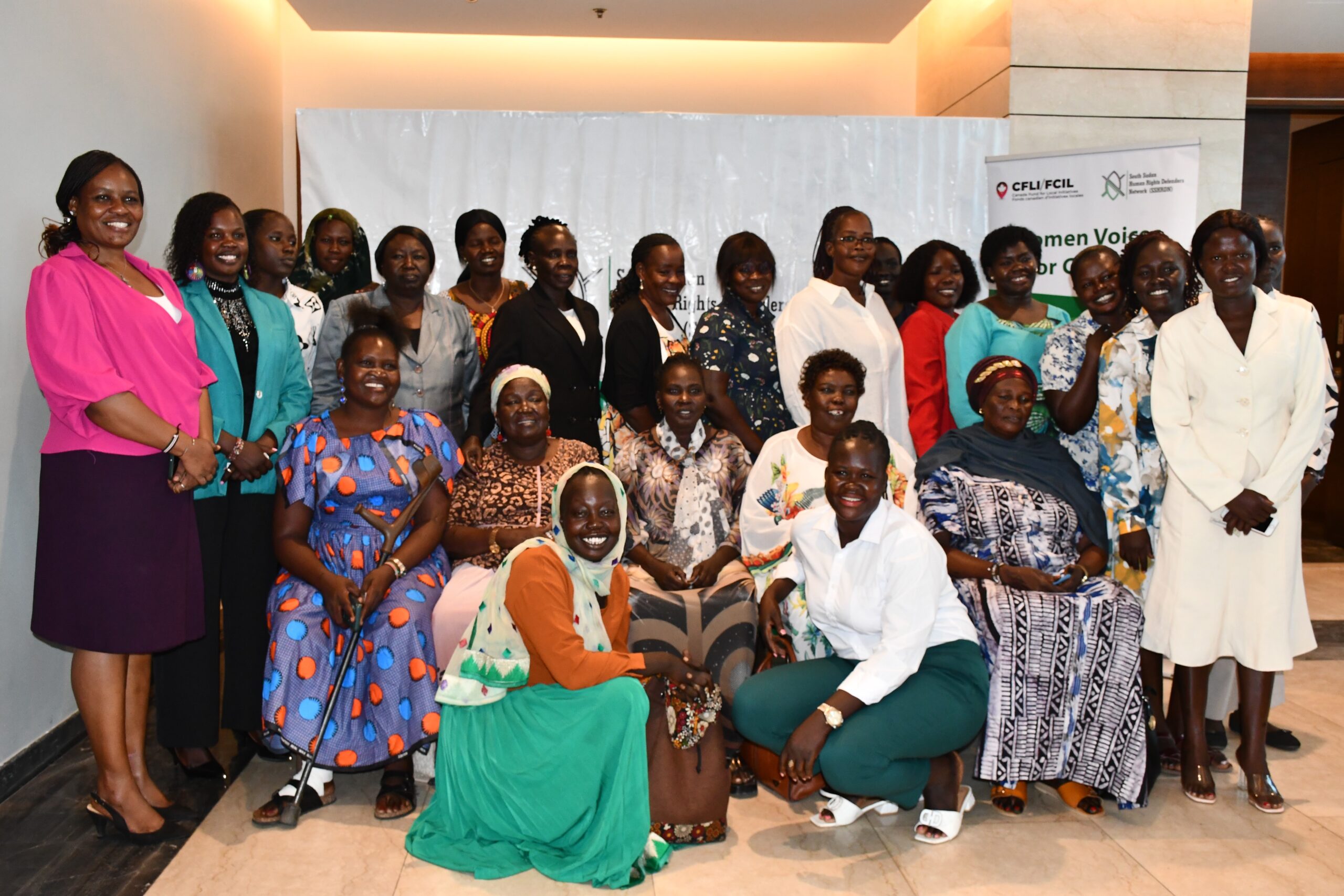
The South Sudan Human Rights Defenders Network on Friday convened a one-day high-level dialogue that brought together women leaders from civil society and Members of Parliament to explore ways to strengthen women’s participation in governance and influence policies that promote gender equality.
Held at Radisson Blu Hotel, the forum sought to foster collaboration between civil society and lawmakers, ensuring that women’s voices help shape national decision-making and policy formulation.
Opening the session, Advocate Omara Joseph L. Wani, Protection and Advocacy Officer for SSHRDN, said the dialogue aimed to identify laws and policies that could better protect women’s rights and eliminate long-standing barriers facing women in communities and workplaces across South Sudan.
“If you are an activist, you are a woman, so the challenge is for women. We need to look for policies and laws that protect women and their rights,” one facilitator remarked, underscoring the importance of collective advocacy.
Participants also discussed the creation of communication networks, including a WhatsApp platform, to enhance coordination among women’s organizations and activists.
On behalf of the SSHRDN Secretariat, Omara welcomed participants, members of the Women Parliamentary Caucus, and partners from the Canadian Embassy, recognizing their continued support for advancing gender equality and human rights in South Sudan.
“South Sudanese women have long been at the forefront of resilience, holding families together during conflict, sustaining communities in hardship, and contributing tirelessly to peacebuilding. Yet, despite these immense contributions, women remain underrepresented in policymaking,” the SSHRDN Secretariat noted.
The dialogue reaffirmed that women’s participation in governance and peace processes is not optional but essential to achieving a just and inclusive society. Participants agreed that meaningful participation must go beyond numbers, it should empower women to actively shape the nation’s future.
During the panel discussions, Hon. Adeng Leek, Member of Parliament, highlighted the political and structural barriers hindering women’s advancement in leadership.
“Party discipline, internal politics, and gender bias remain major obstacles,” she said. “Although the law grants women 35 percent affirmative action, that figure has not been realized. Many of us struggle with limited resources, lack of funding, and the broader economic challenges that make it difficult to reach the grassroots.”
Hon. Leek urged activists and women legislators to build cross-party coalitions to amplify their collective voice.
“When we enter Parliament, we must put aside our political ideologies and unite as women. The revitalized Parliament has women from different parties, and if we act collectively, we can influence policies that address challenges such as the Cybercrime and Computer Misuse Act or the National Security Act,” she added.
She also called for stronger collaboration with civil society, businesswomen, and youth networks to rebuild women’s representation and influence ahead of the upcoming elections.
Adding to the discussion, Juan Lucy Ladu, a representative of persons with disabilities, drew attention to the urgent need for accessibility and inclusion in political and civic spaces.
“Women with disabilities face multiple barriers from lack of information and transport to the absence of assistive devices,” Ladu said. “We don’t have sign-language interpreters in Parliament or during public communications, and political parties rarely provide wheelchairs or white canes for members with disabilities.”
She explained that women with disabilities are often excluded from political processes and sometimes face abuse within party structures, emphasizing the need for awareness campaigns and inclusive electoral reforms.
“We must not surrender. We will keep pushing for participation, accessibility, and inclusion in all political and civic processes,” she affirmed.
Responding to Ladu’s remarks, Hon. Leek said that while women’s caucuses in Parliament strive to represent women with disabilities, much remains to be done to ensure their meaningful involvement in legislation and decision-making.
The dialogue concluded with participants renewing their commitment to advocate for stronger legal frameworks that promote gender equality and protect women’s human rights.