


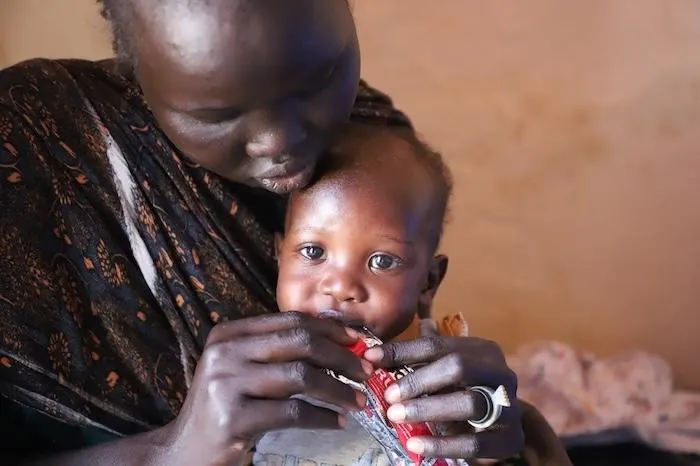
More than 450,000 children are at risk of acute malnutrition in South Sudan’s Jonglei State following a surge in violence that has displaced hundreds of thousands of people and disrupted lifesaving health and nutrition services, UNICEF has warned.
Renewed violent clashes since the beginning of 2026 have reportedly displaced at least 250,000 people, particularly in the northern and central parts of Jonglei, forcing families to flee their homes and cutting off access to essential services.
“We are extremely concerned for women and children affected by these violent clashes,” said Noala Skinner, UNICEF Country Representative in South Sudan.
“These areas already have some of the highest rates of child malnutrition, and we know that a malnourished child without treatment is 12 times more likely to die. We urgently call on all parties to cease the violence and allow rapid, safe, and unimpeded humanitarian access to reach the most vulnerable.”
Humanitarian access to affected communities remains severely restricted, with aid agencies facing limitations on river, air, and road travel. As a result, six counties in Jonglei State have already run out of, or are close to running out of, therapeutic food—a critical, lifesaving treatment for severely malnourished children.
Across South Sudan, UNICEF has recorded the closure of 17 health facilities due to conflict, leading to the suspension of associated nutrition services. In addition, 10 incidents of looting of health and nutrition supplies have been reported nationwide, five of them in Jonglei State.
Despite these challenges, UNICEF continues to respond. Emergency water purification equipment, buckets, and soap have been dispatched to Duk County, where there are growing concerns about a potential cholera outbreak.
Additional supplies sent to Akobo include malaria treatment, therapeutic food for malnourished children, and emergency health kits to support more than 10,000 people.
UNICEF warns that without immediate access and sustained humanitarian support, the lives of hundreds of thousands of children remain in grave danger.