

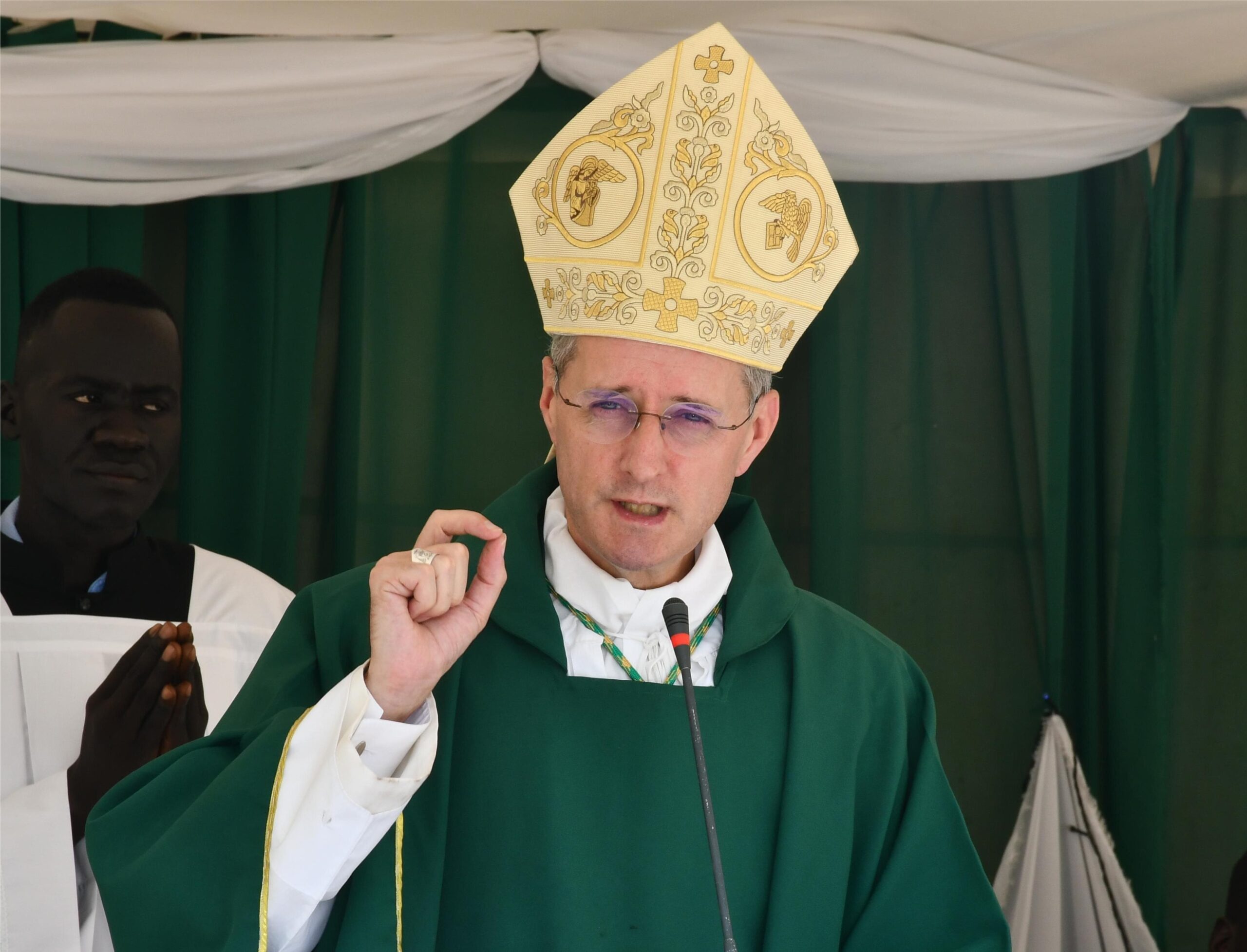
Chuol Jany|CRN| The Apostolic Nuncio to South Sudan, Archbishop Séamus P. Horgan, has issued a strong appeal for peace, disarmament and dialogue amid escalating tensions and violence in Jonglei State, warning that continued conflict is deepening displacement, reopening communal wounds and threatening the social fabric of the region.
Speaking during Mass at St Paul’s Parish in Bor over the weekend to mark the feast of the Conversion of St Paul, Archbishop Horgan said he had come at a moment of “grave tension, indeed of conflict” and deliberately used the occasion to deliver an urgent message on behalf of Pope Leo.
“As the Pope’s representative, I come with a word of closeness and a word of peace,” the archbishop said, stressing that the Holy See is closely following developments in Bor, Jonglei and South Sudan more broadly.
Referring to the Pope’s message for the World Day of Peace, Archbishop Horgan urged communities and leaders to embrace what he described as “an unarmed and disarming peace,” calling not only for the silencing of guns but also for the rejection of war rhetoric, propaganda and mutual suspicion.
“Picking up the gun to injure or kill our brothers and sisters is not the solution,” he said. “There may be forces outside this State who profit from conflict, but the people of Jonglei will be the losers.”
The Apostolic Nuncio noted that an estimated 240,000 people have already been displaced this year, with lives lost and many injured, warning that continued violence risks deepening divisions between communities. “What we need is to heal existing wounds, not open new ones,” he said.
Archbishop Horgan appealed to political, military and community leaders at all levels to work for de-escalation and to prioritize local dialogue as the primary means of resolving mistrust and grievances. He welcomed recent initiatives by community elders calling for peace and rejecting attempts to portray the violence as an ethnic conflict.
“The problems of Jonglei can be resolved by talking to one another locally,” he said. “This conflict is not ethnic and should not be represented as such.”
Linking his message to the feast being celebrated, the Archbishop drew on the teachings of St Paul to emphasize unity and equality among believers, rejecting divisions based on tribe, political affiliation or identity.
“There is neither Jew nor Greek,” he recalled from St Paul’s letter to the Galatians, adding that in today’s context the message means there is “neither Dinka nor Nuer, neither IG nor IO,” but all are one in Christ.
He said this Christian understanding of brotherhood leaves no room for violence against fellow citizens and believers, calling on the faithful to reject narrow identity politics and sectional interests.
Archbishop Horgan also highlighted St Paul’s conversion as a powerful reminder that change is possible, even in moments of deep crisis. “No one is trapped forever in a destructive path,” he said. “A change of heart is possible through an encounter with Christ.”
Concluding his homily, the Apostolic Nuncio challenged Christians to live out their mission as witnesses of peace, stressing that the only “fight” Christians are called to engage in is the struggle to remain faithful, to bring reconciliation and to build peace.
“Let us leave other weapons aside,” he said, “and fight, like our patron St Paul, to remain faithful to Christ and to bring His peace into the world.”
The Mass was attended by parishioners from Bor and Jonglei, local church leaders, representatives of civil authorities, UNMISS officials, religious leaders and members of other Christian denominations.