


By Ginaba Lino
A coalition of young leaders group has called on Central Equatoria State Governor Emmanuel Adil to fully implement South Sudan’s 35 percent affirmative action quota for women, saying recent government appointments show that women and young women remain largely excluded from decision-making positions.
The appeal follows the governor’s latest appointments to 19 key state government posts, in which only one woman was selected and no young woman was included.
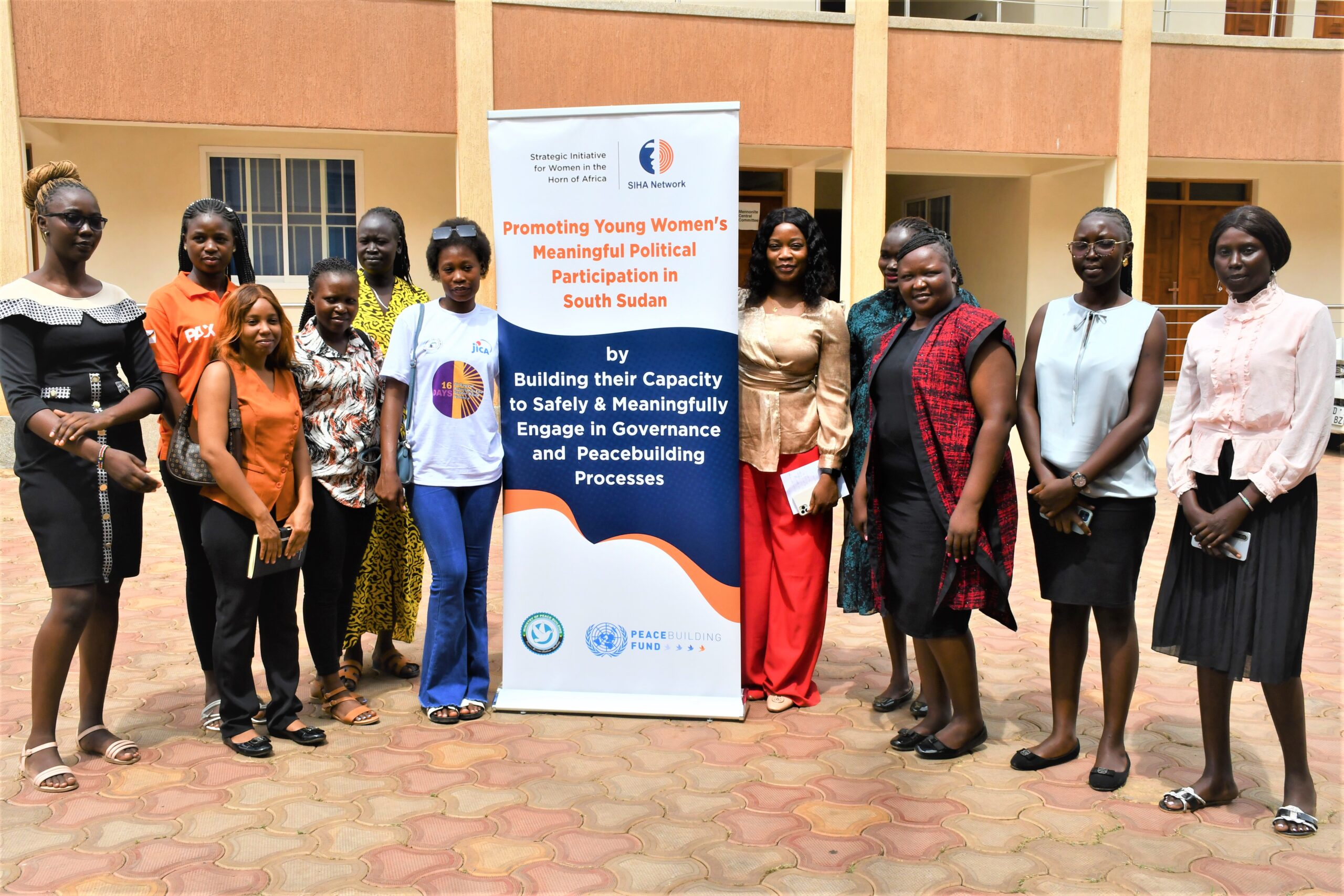
Speaking at a press briefing held at the South Sudan Council of Churches in Juba, the young women organized under the Strategic Initiative for Women in the Horn of Africa (SIHA) Network and supported by the UN Peacebuilding Fund’s Inclusive Governance for Peace project described the appointments as a setback for gender equality.
Reading the group’s statement, Ms. Adure Kujo said the outcome was “a painful reminder” that women continue to be sidelined in leadership, despite constitutional and peace agreement guarantees.
“Our exclusion is not because we lack capacity,” Kujo said. “It is because the systems still shut us out. We are ready to lead, but we need open and fair opportunities.”
The young women argued that marginalizing women in leadership undermines peace, justice, and development. They urged the state government to comply with the 35 percent quota provided for under South Sudan’s Transitional Constitution and the Revitalized Agreement on the Resolution of the Conflict in South Sudan (R-ARCSS).
They also called for a review of the recent appointments to ensure transparency, inclusivity, and fair representation of Central Equatoria’s diversity, and demanded the creation of safe spaces for young women to participate meaningfully in political and community leadership.
“Women’s inclusion is not charity, it is a right and a necessity,” the statement read. “When women are included, peace is strengthened, services improve, and public trust in government grows.”
The group stressed that their advocacy is not confrontational but collaborative, saying they are ready to engage constructively with authorities while continuing to push for gender equity in governance.
“Our voices matter. Our leadership matters. Our time is now,” they said.
The gathering reflected growing frustration among young women in South Sudan who say their contributions to peace-building, humanitarian response, and civic engagement are not matched by opportunities for leadership. Many cited economic hardship, limited mentorship, and cultural barriers as ongoing challenges.