
, in partnership with the Talent Initiative for Development (TIDE), convened a two-day Media and Law Dialogue in Juba to discuss how South Sudan can safeguard freedom of expression while addressing the growing challenge of hate speech, particularly on social media platforms.)
By: Ginaba Lino
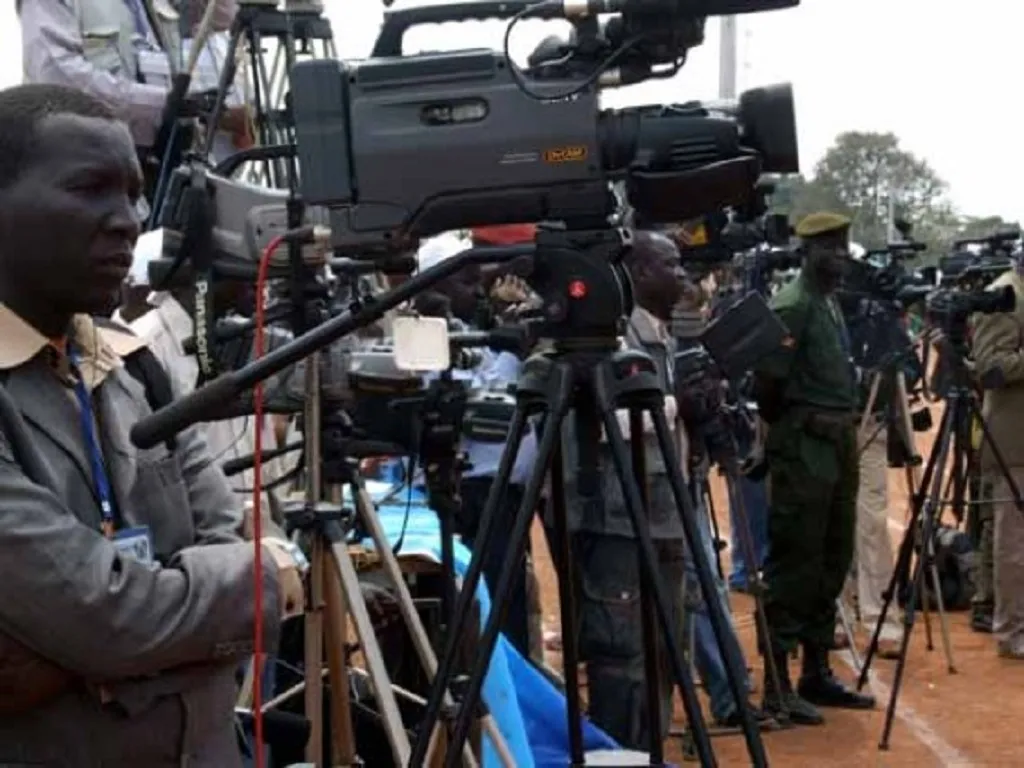
The Konrad Adenauer Stiftung (KAS), in partnership with the Talent Initiative for Development (TIDE), convened a two-day Media and Law Dialogue in Juba to discuss how South Sudan can safeguard freedom of expression while addressing the growing challenge of hate speech, particularly on social media platforms.
The event brought together stakeholders from government, the media, civil society, the legal fraternity, and the diplomatic community.
Among the key speakers were the Deputy Minister for Information, Communication, Technology and Postal Services, Hon. David Yau Yau; the Head of Mission at the Embassy of the Federal Republic of Germany in South Sudan, Mr. Gregory Bledjian; and the KAS Country Representative for Uganda and South Sudan, Ms. Anna Reisman.
In his opening remarks, Robert Antipas, Director of TIDE, welcomed participants and emphasized the importance of fostering dialogue between the media, government, and civil society.
“We are aware of how difficult it is to operate freely as media in South Sudan,” he said. “This dialogue aims to help us understand the extent of our freedom under the law and how we can counter hate speech, especially on social media, while promoting professionalism and accuracy in reporting.”
Antipas commended KAS for its continued partnership and commitment to building the capacity of South Sudanese professionals. “Germany’s support is adding value to the people of South Sudan,” he added.
Delivering the keynote address, Ms. Anna Reisman KAS country representative for Uganda and South Sudan highlighted the crucial role of journalism in shaping democracy and fostering peace.
“Journalism is not just about writing or storytelling it’s about purpose,” she said. “Those who choose this profession to make their country a better place are the real patriots. The media’s power lies in truth, professionalism, and factuality.”
Reisman reminded journalists that freedom of expression must go hand in hand with accountability and ethical responsibility.
“The power of language is real what we say influences people’s emotions and judgments. Therefore, truth and accuracy should remain at the heart of journalism,” she emphasized.
She also reaffirmed KAS’s broader mission to promote democracy and peace globally, noting that “we cannot enjoy freedom and democracy in our own countries if we are surrounded by nations that do not appreciate these values.”
In his address, Mr. Gregory Bledjian, the German Head of Mission, described freedom of speech and press freedom as “the oxygen of democracy.”
“Without them, no society can truly be free, and no government can be accountable,” he said. “Yet these freedoms come with duties to truth, respect, and peace.”
He acknowledged South Sudan’s progress in improving its media environment, including legal reforms and the establishment of the Media Authority, while cautioning that challenges such as intimidation and self-censorship still hinder free expression.
“In societies emerging from conflict, speech can either build bridges or reopen wounds. Words can unite or ignite words matter,” he cautioned.
Bledjian referenced Articles 19 and 20 of the International Covenant on Civil and Political Rights, which guarantee freedom of expression while prohibiting advocacy of hatred that incites discrimination or violence. He noted that Germany’s own legal framework criminalizes hate speech not to restrict debate but to protect democratic values and human dignity.
“Freedom of expression and responsibility for responsible speech are two sides of the same coin. One cannot exist meaningfully without the other,” he said.
He further noted Germany’s continued support for media development in South Sudan, including projects to strengthen local radio networks and enhance journalist safety.
“Social media amplifies voices but also magnifies hate. The ability to distinguish truth from manipulation must become part of every citizen’s education,” he stressed.
Representing the government, Hon. David Yau Yau commended KAS and TIDE for organizing the dialogue and underscored the importance of responsible communication in building national unity.
“Social media is a mirror reflecting the aspirations and challenges of our young nation,” he said. “As South Sudan moves toward lasting peace and democratic consolidation, we must ensure that freedom serves as a force for unity, not division.”
He outlined three key priorities for advancing responsible media practice in the country: legal clarity, professionalism, and compassion in reporting.
“Hate speech is a poison that corrodes trust, fuels conflict, and undermines our hard-won peace. By committing to ethical and responsible reporting, the media becomes a key partner in fostering social cohesion,” he said.
Yau Yau urged journalists to report with empathy, especially on humanitarian and displacement issues. “The words we use and the stories we tell can either harmonize crises or inflame tensions,” he warned.
The dialogue concluded with a shared commitment among participants to strengthen the legal framework governing media operations, improve journalist safety, and promote professional ethics in reporting.
As discussions came to a close, one key message resonated across the room: freedom of speech and responsibility are inseparable in the quest for peace and democracy in South Sudan.