

, which they claim is threatening their security, land rights, and returnee resettlement.)
By Otto Abut | CRN | Juba – Tuesday 23 Sept. 2025
Residents of Pogee, a border community in Magwi County, Eastern Equatoria State, are urging both the state and national governments to take swift action following a border dispute with the Ugandan People’s Defence Forces (UPDF), which they claim is threatening their security, land rights, and returnee resettlement.
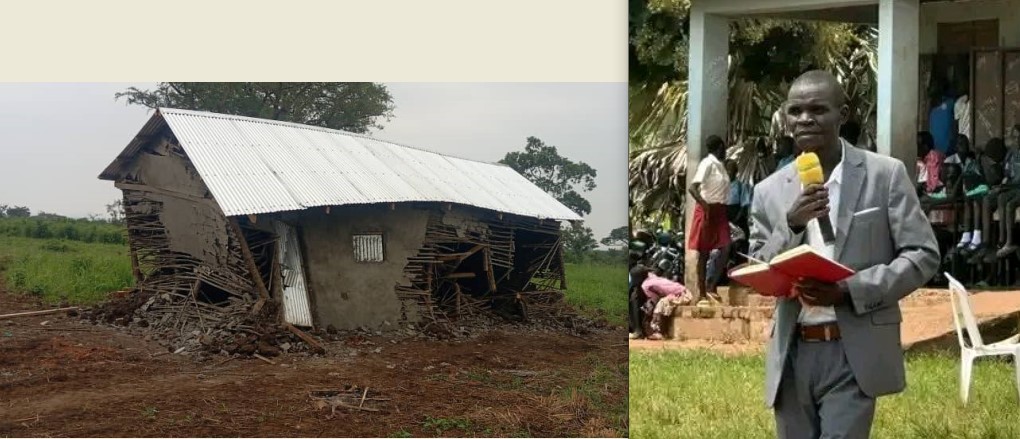
The outcry follows an incident on 16 August 2025, in which UPDF soldiers reportedly used an armored vehicle to demolish a two-room house belonging to a South Sudanese resident. The structure was allegedly destroyed under claims that it was built in a “no-man’s land.”
Chief Okot Peter Marcelo, Boma Chief of Pogee, accused Ugandan forces of deep encroachment into South Sudanese territory, blocking access to land intended for citizens returning from refugee camps.
“The UPDF has crossed deep into our land, marking coordinates nearly 15 kilometers inside South Sudan. This act is blocking our people who fled the war from returning home. It is a clear violation of our sovereignty,” Chief Okot stated.
The contested areas reportedly include Loremo and Pakiro, where GPS markers have allegedly been planted by Ugandan forces without consultation.
Pajok Head Chief, Tony Abore Loguta, called on the Magwi County administration, Eastern Equatoria State Governor Louis Lobong, and national authorities to engage local chiefs in any negotiation or resolution process. He emphasized the role of traditional leadership and history in defining the rightful border.
“We need to be fully involved as local chiefs in resolving the dispute,” said Chief Loguta. “If necessary, we are ready to conduct traditional rituals to reaffirm ownership, because according to the colonial boundaries set by the British, our border with Uganda starts from Lemu.”
Despite the land dispute, Lt. Taban, a police officer stationed at the Pogee checkpoint, reported that cross-border movement remains peaceful. Residents from both sides continue to engage in trade and daily activities without fear, he said, describing the situation as “tense but calm.”
Magwi County Commissioner, Pole Pole Benjamin, acknowledged the incident and confirmed that Ugandan authorities have pledged to compensate families affected by the house demolition. He said the matter is being handled at the intergovernmental level to avoid community-level conflict.
“One of the affected persons confirmed to me personally, in the presence of the Ugandan Resident District Commissioner, that the compensation process is progressing positively,” said Commissioner Pole.
The South Sudan–Uganda border has long been subject to disputes rooted in colonial-era demarcations, often flaring up in areas with strategic importance or fertile land. Communities like Pogee, already recovering from years of conflict and displacement, fear that without prompt action, returnee resettlement and peacebuilding efforts could be derailed.
Local leaders continue to urge the government to reassert national sovereignty, involve traditional authorities in resolution efforts, and facilitate border demarcation based on historical maps. The Ugandan government is yet to respond to the allegations the community raised against them.
As national and regional authorities move to de-escalate the situation, communities on both sides of the border are hoping for a peaceful and just resolution that respects traditional land ownership and promotes coexistence.
This story is reported with a grant from Journalists for Human Rights under the ‘Tackling Mis/Disinformation Project,’ funded by the Peace and Stabilization Program of the Government of Canada.”