


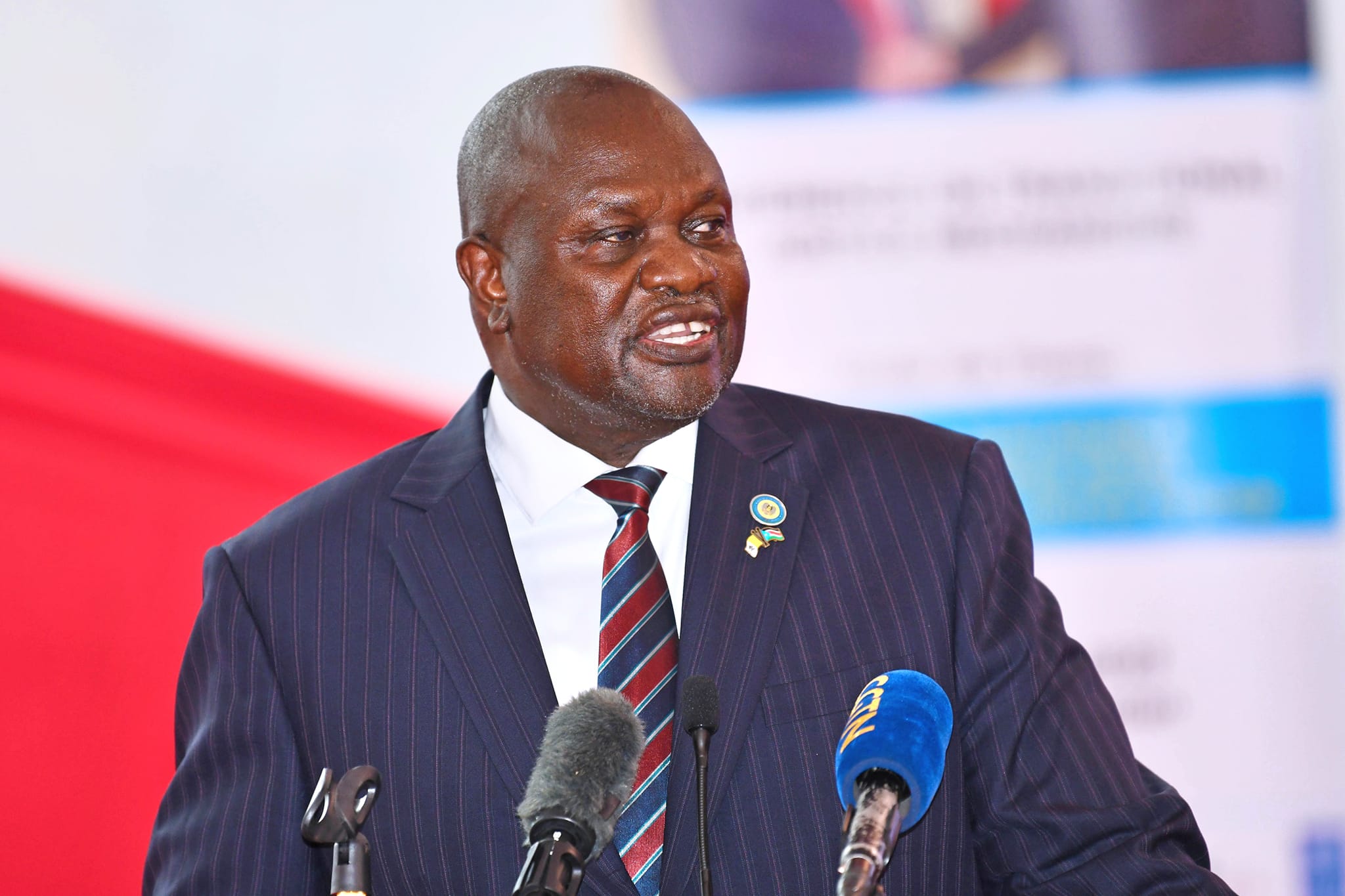
Ginaba Lino|CRN| The high-profile trial of suspended First Vice President Dr. Riek Machar and seven senior members of the SPLM-IO was adjourned on Monday following preliminary legal objections raised by the defense team concerning the jurisdiction and constitutionality of the special tribunal hearing the case.
The proceedings took place at Freedom Hall in Juba, under tight security and closed-door restrictions that excluded independent journalists, drawing criticism from civil society and media rights groups.
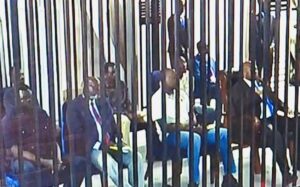
Dr. Machar, along with Puot Kang Chol (suspended Minister of Petroleum) Gabriel Duop Lam former deputy CDF and SPLA IO Chief among others, appeared before a three-judge panel, flanked by legal representatives, family members, and observers.
In their preliminary motion, lead counsel Adv. Dr. Geri Raimondo-Legge challenged the legal basis of the special court, arguing that it lacks jurisdiction to try a sitting—or even suspended—vice president.
Citing Article 8.3 of the Revitalized Agreement on the Resolution of the Conflict in South Sudan (R-ARCSS) and relevant provisions of the Transitional Constitution of South Sudan (2011, as amended), the defense maintained that such cases must be tried either by the Supreme Court, or a Hybrid Court as stipulated in the peace agreement.
“This tribunal has no legal standing to prosecute the First Vice President,” Dr. Raimondo-Legge told the court. “Both the Constitution and the Peace Agreement affirm the supremacy of specialized judicial mechanisms in such matters.”
The defense further argued that constitutional immunity applies to high-ranking officials like Dr. Machar, and that no formal impeachment or parliamentary process has been undertaken to lift this immunity.
Responding for the state, Adv. Ajo Noel Julius Kenyi, representing the Ministry of Justice, asserted that the court was lawfully established and empowered to hear the case.
“This tribunal was constituted in accordance with existing laws and does not violate the Constitution or the peace agreement,” said Adv. Ajo. “Immunity cannot be used as a shield against criminal accountability.”
The prosecution emphasized that no individual, regardless of their political status, is above the law—an argument that directly countered the defense’s claims of constitutional privilege.
Following the oral submissions, the presiding judges granted the prosecution until Tuesday, September 24 to submit a written response to the defense’s motion challenging the court’s jurisdiction.
The panel announced that it will reconvene on that date to deliberate on the admissibility of the case and whether the trial will proceed under the current tribunal or be referred to a higher judicial body.
Outside the courtroom, civil society organizations and media advocates voiced growing concern over the lack of transparency, particularly after independent journalists were barred from covering the session despite prior government assurances that the trial would be open to the public.