

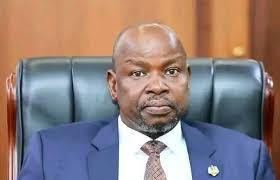
South Sudan’s Vice President Benjamin Bol Mel has been named among senior government officials accused of looting more than $25 billion in oil revenues, according to a new report by the United Nations Commission on Human Rights in South Sudan.
The two-year investigation alleges massive corruption at the highest levels of government, contributing to a deepening human rights and humanitarian crisis.
The report, titled “Plundering a Nation: How Rampant Corruption Unleashed a Human Rights Crisis in South Sudan,” paints a grim picture of how oil revenues — the country’s most valuable resource — have been diverted away from development and into the hands of a politically connected elite.
Among the most egregious examples detailed in the report is the Oil for Roads programme, a multi-billion-dollar infrastructure initiative that, according to investigators, delivered few actual roads. Instead, contracts were funneled to companies closely linked to Vice President Bol Mel, turning what was publicly touted as a development project into a “financial black hole.”
“This was not about building roads — it was about building personal wealth,” said Commission Chair Yasmin Sooka. “These funds were meant to serve the people, but they ended up enriching those in power.”
The report further alleges that nepotism and state capture are accelerating, with Vice President Bol Mel’s wife recently appointed to a top government position alongside President Salva Kiir’s daughter. The appointments are raising red flags about the concentration of power and the erosion of state institutions.
According to Commissioner Carlos Castresana Fernández, the looting has directly contributed to South Sudan’s worsening humanitarian crisis. “When money for hospitals, schools, and clean water ends up in private hands, the consequences are fatal,” he said. “We are talking about lives lost, children starving, and a generation denied education.”
The UN Commission’s findings suggest a government apparatus that has prioritized personal gain and political survival over the welfare of its citizens. Ministries responsible for health, education, and agriculture have been chronically underfunded, while the offices tied to the presidency and vice presidency have consumed a disproportionate share of public resources.
The UN Commission is calling for criminal prosecutions, financial reforms, and stronger civil society oversight, warning that without accountability, South Sudan’s future is in serious jeopardy. “This is not just poor governance — it is calculated theft,” said Commissioner Barney Afako.
As the country’s fragile peace agreement teeters and opposition voices are silenced, international pressure may be the last remaining tool to stem the tide of corruption. Without immediate and decisive action, the report warns, the ambitions of a few will continue to devastate the lives of millions.
“What we are seeing is a nation being plundered from the inside out,” concluded Sooka. “Without justice and reform, the country’s future will remain hostage to the ambitions of the few — while the many continue to suffer.”