

By Ginaba Lino
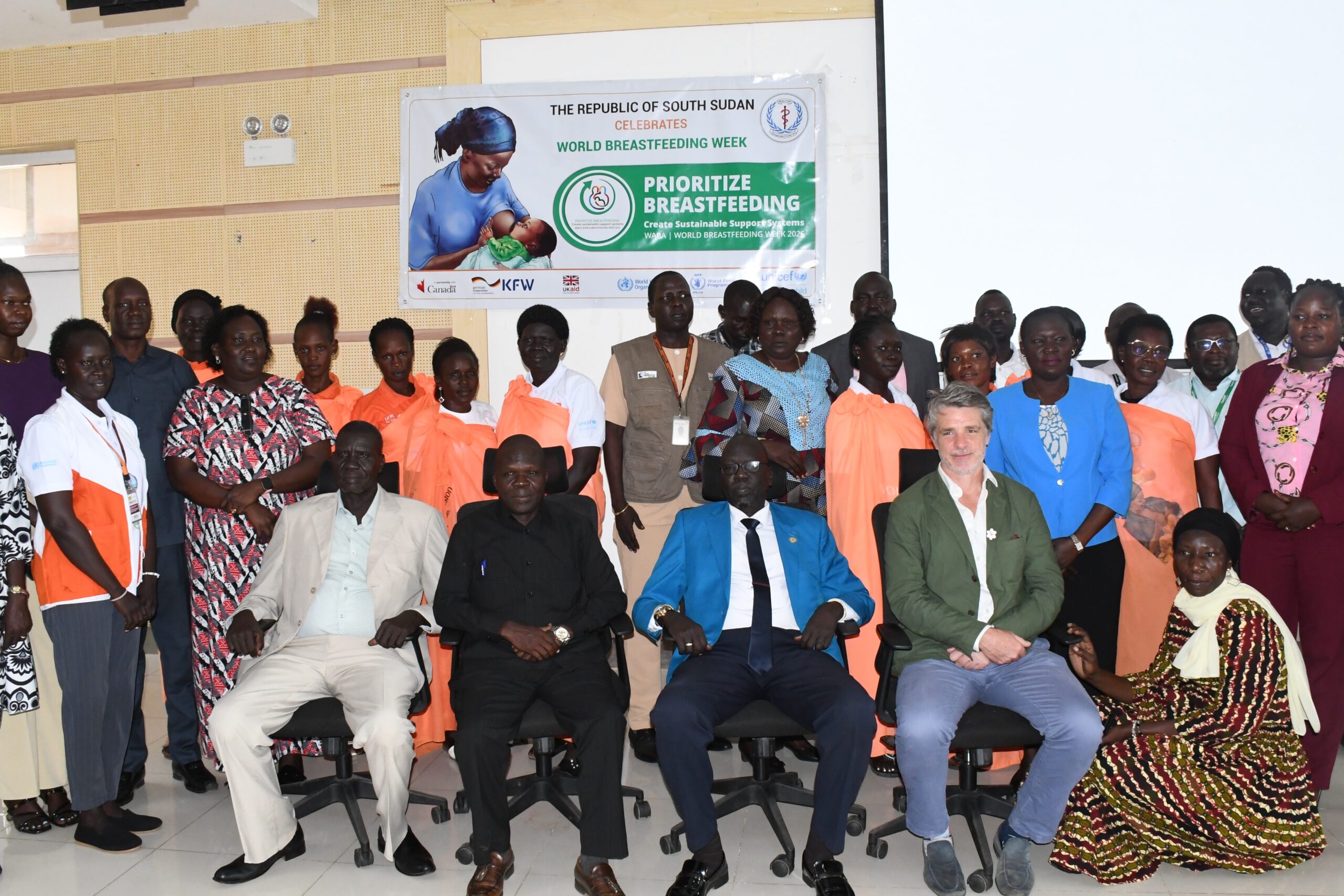
Juba, South Sudan – The National Ministry of Health, in partnership with UNICEF and key nutrition stakeholders, has officially launched the nationwide commemoration of World Breastfeeding Week with a renewed call to address the barriers women face in exclusively breastfeeding their children.
The campaign aims to help the country reach its national target of 80% exclusive breastfeeding by 2027.
This year’s global theme, “Prioritize Breastfeeding: Create a Sustainable Support System,” urges policymakers, communities, and institutions across South Sudan to support and protect breastfeeding as a foundation for a healthy start in life.
Despite significant progress—rising from 45% in 2010 to 73% in 2024—South Sudan still faces challenges preventing many mothers from exclusively breastfeeding their babies during the crucial first six months of life.
These challenges include harmful cultural norms, misinformation, lack of support at home and in the workplace, insecurity and displacement, and the aggressive marketing of breast milk substitutes.
Speaking at the launch event, Hon. Sarah Cleto Rial, South Sudan’s Minister of Health, emphasized that the responsibility of promoting breastfeeding goes beyond mothers alone.
“Prioritizing breastfeeding is not solely the mother’s burden. It requires the active commitment of families, communities, employers, and policymakers,” she said.
The Minister reaffirmed the government’s commitment to empowering healthcare workers with essential skills, including counseling during antenatal, delivery, and postnatal care, and strengthening links between hospitals and communities.
She noted that three in every ten newborns in South Sudan still miss out on the essential benefits of exclusive breastfeeding, making them more vulnerable to malnutrition and early mortality.
“Improving breastfeeding practices is critical to combat South Sudan’s persistently high rates of infant mortality and acute malnutrition,” she stressed.
Noala Skinner, UNICEF Representative in South Sudan, echoed the call for collective action, stressing that exclusive breastfeeding is one of the most effective ways to ensure child survival and development.
“Breastfeeding is a child’s first vaccine and the best source of nutrition. If we are to meet the 2027 target, we must break down the barriers that mothers face,” Skinner said.
She emphasized the importance of investing in breastfeeding support, calling it a vital investment in South Sudan’s most valuable resource: its children.
Skinner also reiterated UNICEF’s commitment to supporting the Ministry of Health in ensuring that malnourished children have access to therapeutic care, and that nutrition treatment centers are expanded across the country.
“We must all play our part to support breastfeeding mothers and create a society that enables every child to thrive,” she concluded.