

.)
By Otto Abut| Magwi County, South Sudan|24 July 2025
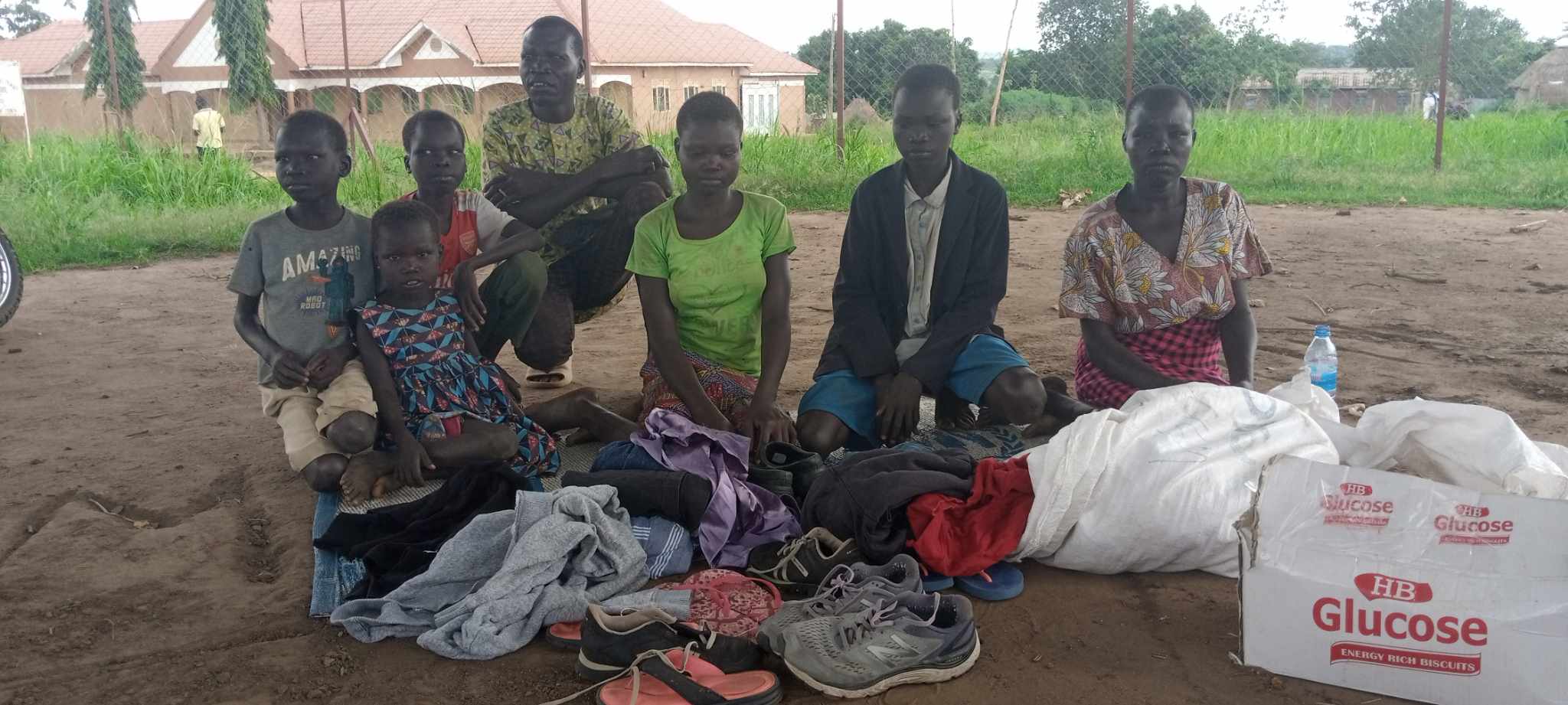
More than 13,000 South Sudanese returnees who have voluntarily repatriated to Magwi County from neighboring countries are in dire need of humanitarian assistance as they struggle to reintegrate into their ancestral communities.
According to the Relief and Rehabilitation Commission (RRC) in Magwi County, a total of 13,018 returnees arrived between January and June 2025. Most of them came from Uganda, while others returned from Kenya, Khartoum in Sudan, and a single family from Eritrea.
Salfa Ben, the RRC Coordinator for Magwi, said many of the returnees trekked long distances on foot, fleeing worsening humanitarian conditions in refugee camps conditions which include food shortages, inadequate healthcare, and a lack of basic necessities.
“Our office, along with partners like Lutheran World Federation (LWF), has responded by providing essential items such as clothes, jerrycans, carpets, and transportation to their final destinations,” Salfa stated.
Despite these efforts, the needs remain overwhelming as returnees share their Struggles
Regina Joseph, a mother of five who returned in May, said life in Uganda’s Palabek refugee camp had become unbearable due to food ration cuts and limited farming opportunities.
“Our food rations were reduced from the initial 30 kilograms, and there were no opportunities to grow food. Life was hard,” she recalled.
Lucia, a returnee from Pogee, echoed similar sentiments. “We chose to return home out of frustration, even without informing the camp authorities,” she said.
Pogee Boma Chief Peter Okello Marcelo noted that returnees in his area are grappling with a lack of shelter, farm tools, seeds, and rising cases of domestic violence.
“We urge NGOs to support women, especially single mothers running small businesses with loans. Empowering them economically will ease their burden,” he appealed.
Meanwhile, the head chief of Agoro Payam warned that the area’s fragile infrastructure is ill-prepared to support the growing number of returnees, especially as it continues to recover from conflict.
“We are appealing to NGOs and development partners to help renovate our Primary Health Care Unit (PHCU) so that people can access health services locally,” he urged.
LWF Program Coordinator Ongwen Pasquali said the organization is engaging in peace-building activities, stakeholder dialogues, and cross-border support programs in Magwi and their counterpart in Lamwo District, Uganda, to ease the rehabilitation process of the returnees.
Pasquali noted that returnees traveling through border communities like Lobone, Pogee, and Owiny-kibull are facing additional challenges, including poor road networks, inflated border fees, and a lack of medical services.
The RRC Coordinator, Salfa Ben, is now calling on the Eastern Equatoria State government to scale up support for the returnees.
“These are our people who have come back voluntarily, and they need help,” he said. “We also appeal to the indigenous communities to create a welcoming environment so returnees can feel at home again.”
As more families return, local leaders are urging immediate intervention to address the humanitarian and developmental needs of these communities in Magwi County, Eastern Equatoria.
This story is reported with a grant from Journalists for Human Rights under the ‘Tackling Mis/Disinformation Project,’ funded by the Peace and Stabilization Program of the Government of Canada.”