

 has raised the alarm that 7.7 million people—half of South Sudan’s population—are facing severe hunger due to a major funding shortfall, putting millions at risk of losing vital food assistance.)
By Ginaba Lino
The United Nations World Food Programme (WFP) has raised the alarm that 7.7 million people—half of South Sudan’s population—are facing severe hunger due to a major funding shortfall, putting millions at risk of losing vital food assistance.
This warning followed the recent visit of Carl Skau, WFP’s Deputy Executive Director and Chief Operating Officer, to South Sudan from 17–20 July 2025.
According to the WFP report released on 22 July, over 83,000 people are already experiencing catastrophic levels of food insecurity (IPC 5), including 32,000 in Upper Nile State, where conflict since March has displaced thousands and hindered humanitarian access.
“A record 2.3 million children are at risk of malnutrition—especially in conflict zones like Upper Nile and flood-affected areas such as Bentiu,” the report stated.
The crisis has worsened with the continued conflict in neighboring Sudan, which has forced nearly 1.2 million people to flee into South Sudan since April 2023. Many arrive malnourished, hungry, and traumatized.
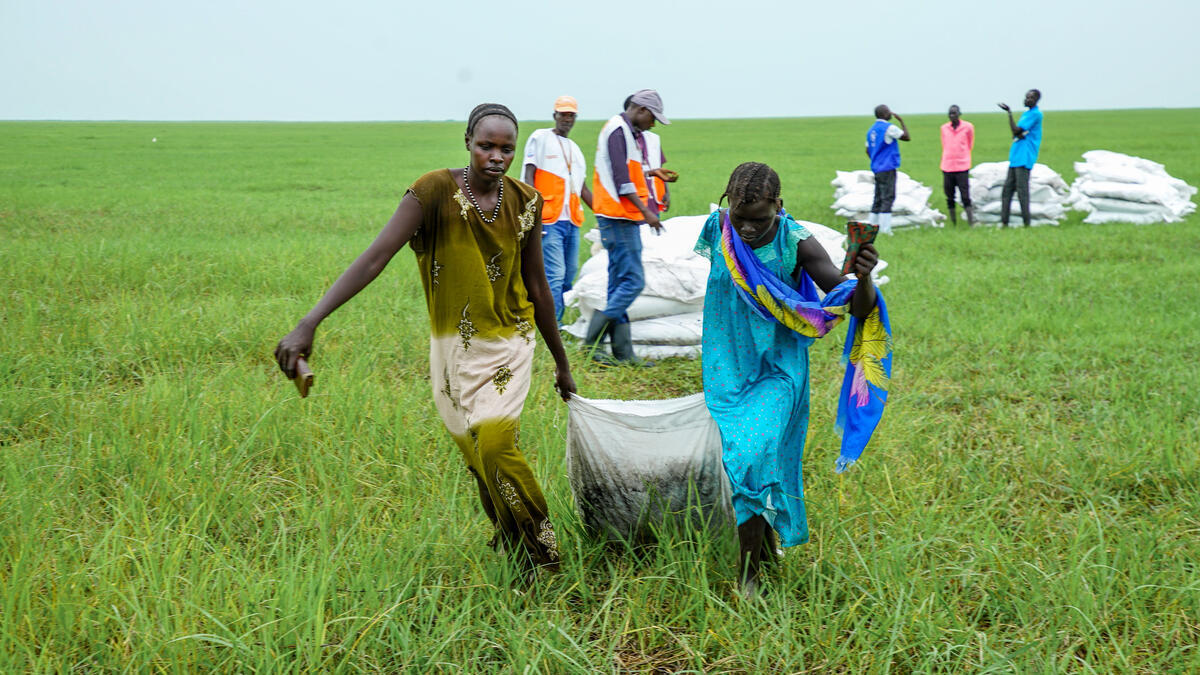
So far in 2025, WFP has assisted 2 million of the most vulnerable people, including 300,000 affected by renewed fighting in Upper Nile. In July alone, WFP conducted airdrops to remote areas in the Greater Upper Nile region, delivering 430 metric tons of food to nearly 40,000 people. These air operations are ongoing.
The UN Humanitarian Air Service (UNHAS), operated by WFP, continues to reach seven key destinations in Upper Nile—Maban, Mawut, Malakal, Mandeng, Mathiang, Renk, and Ulang—delivering essential supplies and life-saving cargo.
Despite these efforts, WFP warns that due to funding shortages, it can now support only 2.5 million people with regular food assistance—just 30% of those in need.
WFP urgently needs US$274 million to maintain emergency food aid through the end of the year. Even with this funding, most recipients will receive only 50% of their daily food rations.