


Author: Chuol Jany|CRN
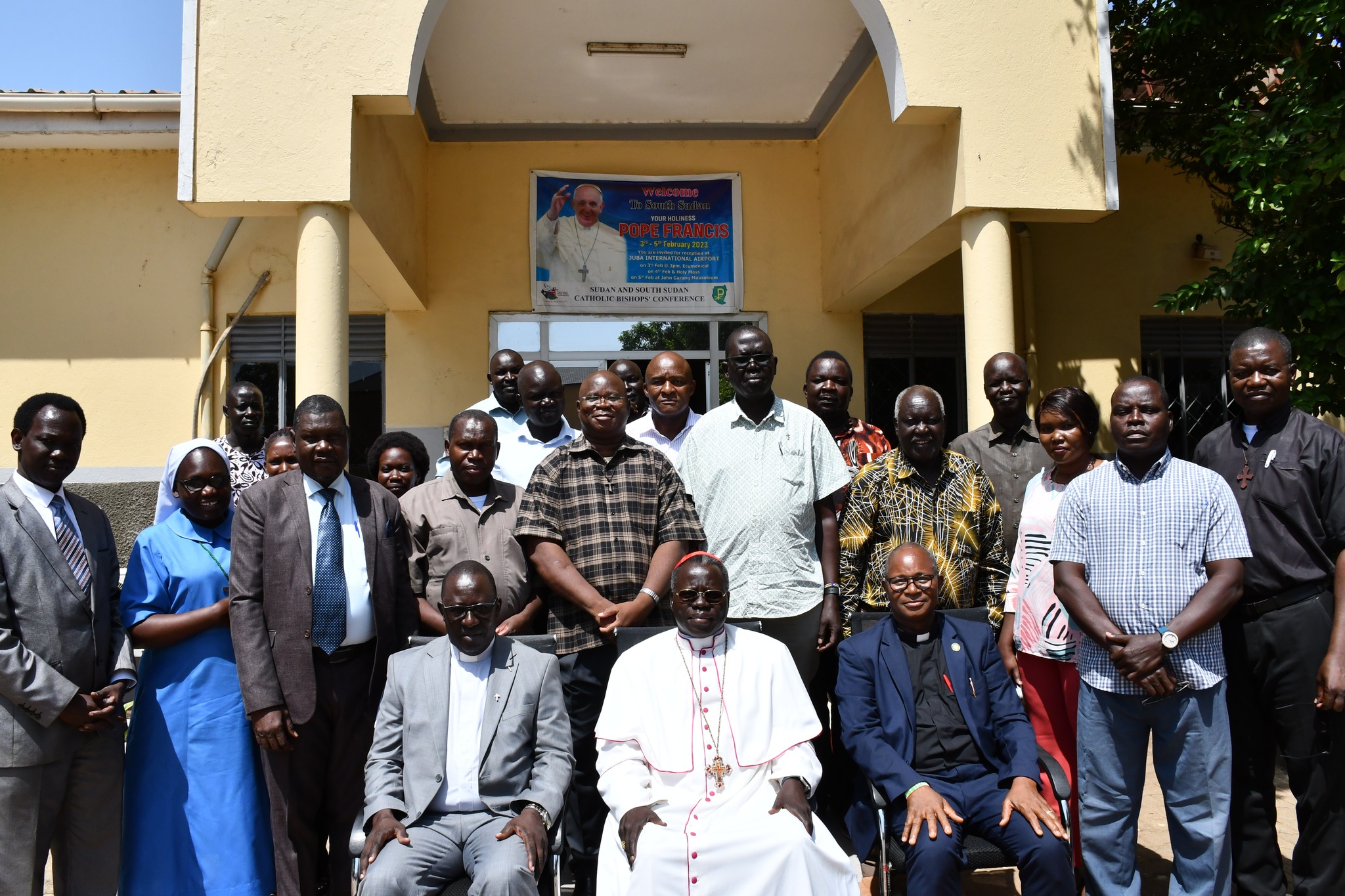
The Sudan and South Sudan Catholic Bishops Conference has officially launched a two-day strategic planning workshop in Juba, bringing together over 30 participants, including clergy and lay people engaged in Church activities. The initiative aims to develop a comprehensive strategic plan that will help strengthen and advance the mission of the Church across both countries.
In his opening remarks, His Eminence Stephen Cardinal Ameyu highlighted the critical role of the Bishops’ Conference in promoting coordination and unity among dioceses. He emphasized that the strategic plan must be grounded in the realities and unique challenges facing both Sudan and South Sudan.
“This workshop should assess the Conference’s strengths and weaknesses—and seek to resolve the challenges we have inherited,” Cardinal Ameyu stated. Cardinal Ameyu also acknowledged the difficulties the Conference has faced since relocating to Juba, citing the limited functionality of several departments.
“Many of our departments are not operating effectively. What we currently have is practically non-functional. All of us must take this seriously and find ways to revitalize and expand these departments through the new strategic plan,” he added.
Rev. Fr. Martin Ochaya, Secretary General of the Bishops’ Conference, noted that the faithful have high expectations of Church leadership, particularly when it comes to speaking out on critical public issues. He stressed the need for bishops to remain engaged and responsive to the struggles of ordinary people.
Fr. Martin CLIP “When the bishops release a pastoral letter or public statement, people listen. But when they remain silent amid suffering, the Church is questioned. These concerns will be addressed in the new strategic plan, as we work more closely with diocesan conferences,” said Fr. Ochaya.
The workshop represents a move towards a more inclusive, participatory model of Church governance—one that reflects the principles of synodality and shared responsibility between clergy and laity.
The outcomes are expected to shape the Conference’s direction in the coming years, identifying institutional strengths, addressing weaknesses, and laying a foundation for growth and impact.