
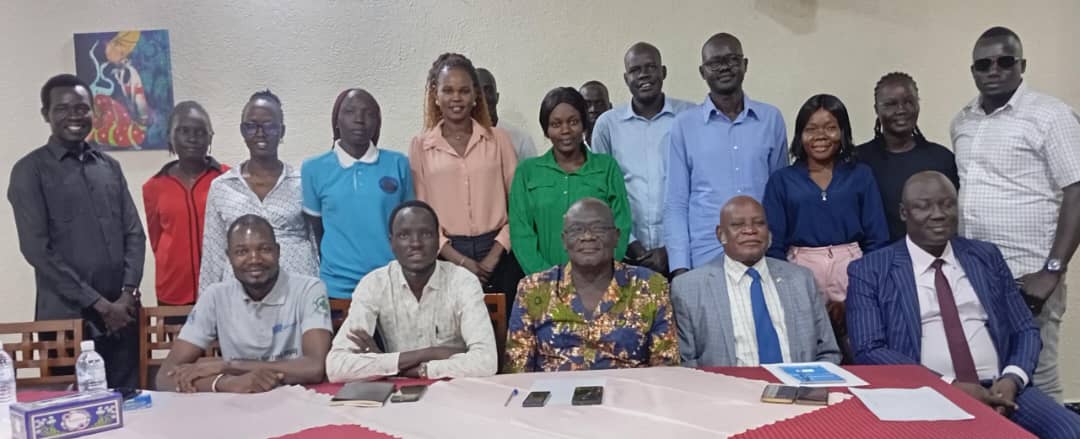
 organized a half-day breakfast roundtable forum on Thursday, bringing together journalists and government stakeholders to discuss the vital role of the media in expanding civic education ahead of South Sudan’s anticipated general elections.)
By: Ginaba Lino
The Union of Journalists of South Sudan (UJOSS) organized a half-day breakfast roundtable forum on Thursday, bringing together journalists and government stakeholders to discuss the vital role of the media in expanding civic education ahead of South Sudan’s anticipated general elections.
Held in Juba, the forum provided a platform for dialogue on how the media can help inform citizens about their rights, electoral processes, and the constitutional-making process in a neutral and professional manner.
The breakfast roundtable was held under the theme: “The Role of Media in Expanding Civic Education and Public Consultation Ahead of the Anticipated General Elections in South Sudan.”
UJOSS President Patrick Oyet stressed the importance of the media in shaping public understanding and engagement in democratic processes.
“Journalists must play a proactive role in educating the public about the electoral process and connecting citizens’ voices to those in power,” Oyet said. “Our responsibility is not driven by money, but by a duty to inform, guide, and empower citizens.”
He urged media practitioners to go beyond routine reporting and prioritize public interest journalism, particularly during the electoral period.
Oliver Mori Benjamin, spokesperson of the National Legislative Assembly, commended journalists for bridging the civic education gap in the electoral process.
“The media plays a critical role in ensuring that citizens understand their rights and duties,” Modi said. “However, I encourage all journalists to follow the guidelines and regulations provided by the National Elections Commission to ensure the dissemination of accurate information.”
He further suggested that future roundtable forums include representatives from political parties to foster inclusive dialogue and better inform media coverage.
The Director General for Information and Media Compliance at the Media Authority, Sapana Abuyi, emphasized the unique nature of the upcoming elections—South Sudan’s first general elections since independence in 2011—as distinct from the previous referendum on secession.
“This is the first time our citizens will elect their national leaders. It is crucial that journalists clearly explain the voter registration and electoral process to ensure informed participation,” Abuyi said.
He called on media practitioners to maintain neutrality and avoid biased reporting, especially during the elections, and revealed that the Media Authority is working to develop media coverage guidelines to help journalists report responsibly and effectively during the electoral period.
Abuyi also praised UJOSS for organizing the forum, describing it as an important step toward strengthening collaboration between the media and key institutions ahead of the elections.
The forum brought together 15 journalists from various media outlets, along with government representatives and stakeholders, marking an important moment of reflection and collaboration as the country prepares for one of the most significant events in its democratic journey.