


Ginaba Lino|CRN JUBA
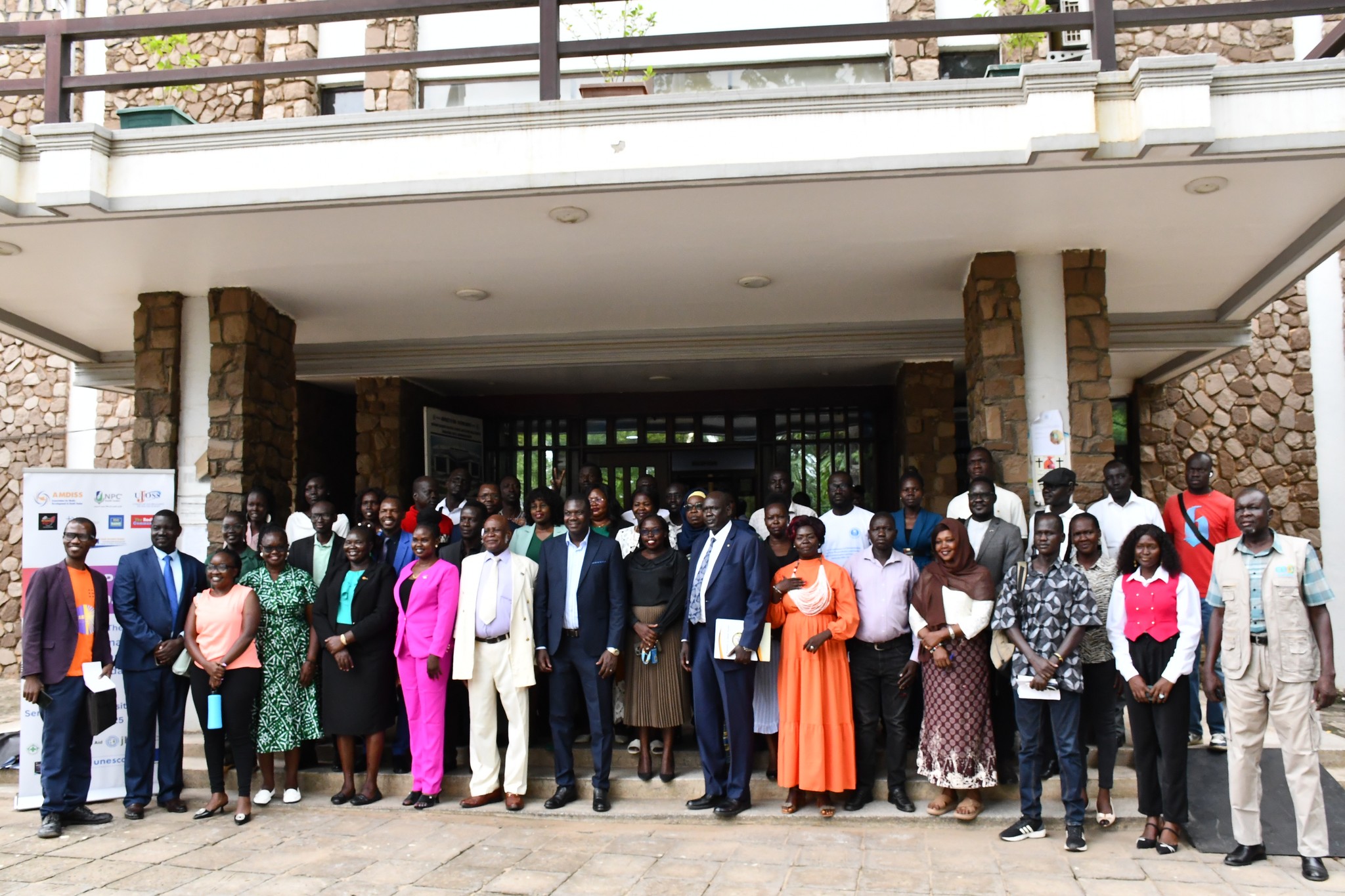
Journalists in South Sudan marked World Press Freedom Day by calling on the government and media owners to improve working conditions, ensure journalists’ safety, and enhance press freedom as the country heads toward its first general elections.
During the celebrations in Juba, Irene Aya, Executive Director of the Association for Media Development in South Sudan (AMDISS), emphasized the need for a safe and supportive environment to allow journalists to perform their duties effectively.
“We still have media houses that are closed. One of the leading newspapers remains shut, and many people don’t even know why,” Aya said. “As we approach elections, the government must resolve such issues and ensure transparency.”
She also called on media practitioners to prioritize accuracy and responsible journalism, especially during this sensitive political period.
The Managing Director of the Media Authority, Elijah Alier recognized the vital role of a vibrant and independent press in promoting democracy and accountability. He reiterated the authority’s commitment to creating a conducive legal and operational environment for media to thrive.
However, Alier pointed out several challenges hampering journalistic work in the country, including political instability, poor infrastructure, and low literacy levels. He also addressed the growing presence of Artificial Intelligence (AI) in journalism, cautioning reporters to use it ethically.
“AI must support—not replace—journalists. Media professionals must remain vigilant and uphold the values of truth, fairness, and responsibility,” Alier noted.
He urged unregistered media outlets to legalize their operations with the Media Authority to benefit from institutional protections and capacity support.
Mary Ajith, Program Manager for Journalists for Human Rights (JHR), underscored the importance of professionalism, especially in conflict reporting. She emphasized the need to combat disinformation and hate speech through accurate, ethical journalism.
Ajith also highlighted the difficulties faced by young journalists, who are often unrecognized by officials when covering public events. She urged editors to strengthen editorial standards and eliminate errors that compromise credibility.
“Mistakes in published stories remain a major concern. Editors must invest more effort in reviewing content to ensure quality and integrity,” she stressed.
Representing the partners, UNESCO’s Jesper Okuiki applauded the resilience of South Sudanese journalists and emphasized that AI should be seen as a tool, not a threat, to journalism.
“AI cannot replace the critical role of journalists. They must continue investigating, reporting, and holding power to account without fear or intimidation,” Okuiki stated.
He reaffirmed UNESCO’s commitment to strengthening legal protections, providing capacity training, and fostering an inclusive media environment in South Sudan.
As part of the commemoration, UNESCO honored the courage of journalists who risk their safety to report on complex and sensitive issues in the country.
This story is produced with the support of Norwegian People Aid (NPA) and JHR: Journalists for Human Rights under the Tackling Mis/Disinformation Project, funded by the Peace and Stabilization Operations Program of the Government of Canada.